

Give the gift small icon
Give the gift of Artifcts!
HELLO!
Give the gift big icon
Give the gift
of Artifcts

The perfect gift for the person
in your life who has everything.

Give a gift Close

ARTIAssist has arrived

Try our new AI-boosted ARTIAssist for FREE on your own Artifcts. Add historical and factual details to your Artifcts, and learn what similar items have sold for in recent months.
Exclusive articles, interviews, and insights covering downsizing & decluttering, genealogy, photos and other media, aging well, travel, and more. We’re here to help you capture the big little moments and stories to bring meaning and order to all of life’s collections and memories for generations.
Share With Friends
Use Artifcts Timelines to Enrich Your Family History

We live in a world of information overload, and if you’re digging into family history, that overload threat is potentially multiplied by generations.

Some of us organize our research and learnings in folders, and folders within folders. Nothing other than the name of each folder provides us a clue as to how everything inside relates or where gaps in the content may exist.

Others of us rely on hardcopy photo albums and scrapbooks, often missing the contextual details and stories to bring those books to life when the creator of those books is not there to talk you through them. And how do you modify them once complete?

Whether you’re just getting started with fleshing out your family history or focused on closing gaps, we think timelines are a powerful tool to have in your corner. Dive in with us!

Enriching Family History with Artifcts Timelines

Digital timelines can be hit or miss. Many applications, from Google Photos to specialized genealogy software to Facebook, offer timelines, but they often are rigid in terms of editing and lose the context for each entry. That’s because those timelines simply place photos, for example, in sequential order or display SOME information while leaving other information (documents, location, etc.) in separate, disconnected albums or galleries.

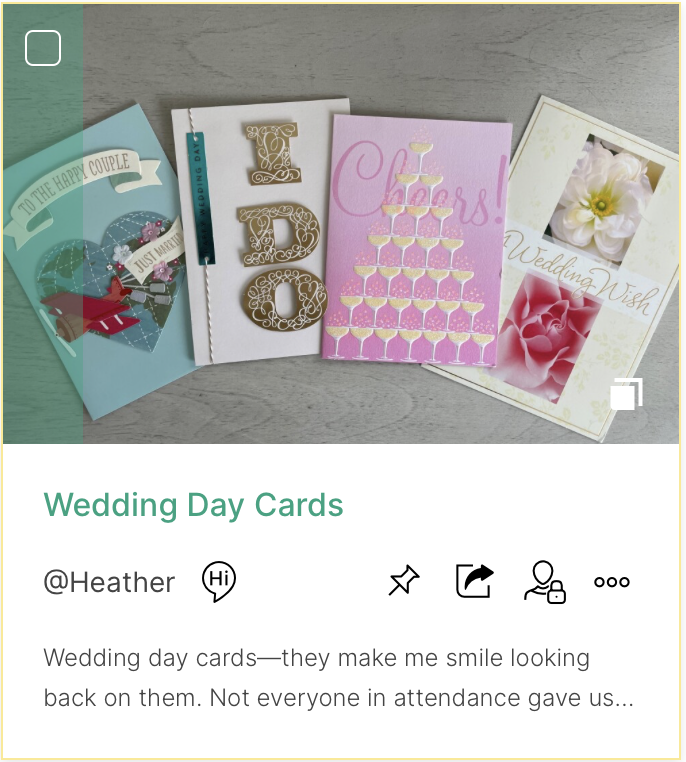
We view the Artifcts timeline as the ultimate way to future proof your history by, first and foremost, revealing gaps in the life moments you've captured with your Artifcts. True story: When our co-founder Heather first looked at her personal timeline, she realized she’d never Artifcted anything about her wedding! Oops.

Once you know your gaps, you can then create new Artifcts to enrich your history with the stories and memories that have been left out. Another approach would be to start with Artifcts you’ve already created and add in videos and audio and/or supporting documentation for more color and context.  

Here's a great example of enriching a family history. It's one thing to know who created this painting:

Painting of a horse drawn carriage on a prairie

It’s another to hear first-hand what the artist was trying to capture and what the painting means, a generation later, to the artist’s son, Matt Paxton. Listen in -->  

Sharing family history in bite-sized mini-stories via Artifcts means you make feel-good progress a bit faster and family are more likely to tune in and listen to the whole story.

Steps to record audio or video inside the Artifcts app


Put Timelines to Work for You!

As you Artifct, we create your timeline automatically.

Assuming you have created a few Artifcts already, you will find your timeline by visiting your homepage and choosing "My Artifcts." You'll see the timeline option marked with a yellow "New!"

If your timeline is a bit sparse right now, check out the public Artifcts in our team's timelines for inspiration - @Heather and @Matt have shared many Artifcts over the past few years. 

As you explore Artifcts timelines and think about your family history, test out the built-in timeline features, because you never know from where inspiration may spring:

      • Switch between annual and decade views.
      • Flip your Artifcts from newest-to-oldest and oldest-to-newest.
      • Drag and drop to move any Artifct to a different year.
      • Add time period notes, per year, about key events or family history research gaps.

We have great FAQs about timelines and a quick video ready for you as well.

Share with Us 

We’d love to hear what you learn about your own history when you look at it anew as a timeline. Had you skipped key life events? Are there whole decades missing? What inspires you to fill in any gaps? You can write to us at Editor@Artifcts.com  to share!

Happy Artifcting!

###

© 2026 Artifcts, Inc. All Rights Reserved.
Read more
My Family Wants Me to Tell My Stories. Help!

Feeling pressured to tell your life stories?

Has a loved one given you a questionnaire or a book to write in about your life that feels like another to-do?

Does it contain absurdly challenging and broad questions like, "What's one of the most important moments of your life?"

Are you receiving tips on how to “express yourself” or make your stories “entertaining," "thoughtful," or "compelling" and don’t really know where to begin?

(Are you the one creating the pressure?! Keep reading. Today's article is also for you!)

The Story Burden: What Is It?

Maybe you're not a great writer, maybe you don't want to commit the time, or maybe you don't think you have good stories to tell. But "they" are asking you to write or record your stories anyway and maybe even throwing money at it via well-intentioned gifts to encourage you. That is what we call the "story burden."

We know the pressure comes from a heartfelt place. Our friends and family may think we and our stories are worth preserving and sharing. And the storytelling industry wants to help us structure our stories to capture people’s attention in an increasingly distracted world.

At the same time, these story pressures can snowball and become a giant turnoff. The well-intentioned tips, classes, and frameworks may backfire and prevent us from making progress. And progress, not perfection, is what matters, just as much as what “they” want. Right?

Set Your Own Goal

You can't get there, if you don't know where you're going. What is your goal in recording your stories, no matter the format you select? Perhaps your goal looks like one of these:

      • Private, diary-like reflections that maybe you'll share one day with a chosen few.
      • Recording bits of your personal and family history to share your knowledge with your loved ones.
      • Capturing moments and memories that made you and others smile before the details slip away. These stories could make up the pieces to a great memoir one day!

No matter your goal, consider the strategies we've gathered below to see if any will help you make progress without that burden stories can create.

Time-Tested Strategies to Capture Your Stories

STORY PROMPT BOOKS AND CHECKLISTS

Lacking inspiration or searching for a jumping off point? Download a free checklist of interview questions. A great question source is the independent non-profit StoryCorps (check out the podcast, too) and it's FREE collection of life story questions aross 17 categories. Or you could download one of our many Artifcts Inspiration Lists to work through at your pace. These resources will avoid set schedules and fixed costs so you don't have to worry if you fall out of sync with their pace or wonder if you're getting good value for your money. It's free or a one-time fee!

If you're motivated by, let's say, a treat now and then, you could even eat your way to stories. One of our members shared with us how excited their family was to answer the questions wrapped around each of these caramels during the holidays. Talk about low pressure! 

SUBSCRIPTION STORY SERVICES

Need more motivation? Subscription services like Storyworth and many others can send you regular prompts by email or have someone call you and by answering them in a timely fashion, by yearend, you’ll have enough fodder to complete and purchase your responses in a book format. For additional fees, you can even add color photos, additional pages, and special covers.

SUPPORT FROM A PRO!

Worried you won't find the time to capture your story without the help of a real human? Hire a life story biographer to interview you and write your story. Whether a short 30-minute session to scratch the surface or a full life story multi-month endeavor, you can find an option to fit your goals and budget and remove the pressure from you to pull it all together. There are an abundance of companies that will do this and range greatly in price. If this is of interest to you, check out our partners, Whole Story Productions and LifeBook Memoirs

Bite-Sized Stories with Artifcts 

We heard a lot about the story burden as we began the research for what became Artifcts. We knew we had to do better and create something innovative that would avoid the story pressure while integrating the best of the tried and tested techniques of story telling AND sharing.

Let's begin at the very beginning. WHAT you choose to Artifct speaks volumes. The fact that you chose to take a moment and document THAT item lets your loved ones know that it mattered to you. The "story" becomes a bonus, a bonus that can be one simple word—e.g. Dad’s—or a 5,000+ word story.

Once you decide WHAT to Artifct, we try to make it as easy as possible to craft a story. If staring at a blank screen leaves you speachless (or wordless), we provide story-writing prompts to help you get started. Pick a prompt and go! Remember, it doesn't have to be perfect, you just have to start. 


Artifcts story-writing prompts. Pick one and start! 

We also designed Artifcts so you can proceed at your own pace. No pressure, no deadlines. You don't have to worry about missing a week or skipping a question. An Artifct a day, two hours on a Sunday afternoon, seasonal themes, or work your way through a collection, object by object ... whatever works for you! No stress, no quota to meet. 

WHAT you choose to Artifct already speaks volumes.

Artifcts are also easily shareable to loved ones or professionals who may be assisting you with family history research, writing a memoir, or creating a family videography, saving you countless hours searching for, sharing, and annotating the materials when you’re ready to take that next step. 

If your family is asking you to share your stories, take it as an invitation—not a burden. You don’t have to write a memoir or capture everything at once. The most meaningful stories often begin with a single object and the memory it holds. With Artifcts, each belonging becomes an easy starting point—a photo, a keepsake, a recipe card, a travel souvenir—each one unlocking a story worth preserving. Don’t let overwhelm stop you or worry about where to begin. Simply choose one object, tell its story in your own words, and start today.

###

© 2026 Artifcts, Inc. All Rights Reserved.

Read more
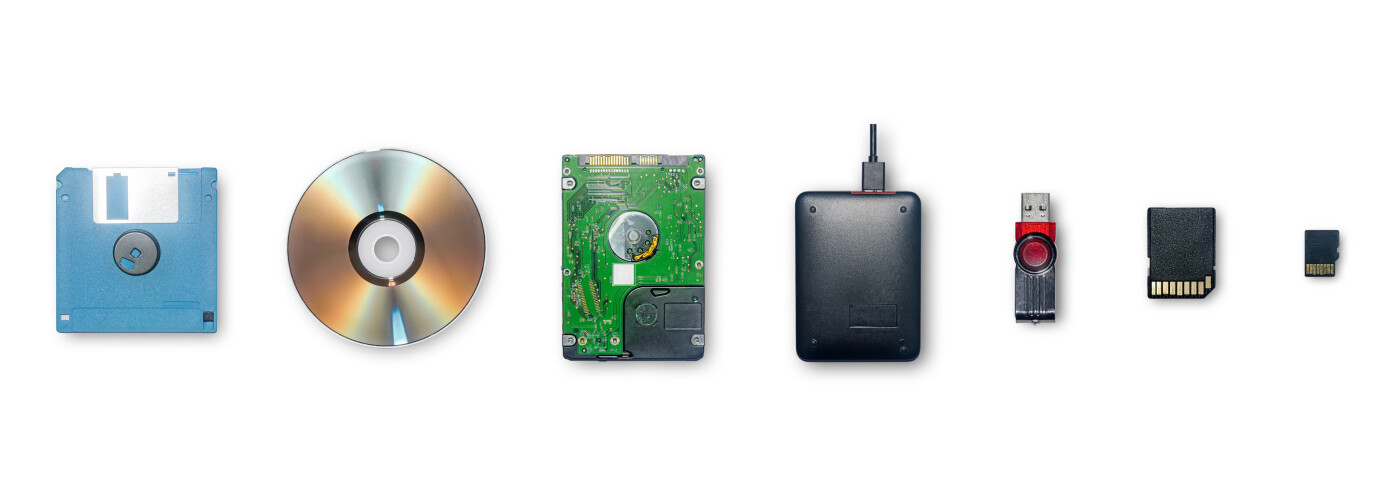
15 Years in Storage: Now What? It’s Time to Organize 'Stuff'

"I said I would go through it someday. I know I don’t need it all. But there it sat for over 15 years while I paid for the storage. I couldn't even remember what was in storage, much less enjoy it.” That’s what one Artifcts Community member of the boomer generation told us recently. We know she is not alone. 

According to an AARP magazine review of commercial storage trends, the older you are, the longer you keep items in storage. And, on average, boomers only visit their storage units once per month. How critical is that storage? How much cost and uncertainty does it create? Maybe, we need to take a minute to talk about the proverbial elephant in the room, or in this case, the storage unit.

“Our family moved a lot over the span of 20 years, and I was in constant survival mode. There was no time to ponder what we kept and what we let go of much less the good stories to pass on,” said another Artifcts Community member. He then proudly (or rather sheepishly) shared that that is how they ended up one time moving a trash can still full of trash. 

He was trying to justify to himself why he and his partner kept moving the same ‘stuff’ from house to house, even if only to put back in storage in the next garage, closet, and attic. (And that eventually became a downsizing adventure of epic proportions. Read about it here.)

We have also heard from people who held onto items and expressed some version of, “Surely it will still be worth something, and I can sell it,” only to find it degraded over time in the hot attic, the style or material was no longer in vogue when recovered from the basement, or some other reason meant that no, it was a lost cause. And still others have confessed to using storage for items and sometimes nearly whole estates they have inherited and did not have the time, interest, or heart to go through.

Surely it will still be worth something, and I can sell it...

Sound familiar? Or think you're immune? Given today's demographics and the impending great wealth transfer, we are all at some point going to have to encounter this very dilemma--too much 'stuff,' not enough space, and the desire to preserve and share the family memories and stories behind those keepsakes.

why do people put belongings into storage

How to Make the Most of the Money We Spend on Storage

Keep in mind, storage is not always at an offsite property where you pay a monthly fee. Want to talk about expensive storage, consider the climate controlled space you live in!

#1  KEEP TRACK OF WHAT YOU STORE

If nothing else, make a list and take pictures of the bulky and or valuable items in storage or heading into storage. Better yet, Artifct what you store. Otherwise, you know what they say...out of sight, out of mind. 

When you create an Artifct for the items heading into storage, you can also affix an Artifcts QR code sticker to the box to help you easily recall which box the item went into in its storage location. Bonus! Staring at a wall of boxes? Having an Artifcts QR code sticker on the outside of the box is a quick and easy way to figure out what's in the box without having to open or unpack. 

Tag Artifcted items with two tags: one that's simply #Storage and a second that's the specific location, such as #attic, #fronthallcloset, or #storageunit. That way with a single click on any #storage tag you can easily review what you're storing, and second click #attic, and "Oh, yes, that's what's up there. Maybe it's time to take it out of storage and use it."  

If you're working with a professional moving and storage company, they usually offer services to help you create an inventory for practical and insurance purposes. We encourage you to consider this the "if nothing else" bare minimum, because we believe you deserve more than an inventory of stuff.

#2  THINK AHEAD TO CAPTURE USEFUL DETAILS

Photos of the objects are important, including from multiple angles, especially if you live in an area prone to natural disasters. But we also recommend a video snippet that gives a 360-degree view if an item is particularly special or valuable. The video may capture details and imperfections you otherwise overlook.

Grab approximate dimensions and weight, too. This will help whether you need to move it again or file an insurance claim. 

You may also enjoy our ARTIcles with tips on Articting for Insurance as well as Artifcting for Estate Planning.

#3  ASK BEFORE YOU STORE, THEN STORE, AND STORE SAFELY

We know it might be hard to let go of that piece of furniture that's been in your family for decades or even generations. Likewise, those bins of old papers and photos that you know tell your family's story. It's all very tempting to store for someone someday to enjoy again.

      • If you Artifct it and share it, with one click you can ask someone if they want the item if you do not, using Artifcts as a decluttering app. If they do not want it, you can more easily now let it go to a new home.
      • If you choose to store it, and let's assume that space is climate controlled, please still think about what boxes and bins you are storing the item in. So many of the most popular bins you pick up at local shops will let off gasses ("off-gas" in archival terms) and ruin photos, film, and documents. And without proper care, textiles can also be a lost cause. You don't want to realize you lost the history and stored what's now trash. Use archival quality materials. Archival Methods offers great tips and supplies. (Visit Artifcts' Our Partners page for a discount on your next Archival Methods purchase!)

Ready to Make Some Decisions?

You’ve read about how long-forgotten belongings can quietly take up space and money, and you now have tools and strategies to track, document, and care for what you store. But real progress happens when you act.

Set aside an afternoon — or even just a couple of dedicated hours — to tackle what’s in storage. Pull things out, see what’s there, and be honest with yourself about what truly still matters. Use Artifcts to capture photos, videos, and stories of the items you decide to keep so their meaning isn’t lost, and let go of what no longer serves you by donating, gifting, selling, or recycling it.

Set aside an afternoon — or even just a couple of dedicated hours — to tackle what’s in storage...

It can feel overwhelming to face years (or even decades) of accumulation — but breaking it up into a manageable block of time turns a daunting task into a meaningful afternoon. Make a conscious decision about what happens next with those belongings, and you’ll not only reclaim physical space but also peace of mind. Your future self will thank you for finally confronting what’s in storage and making intentional choices about what stays and what goes.

###

© 2026 Artifcts, Inc. All Rights Reserved.

Read more
Should You Sell Old Jewelry? A Guide to Cashing In Without Losing Its Meaning

Earlier this month, one of our members wrote in to ask us what to do with the old jewelry she’s accumulated that she no longer wears or may have seen better days. Her predicament... 

I’ve just started downsizing and going through our bedroom closets. I’ve come across a rather large collection of jewelry pieces that I either no longer wear, didn’t remember I had, or are broken and in need of some TLC. I plan to Artifct the ones that I will keep and one day pass down to my daughter and granddaughters, but I’m not too sure what to do with the rest. I’ve heard gold is at record prices, and I’m wondering if I should sell some of it rather than simply donate to our local thrift shop. Any advice? 

Our first response after reading her note was, “You’re not alone.” We routinely get this question a couple of times a year, although we’ve yet to write about it. So, in honor of and in tribute to those of you who’ve asked and those of you who’ve wondered, this ARTIcle is all about what to do with the jewelry you no longer use.  

Many of us have jewelry tucked away in drawers — broken earrings, outdated rings, chains tangled in a giant knot, or pieces we just don’t wear anymore. With gold and silver hitting record-breaking prices in recent years, now might be a great time to think about selling those pieces for cash.  

Turning Old Jewelry into Cash — Without Losing the Story 

Precious metals markets have seen historic highs. Gold has surpassed multi-year records — recently trading above $5,300 per ounce according to multiple market reports — and silver has also surged, making old metal jewelry potentially more valuable than it has been in decades.  

That means your old gold bands, silver bracelets, and even scrap metal jewelry could be worth far more today than when you first set them aside. You might be wondering what do I do with it now, or you might be willing to let go of the pieces but concerned about preserving the memory.  

If you find yourself in this camp, Artifct the pieces you plan to sell. Photograph each piece and enter the details about where it came from, who owned it, and any events or moments connected to it. Consider adding a photo of you back in the day wearing the piece. Was the piece a gift from a loved one? Include a photo of them too, as part of your story. This way, the story lives on with Artifcts, even if the items themselves don’t stay in your hands. 

Looking for Ways to Sell Old Jewelry? 

Here are common places people sell their jewelry — each with pros and cons: 

  • Local Jewelers or Dealers: Professional buyers may offer competitive prices for gold and quality gemstones based on current metal prices. 
  • Pawn Shops: Quick and easy, but often lower payouts. 
  • Online Marketplaces: Platforms like eBay, Etsy, or dedicated resale sites such as Worthy can expand your buyer pool and potentially get higher prices — especially for vintage or branded pieces. 
  • Consignment: Let a jeweler or boutique sell for you — you may earn more, though it can take time. One of our business partners, National Rarities, may be able to help, especially with gold or silver pieces.  

Pro tip: Before selling, get multiple quotes, check reviews, and always know that a lot of jewelry gets melted down — its resale value is usually tied to metal content, not necessarily emotional or design value.  

Keeping and Passing Jewelry Down  

For many families, jewelry is much more than metal and stones — it’s a legacy. Perhaps it was your grandmother’s engagement ring, your aunt’s vintage brooch, or a locket your parents gave you on graduation. These pieces carry stories that transcend material value. 

Even if you don’t wear or display every piece, you can honor its meaning: 

  • Document Stories: Use Artifcts to upload photos and narratives — who gave it to whom, the occasion, what it symbolizes, and even how it was worn.
  • Add Context: Include letters or cards, old photos of the piece being worn, or transcripts of conversations about it.
  • Connect Generations: Invite family members to collaborate on the same Artifct so everyone contributes their memories or interpretations. 

Documenting, preserving, and sharing the stories behind the pieces through Artifcts keeps not only the jewelry itself, but the stories behind it in your family history, not just stored in a drawer. 


If you do plan for pieces to stay in the family: 

  • Make It Meaningful: Writing down why you’re choosing a particular heirloom for a specific family member adds intentionality and sentimental depth. We wrote extensively about this in Gift Your Loved Ones a Why.
  • Use Artifcts as a Legacy Tool: Artifcts can serve as a digital keepsake your next generation can revisit long after the physical piece changes hands — or even if it gets lost. Bonus! You can’t split a diamond ring in thirds, but with Artifcts, one member can inherit the ring, and all can inherit the Artifct of the ring. 
  • Fill Out the 'In the Future' Field: Don’t leave it to guesswork. If you know who you want to inherit the piece, use our In the Future Field to document your wishes, and then share with your attorney or estate planner. 


Our 'In the Future' field makes it easy to pass down jewelry and other keepsakes. 

Whatever You Decide — Keep the Story 

Whether selling pieces for their intrinsic value or keeping jewels close for future generations, Artifcting their stories ensures memories aren’t lost. Jewelry often carries layered personal meaning and Artifcts helps you capture that meaning forever, no matter what happens to the physical objects. 

###

You might also enjoy reading these related ARTIcles:

Your Future Family Heirlooms

Everything You Wanted to Know About Appraisals But Were Afraid to Ask

How to Artifct That Heirloom

© 2026 Artifcts, Inc. All Rights Reserved.
Read more
Artifcts: The New Love Language

In a world where messages often zip by in seconds and memories can slip through the cracks of daily life, Artifcts offers something beautiful: a way to say “you matter” that’s tangible, personal, and lasting.  

An Artifct isn’t just a photo, a story, or a digital file — it’s a love note stitched together with meaning. It’s a moment preserved in time, carefully captured and shared with intention. It becomes a topic of conversation, a happy memory shared, a new story discovered. Whether you’re celebrating a milestone, reconnecting across time and distance, or simply saying “I love you,” Artifcts transforms everyday objects and memories into meaningful expressions of affection. 

How Artifcts Becomes a Love Language 

At its heart, Artifcts is about connection: between family, across generations, and even between friends. When we slow down to document why something matters — not just what it is — we invite others into our world, our stories, and our hearts.  

Objects gain power when their stories are told. A simple recipe card becomes a warm memory of Sunday dinners. A well-worn baseball glove becomes proof of childhood dedication. These are the stories that make the Artifcts priceless. 

When you share an Artifct, you’re doing more than sending a file — you’re offering understanding, appreciation, and connection. 


A special Valentine's Day gift from mother to daughter. Sorry, this Artifct is private! 

Artifcts: Love Across Time and Distance 

One of the most magical aspects of Artifcts is that it lets you share love no matter where you are. Whether family members are across town or across the globe, an Artifct carries emotions and memories in a way that text messages and social feeds simply can’t.  

You can preserve: 

  • Family traditions and heirlooms
  • Stories and mementos from loved ones who’ve passed on
  • Milestones and awards big and small
  • Meaningful moments and photos you never want to forget 

This shared remnant of life becomes a bridge between your world and someone else’s, a shared narrative that deepens relationships and invites ongoing conversation. 

Tips for Creating Truly Heartfelt Artifcts 

Ready to make Artifcts that resonate deeply with those you love? Here are thoughtful tips and tricks to ensure your Artifcts are full of heart value: 

🧡 1. Start With Why 

Every meaningful Artifct begins with a why — a reason that goes beyond the object itself. Ask yourself: 

  • Why does this keepsake matter to me?
  • What memory does this memento spark?
  • Why have I kept this item all these years? 

Share those answers as part of the Artifct’s description. 

📸 2. Combine Media for Richer Stories 

Blend photos, videos, and voice recordings to tell a fuller story. Hearing someone’s voice or seeing a moment in motion adds emotional depth that text alone can’t match. Whether it’s the history behind a treasured heirloom or the tale of a favorite trip, capturing details while they’re still fresh and in your loved ones own words adds richness that’s irreplaceable.

🗣️ 3. Include Personal Reflections 

A heartfelt Artifct isn’t just about facts, it’s about feelings too. Take a moment to reflect on: 

  • What this object means to you
  • How it connects to someone else
  • Why you’re sharing it now 

These reflections will help make your Artifcts feel personal and intimate. 

🎁 4. Share with Intent 

When you share an Artifct, think of it as a digital gift: add a message that tells the recipient why you chose to Artifct and share this item with them. Just like thoughtful gifts in real life, these intentional Artifcts become keepsakes of the heart. 

The Art of Saying “I Love You” with Artifcts

In a culture filled with fleeting interactions, Artifcts invites us to pause, reflect, and communicate what matters most. It’s more than documentation, it’s devotion. It’s a love language for our digital age. So whether you’re commemorating a birthday, sharing a treasured family memory, or simply telling someone you’re thinking of them, let Artifcts help you speak from the heart.  

This Valentine's Day as you pause for a moment to absorb all the positive in life, surprise someone—friend, sister, neighbor, professor, parent, son—with an Artifct!

Happy Artifcting! 

###

© 2026 Artifcts, Inc. All Rights Reserved.
Read more
What Should I Artifct First?

We get questions every day from people wondering what they should Artifct first. There’s no right answer, because the things you collect, accumulate, and inherit are as diverse as is the content of the world’s most amazing estate sale or flea market (or Grandmas' closet).

Of course, we try to help inspire you along the way. We have more than two dozen free downloadable inspiration checklists to help you get started. And we often write about different approaches to get started Artifcting or for those who think, “But I’m not sentimental.”

Today we’re sharing fun and thoughtful starter prompts in a series of lists to help anyone create their first Artifct or their 100th Artifct—whether it's sentimental, quirky, or just a favorite item with a cool backstory. Because the fact is the stuff we keep, and the mere act of taking seconds to Artifct that, can tell others more about us than the most formal or thoughtful of interviews or workbooks.

🧠 Memory-Based Prompts

      • What’s the oldest thing you own—and why do you still have it? 
      • Tell the story of a gift you’ll never forget (yes, even if you accidentally lost the item). 
      • What item reminds you most of someone you’ve loved and lost? 
      • What’s something you’d want your great-grandchildren to know you owned?

😂 Light & Fun Prompts 

      • What’s the weirdest item in your junk drawer, and why is it still there? No cheating. Go open it and Artifct that!
      • What’s your favorite T-shirt or mug—and what’s the story behind it? 
      • What’s something that you brought home from a vacation that still makes you smile? 
      • What's the silliest photo you've taken this year? Artifct the photo and the story behind it.  

🎶 Music, Pop Culture, and Hobbies 

      • What’s the first concert or event you ever went to? Do you still have the ticket or merch? 
      • Share an item related to your favorite movie, book, or band. 
      • What hobby item (camera, sewing machine, old bike) has the most history for you? 
      • What game, toy, or gadget meant the world to you growing up?

🏠 Everyday Meaning 

      • What’s one recipe card or cookbook you couldn’t live without? 
      • Is there a piece of furniture in your home with a backstory? 
      • What’s an item in your garage, attic, or basement you keep moving but can’t throw away?

💼 Work & Milestones

      • What item represents a proud work moment or accomplishment? 
      • Choose something from a graduation, award, or “big day.” 
      • What’s the story behind your first paycheck or ID badge?

These prompts aren’t just about choosing what to Artifct first—they’re invitations. Invitations to ask better questions, to listen a little longer, and to discover the stories that often surface only when we slow down together. Whether you’re sitting around the table at a family reunion, visiting grandparents, or catching up with loved ones you don’t see often enough, these moments can turn everyday conversations into lasting connections.

This year, let curiosity lead the way. Use these prompts to spark meaningful exchanges, uncover memories you’ve never heard before, and preserve the stories that matter most—while the people who lived them can still tell them in their own words. One Artifct at a time, you’re not just capturing objects or memories, you’re deepening relationships and building a shared history your family can return to again and again.

Happy Artifcting!

###

© 2026 Artifcts, Inc. All Rights Reserved.
Read more
From ‘Just Stuff’ to Family Gold: The Power of Story

If you’ve spent any time reading about downsizing, decluttering, or estate planning, you’ve probably seen this line repeated over and over: your kids don’t want your stuff. Full stop. End of story. 

Major publications from The Atlantic to The Wall Street Journal (WSJ) have documented this myth time and again. In one of the many pieces about family heirlooms and inheritance, the author, Robbie Shell, notes that many parents find themselves surprised when their adult children “turn down many more items than they accept” when offered keepsakes, highlighting a common reality: the things we think matter often aren’t wanted simply as objects without context. 

But based on what we see every day at Artifcts, that narrative is missing something important. 

Yes—your children may not want random stuff. An extra side table with no backstory? A box of unidentified knickknacks? Probably not. But meaningful things? Objects that hold memories, history, and connection? That’s a very different story. 

It’s Not About the Object. It’s About the Meaning. 

That dining room table where birthdays were celebrated, homework was done, and holidays stretched late into the night? That’s not just furniture—it’s a witness to family life. The love letters Grandpa sent Grandma during World War II? That’s not paper—it’s proof of a love that endured separation, uncertainty, and time. 


When items are stripped of their stories, they lose their power. But when you take a moment to document why something matters, everything changes. 

From “No One Wants It” to “It’s Been Rehomed!” 

We hear this transformation all the time from Artifcts members. 

An object sits untouched for years because no one understands its significance. Then the story is shared—the memory, the moment, the reason it mattered—and suddenly the response shifts. A sibling claims it. A grandchild treasures it. A family member who never would have raised their hand now says, “I had no idea. I’d love to have that.” 

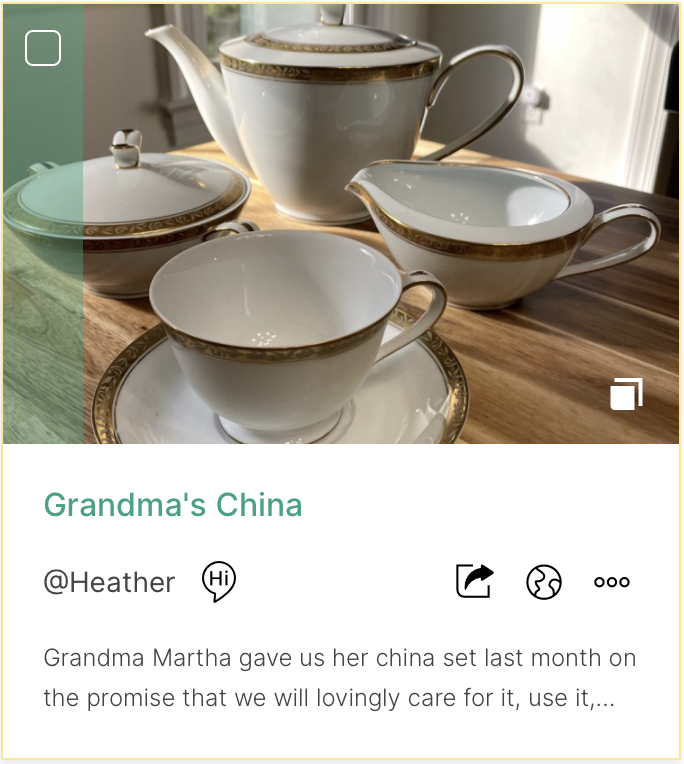
One of our favorite stories we’ve heard over the years is from one of our Artifcts members, Grandmom. She lovingly told of how no one wanted her beloved china set until one day, one member of her family decided to ask her about the story behind the china set. To everyone’s surprise, the china set was not a wedding gift, but rather a piece of family history with a great story.  

Turns out Grandmom was “kindly requested” to purchase a china set for 12 by the US Ambassador while stationed in Liberia, because “Well Martha, it’s high time you and Bobby start entertaining.”  

Once the story is known, the item isn’t just kept—it’s rehomed. In this case, happily rehomed with one of her three sons, with his daughter already claiming “dibs” on it once she settles down.  

The Power of Heart Value 

Not everything valuable has a price tag. Some things are priceless because they carry heart value—the emotional connection that binds one generation to the next. 

At Artifcts, we see how even the most seemingly insignificant objects can take on new meaning once their story is discovered. A recipe card. A tool. A piece of jewelry worn every day but never discussed. These items become bridges between past and future when their stories are preserved and shared. 

These items become bridges between past and future when their stories are preserved and shared. 

Our Takeaway? 

The myth isn’t that no one wants your stuff. The truth is this: people want the stories—and if you never ask, you’ll never know what might matter. 

Our co-founder Heather experienced this firsthand just the other week. Her father was cleaning out his cellar and came across the old family toboggan. Before tossing it in the Goodwill pile, he asked, “do you want this?” and much to his (and Heather’s spouse’s) surprise, the answer was a quick “yes!”  

So many meaningful objects are lost simply because no one paused to ask the questions: What is this? Why does it matter? What’s special about it? Do you want it? 

When you take time to ask your loved ones about the items in their lives—or invite them to ask you—you open the door to discovery. You uncover memories, moments, and meanings that might otherwise disappear. And once those stories are documented and shared, what seemed unwanted often becomes deeply desired.

Moreoever, simply asking your loved ones if they want an item gives them a chance to engage in conversation with you about the item, memories, and stories. With Artifcts the simple act of asking transforms uncertainty into connection. It turns “no one wants this” into “I didn’t know—and now I care.” 

Because in the end, it’s not really about ‘stuff’ at all. It’s about listening, learning, and preserving the stories that connect generations before they’re gone. 

###

You might also enjoy reading these related ARTIcles:

Who Wants Your Family China?

Gift Your Loved Ones A 'Why'

My Family Wants Me to Tell My Stories: Help!

© 2026 Artifcts, Inc. All Rights Reserved.

Read more
15 Decluttering Targets for Artifcters

People love to prescribe decluttering. Often, they even give you tips on how to get started and lists to help you think through what “goes” and what stays. More often than not, the lists typically go something like this: 

      • Is it broken? 
      • Is it a component (like a cable or remote) to a gadget you no longer own? 
      • Do those clothes fit anymore? Are they sporting holes? Are they still in style?
      • Do your kids still play with those toys? Or have they outgrown them?
      • Why do you need to hold on to legal and tax documents beyond their usefulness (e.g. 7 years for most tax documents)? 
      • Is it expired, as in cleaners and paints, make up and fragrances, or spices? 

And so on. All valid options for a quick declutter of your home. 

More frustrating is that the advice usually ends there or will weave in a, “Get rid of it, but take a photo first.” Really? I have 1,000s of photos to scroll through, I’ve forgotten the details, and, again, what am I supposed to do with the photos anyway? They'll just get lost in my every growin pile of digital clutter, no thanks. 

Why We Have to Talk About This 

We think standard decluttering advice is partly helpful, partly a clever ruse to distract you from and avoid an entire segment of ‘stuff’ - the stuff that also has sentimental value. "Time to let go," they will say. And how exactly should I do that?  

We’ve tapped the Artifcts Community for a fresh take on decluttering targets full of all those sentimental, history-filled, "just cool," or "you never know what it might be worth one day" things that make decluttering especially challenging. We know how hard it is.  

Let us know how these targets help you and which are missing. And, when in doubt, call in a specialist to help! We provide some ideas and resources at the bottom of this article.

15 Decluttering Targets in the Age of Artifcts: Artifct, Share, and Let Go!

With contributions from Matt Paxton, star of the Discovery Channel series "Filthy Fortunes," host of the PBS series "Legacy List with Matt Paxton" and author of "Keep the Memories, Lose the Stuff." 

1. OLD CAMERAS (AND OTHER TECH GADGETS)

You know, the type that used actual film. And other gadgets that you remember the good ol’ days when you see. Anyone still hanging onto an original iPod?

* Expert tip: Like a passport, Artifct the camera and all the places it’s been! Then … how old are we talking? Maybe a local school or a child would be interested? If you want to sell it, you could check specialized marketplaces, including KEH Camera. As with any technology, please do not throw it away. Contact your local municipality about recycling, try tech vendors like Canon, or pop into local stores, such as Best Buy.

2. THAT OUTFIT YOU WORE ...

… when you graduated, honeymooned, won the big deal at work. If you’re Dolly Parton, yes, that sequin-embellished gown will likely go into a museum, so let’s just set those exceptions aside. For the rest of us mere mortals, you know the drill.

* Expert tip: Artifct it, and include a photo of you wearing it back in the day, if possible. 

3. CHILDREN'S ARTWORK

We all know it’s bountiful. So, let’s pick and choose what we keep, and no matter what, keep the stories. So, record the basics in each Artifct. They gave it to you when? How did they make it? What is it? Better yet, record them telling you and include the photo and video. There’s nothing like hearing those tiny voices again when they are all grown up.

* Expert tip:  Tag the Artifcts with their name and age or grade for easy sorting: #FavoriteChild #1stGrade. 

4. FURNITURE

Come on, we’ve talked about this! We know whole rooms in houses not to mention pricey monthly storage units exist that are bursting with furniture you remember from parents and grandparents or are considered family heirlooms but that no longer have a place in your current life. We keep these pieces because of the memories, stories, and emotions they evoke, not because we have an actual love of or even use for the mahogony dining room table from the 1980s.  

* Expert tip from Matt Paxton: If you’ve decided to try to sell the item, list it on Facebook Marketplace and if it doesn’t sell in, say, 48 hours, then move it over to a Buy Nothing group and get it out. Remember your time is worth at least $25 an hour; do not spend six hours selling a $100 item. And don’t forget – you already decided you don’t want it, and you have the memory on Artifcts, which will easily outlive the use of the furniture. Don’t let haggling over the price ruin your decision to make space in your home. 

5. HOLIDAY DECOR

There could be any number of reasons—it’s faded, maybe slightly damaged, out of style—why you never take it out to use or display anymore. But you likely have a lot of history with it to Artifct and share.

* Expert tip: If it’s still useful, consider getting it to a donation center a few weeks before the holiday so others can pick it up to enjoy! 

6. VALUABLES

Consider your crystal, jewelry & watches, and collections (coins, stamps, statues, art): Are they worth more to you as cash to reinvest in other items you will care for or use more? Or could they be of greater value to someone else in the family? Don't even get us started on collections of dubious value that you're holding onto just in case the value sky rockets. Take a hard look.

* Expert tip from Matt Paxton: I tend to Artifct the item and share it with my family members to see who has the best memory or story of the item before then making the final decision to sell it or gift it (and to whom). To help with your sell vs. gift decision, seek out the best industry specific site to price the item (e.g. Worthy.com for a wedding ring) or try Artifcts new ARTIAssist feature to see what similar items have recently sold for and at what sites. 

7. HERITAGE AND HISTORICAL ITEMS

Baby bassinets, antique gowns, family bibles, tools of trade, we pass these items down through the generations, often with little care for their preservation. And they take up a lot of space, especially if you are the ‘family keeper’ and have the majority of the items.

* Expert tip:  Small museums, historical foundations, and even professional archives may be interested and will in fact preserve them! Here are tips if you are considering donations to archives and similar.

8. RECIPES

Hanging on to a cookbook for a single recipe that was beloved? Combine a photo with your secret methods and ingredients and send that book on its way. And if you have a mess of recipes from a loved one that you never make but are holding onto just because, photograph the collection for a single Artifct, along with any singleton standouts, and then recycle.

* Expert tip: For truly special recipes, consider preserving or framing them. Maybe even turn them into something new, like this Arti Community member did with her mother's rolls recipe.  

9. PHOTO ALBUMS

If you have only one or two albums, this is really not a good category for you. If you have more, and they sit in shelves and boxes never opened, consider whether now is a time to digitize the pictures and Artifct the memories. Maybe you’ll even opt for archival-quality photo books to recast the past with fresh perspective in a coffee table friendly format!

* Expert tip from Matt Paxton: Trim down the massive collection to a more manageable pile before Artifcting, digitizing, printing for photo books, or sorting and gifting to relatives. Get rid of what you no longer need: duplicates, negatives (you haven’t used them yet, you don’t need them), generic landscapes (e.g. beaches and mountains with no identifiable people), and pictures of people you don’t know or don’t like. It’s okay to throw away pictures of your former in-laws that you haven’t spoken to in 20 years.

10. T-SHIRTS 

These are sneak-y! Durable, especially if they end up in the back of the closet or bottom of the drawer, as well as inexpensive, gift worthy, and great mementos. Suddenly you have dozens, some don’t fit or have yellowed stains, and/or they are otherwise ready to be retired. Some you might elevate to framing, others to those popular t-shirt quilts, a few in good condition to vintage clothing shops, and the rest, simple Artifcts with great stories.

* Expert tip from Matt Paxton: You could always offer them up to your favorite niece and Artifct you and her wearing your favorite Duran Duran t-shirt 30 years apart! If you think it’s cool, it’s probably cool to the next generation, too. Worst case scenario, Artifct them and give them to Goodwill. My biggest tip here is to make sure you are detailed when Artifcting. Give the details of the band, when you saw them, who you hung out with and WHY you loved the t-shirt so much. My kids loved my skateboarding t-shirts when they found out I met Tony Hawk at Mt. Trashmore in 1989. The beauty of Artifcting is that it allows you to put your family and friends in the moment with you to enjoy the memory as much as you do 

11. BASEBALL (FOOTBALL ETC.) TRADING CARDS

Those skinny boxes literally pile up, and you never kept them as pristine as you think. Share them with a neighbor kid or post them on freecycle or similar. Just move them on out.

* Expert tip: Suspect there’s hidden value? Artifct them and try Artifcts new ARTIAssist feature to see what similar items have recently sold for and at what sites.   

12. GLASSWARE, CHINA, SILVER

If you’re using them, this category is not for you. If you are dusting and polishing for "remember when" or "they belonged to {loved person}," Artifct them instead, check with family, and if there’s no taker, out they go.

* Expert tip: Don't be afraid to break up a set or re-purpose pieces. We've heard tales from our members of how no one wanted an ENTIRE set of China, but one child wanted the tea cups, and another wanted the bowls, and yet another wanted a couple of plates to add to their gallery wall.  

13. BOOKS

Do you catch yourself reflecting on a funny passage, what was happening or where you were when you last or first read it, or maybe where you got it, and saying “Nope, it can stay for now.” How many books are in this category? Don't lie. Books carry intellectual and personal growth and even sometimes spiritual weight. But even with books you can capture the essence of what it means to you and move it on to the next reader.

* Expert tip: Check between the pages and then consider taking them to school book drives, local donation centers, or even shops like Half Priced Books. 

14. STUFFED ANIMALS

Okay parents, confess, how many of these creatures are more sentimental to you than your child (or future unborn grandchild)? And what about all those that are forgotten moments after receiving them? Or loved soooo much that they are probably a health hazard? Before they declutter those stuffed animals too aggressively, read this ARTIcles story.

* Expert tip: Local requirements vary, but you can offer cleaned toys to some fire stations and animal shelters and lovingly reminisce with Artifcts. 

15. TRAVEL MEMENTOS

We’re willing to bet if you collect them all in front of you, you could pick out the especially valuable ones to you from the lineup. Maybe the details have even grown pret-ty fuzzy. A memento might be cool, but if you feel a clutter crisis closing in on you or you simply want to lighten the load, it’s time to pare it back. 

* Expert tip: Matching items to photos or stamps in a passport, maybe with a bit of audio from you, is a fabulous way to relive those travels and offer a final tribute as you send it off to a new home. 

Sometimes We Need a Little Help

Decluttering help can take many forms, depending on your circumstances. Here are some additional resources that might be just what you need. 

Keys Guild. Collectibles advisors trained through the Keys Guild can provide onsite services to identify items of value for resale and the optimal outlets (i.e. top dollar) for selling the items. To learn if there is a Key in your area, use this contact form

NAPO. The National Association of Productivity & Organizing has a large nationwide membership base ready to help you organize, declutter, and more. Find a NAPO professional in your area by zip code here

Archivists. These professionals may be less familiar to you, but they are often working for or collaborating with institutions of all sizes and types that take donations. Consider original works of fiction or non-fiction; war memorabilia; scrapbooks, journals, letters, and diaries; and media (photographs, slides, film, even websites too). You can learn more and locate an archival consultant at The Society of American Archivists

Auction houses. Valuable items and collections may be a good fit for auction. Auction houses vary, some with broad specialties, others niche. Many now offer online auctions, not just traditional raise your paddle affairs. Their appraisal services for single objects and entire estates can also help inform which of your items will go up for auction or sale in any venue (e.g. auction house, 1st Dibs, Ebay, Etsy, Facebook Marketplace) and which maybe have more sentimental value. 

Keep the Memories, Lose the Stuff.” If you’re in more of a “Let me think on it,” or do-it-yourself mindset, we recommend this book. Matt Paxton joined the Artifcts board years ago, but long before we even met him, we were fans of his book because of its practical advice, engaging stories, and litany of self-starter tips and resources.  

Happy Artifcting!

###

© 2026 Artifcts, Inc. All Rights Reserved.

Read more
What Should You Do with Old Holiday Cards?

The holidays leave behind more than sweet memories and leftover cookies—they often leave behind piles of holiday cards, envelopes, and handwritten sentiments that can accumulate year after year. Many of us have bins tucked away in closets filled with cards we think we’ll revisit someday. But what if there was a better way to preserve the heartfelt thoughts without keeping a mountain of paper?  

At Artifcts, we believe you can keep the memories and reduce the clutter creating a win-win for all. Read on to learn how to give your holiday cards a second life that actually honors the story behind them. 

Rethink What You’re Really Saving 

Holiday cards are meaningful because of the thought and connection behind them—not because of the paper they’re printed on. Most cards are never meant to be kept forever, yet many of us hang onto them like keepsakes.  

According to a recent article in the New York Post, 85 percent of Americans say they will not throw away their holiday cards this year, with the average reader claiming to have 17 cards. We get it! We like seeing our loved ones’ handwriting, and we love looking back at the old photos and re-reading the funny stories contained within. The beauty of Artifcts though is that you can capture the memory and meaning before letting go of the physical card.  

85 percent of Americans say they will not throw away their holiday cards this year...

Step-by-Step: From Card Clutter to Meaningful Memories

  1. Artifct the Best Ones 

Take a photo of your favorite holiday cards—the ones with truly personal, handwritten messages or special photos. Upload the images to Artifcts and add a story or description: who sent it, what the message meant to you, and why it stood out. You can even add audio or video too. This way, you preserve the heart of the card forever, even if the paper gets recycled later.  


One of our co-founder Heather's favorite holiday cards. Sorry, this Artifct is private!

Pro tip #1: Consider grouping cards by year or theme (e.g., “Holiday 2025”) so you can see how handwriting, designs, and messages change over time. Add a custom, private tag to the grouping so you can easily sort and search through your collection years from now. Our co-founder Heather uses a tag #frommattwithlove to quickly find the cards her husband has sent her over the years. 

Pro tip #2: Feeling overwhelmed by the number of cards? Group the photos into a single PDF and upload the PDF to Artifcts thus creating a single Artifct for all your cards this year.   

  1. Let Go Without Guilt 

Once you’ve preserved the memory with Artifcts you can recycle generic or less meaningful cards and maybe keep only a few select physical favorites if you really want. Downsizing your card collection from 17 (!) to three creates a more manageable, meaningful collection. This approach keeps holiday clutter under control while also preserving the memories, without bins and boxes taking over your home. 

It also helps you avoid the bin of forgotten cards. How many of us have that bin? And when was the last time we looked at it?  Feelings of guilt around tossing holiday cards are common but holding onto every single one can quickly become a burden rather than a joy. 

Creative Ways to Give Cards New Life 

Feeling creative? Hate the thought of simply recycling your old cards? If you enjoy repurposing things physically, here are some fun ways to reuse parts of old cards in lieu of recycling them: 

  • Cut out decorative fronts to make gift tags
  • Use images in a holiday scrapbook (with your Artifcts QR code inside!) 
  • Repurpose card pieces in crafts or family projects
  • Donate card fronts to local schools or nonprofits that reuse them  

These ideas let you enjoy the look and feel of your cards without storing them all year long AND ensuring the paper that they were printed on is kept out of a landfill.  

Make It a Holiday Habit 

In case you missed last week's ARTIcle, it should come as no surprise that we're all about habits here at Artifcts. Next time you finish celebrating (be it a birthday or a holiday), take a moment to Artifct your favorite cards. In a short time, you’ll have a beautiful digital collection of holiday love that you can revisit and share anytime with family, inspire future generations, or simply enjoy reflecting on year after year.  

###

Old cards, photos, and letters on your mind? You might also enjoy these related ARTIcles:

What Should You Do with Old Scrapbooks?

Rescue Mission! That's More Than a Photo

How to Artifct Cards & Letters

© 2026 Artifcts, Inc. All Rights Reserved.
Read more
At Artifcts We’re Talking #HabitChange in the New Year

As we kick off a brand new year, it’s the perfect moment to reflect on how small shifts in our routines can create lasting change. With 2026 underway, many of us are thinking not just about resolutions, but about building habits that genuinely stick and bring more meaning to our everyday lives.

Changing habits isn’t easy — especially when it comes to creating new ways of preserving memories, stories, and the things that matter most. Whether you’re looking to be more intentional about documenting family histories, organizing meaningful items, or simply wanting to make sure important moments aren’t lost, we're here to help.

At Artifcts, we're big fans of the book, Atomic Habits by James Clear, it's a must read in our view because it speaks to all of us no matter our day-to-day way of living. 

For example, are you the type of person for whom the moment an item is added to your to-do list you ignore it as though it were written in invisible ink? Or do you sweat that list out until it's done, hopefully as soon as possible, and then cross it off your list with great satisfaction? 

Yup, James Clear sees us all and has strategies to help. 

In case you haven't read, or have no interest in reading, his book, we've developed some practical strategies and insights to help you turn #HabitChange into lasting practices, and make 2026 the year you preserve what matters most in ways that are simple, sustainable, and personally meaningful. 

Read on for tips that will help you shape routines that support your goals — from starting new habits to keeping them — and bring purpose and clarity to how you care for the memories and items you treasure.

Three Habit Strategies for our Artifcts Community 

STRATEGY ONE 

Like everything else in life, to create new habits, you need to consider first what “rewards” you want from, in this case, Artifcting. Depending on your situation, maybe you identify with one of these, and it will help guide you to the right habit-based approach to Artifcting and what you do with your Artifct once you create it: 

  • I need to be better organized and in greater control of the ‘stuff’ around me. Consider our 5 Ways to Start Artifcting, room by room, most valuable, most cherished, that closet you hate to open … 
  • I want to make sure my loved one is not forgotten. Artifcting need not be a solo experience. Create an invite-only circle to share and remember those who you have lost. 
  • I want to document and share my family history. Invite-only circles on Artifcts are one place to start so that you can invite family in to see heirlooms, but social media groups are often another great source of information, and you can easily share your Artifcts into social media for more fact and family lore gathering. 
  • I love swapping good stories, laughing and remembering with friends and family. So try sharing an Artifct or two and see how that works for you; add audio or video too so your loved ones can hear your story in your voice.  

STRATEGY TWO 

Frame Artifcting as a "when" activity so it becomes intentional. The key here is to be very specific! 

  • "Every Sunday when my husband watches the football game, I'll grab my phone and create two new Artifcts." 
  • "When I add something into storage, I'll Artifct it first."
  • “When I buy something over $100, I will ask myself, “Is this an Artifct?” and Artifct it on the spot (with receipt!) and fill in the full details later. 
  • "When I unpack my suitcase, I'll Artifct my new mementos along with the photos from the trip." 
  • "Every Friday when my son brings his art folder home, I’ll Artifct his projects with him while he has an after-school snack.” 

STRATEGY THREE 

Try out what Clear calls "habit stacking" to incorporate Artifcting into your regular routines and existing habits. 

  • "Each season when I organize my closet, I'll Artifct any sentimental pieces, and then sort the items into three piles: keep, consignment, or donation." 
  • "As I review my estate plan each year, I will check that my Artifcts are included in the tangible assets memorandum."
  • “As I add an item to my daughter's baby keepsakes box, I will Artifct it. Then I will put the box away immediately.” 
  • "While we put away the holiday decorations each winter, we will take breaks. During the breaks we’ll Artifct special ornaments, cards, etc.” 

The best way to build a new habit is to start small — and start now. Create one Artifct. See how easy it is. No pressure, no perfection required — just one story, one moment, one memory captured.

From there, build a rhythm that works for you, on your schedule. One Artifct a week adds up faster than you might expect. By the end of the year, you’ll have 52 Artifcts, 52 stories, and 52 memories preserved — a meaningful collection of what matters most.

This is how preservation becomes a habit — not a task. Begin today by creating your first Artifct. Happy Artifcting!

###

© 2026 Artifcts, Inc. All Rights Reserved. 
Any mistakes in the interpretation of the habits to Artifcting belong to Artifcts. In fact, we would encourage you to download the free habit cheat sheets from the author at atomichabits.com/cheatsheet

Read more
Looking Back with Gratitude, Looking Ahead with Purpose

Dear Artifcts Members, 

As we step into a brand-new year, I want to pause and say thank you. Artifcts exists because of you—your stories, your trust, and your belief that the memories behind our things matter just as much as the things themselves. As we reflect on 2025, I’m filled with gratitude and pride for what we’ve built together. 

This past year was one of meaningful growth and exciting milestones. We partnered with Clutter Cleaner to help families facing downsizing and life transitions preserve what truly matters—the stories and significance behind their belongings. This collaboration reinforced our shared belief that letting go of things doesn’t mean letting go of memories. 

We were also honored to be named one of Family Tree Magazine’s Top Genealogy Tech Websites for the third year in a row. This recognition reflects our continued commitment to supporting families, historians, and everyday memory-keepers with thoughtful, accessible technology. 

In 2025, I also had the opportunity to join the Northern Trust “Secrets of Enterprising Families” podcast, where we talked openly about legacy, loss, and practical estate planning. These conversations are at the heart of why Artifcts exists—to make space for reflection, clarity, and connection across generations. 

On the product side, we reached a major milestone with the launch of ARTIAssist, our first AI-backed feature. ARTIAssist was designed to make creating Artifcts easier and more intuitive, helping members capture historical and factual details behind their most cherished keepsakes. This was a big step forward for us, and we’re just getting started. 

None of this would be possible without your continued support, feedback, and enthusiasm. You inspire us every day. 

Looking ahead to 2026, we’re excited about what’s to come: 

  • Continued refinement of ARTIAssist and other AI-powered tools to help you create new Artifcts with confidence and ease 
  • Virtual workshops designed to help you get the most out of every Artifcts feature 
  • And a growing team, bringing new ideas, energy, and expertise to better serve our community 

Thank you for being part of the Artifcts family and for trusting us with your stories. Here’s to a new year filled with reflection, discovery, and connection—and to preserving what matters most, together. 

With gratitude and warm wishes for the year ahead, 


Co-Founder & CEO, Artifcts 
Happy New Year ✨ 

Read more
Happy 12 Days of Artifcts!

The holidays have a way of stirring up memories—some wrapped in joy, some tucked quietly into the corners of our hearts. This year, Artifcts is celebrating those moments in a way that’s meaningful, creative, and deeply personal with the 12 Days of Artifcts holiday challenge. 

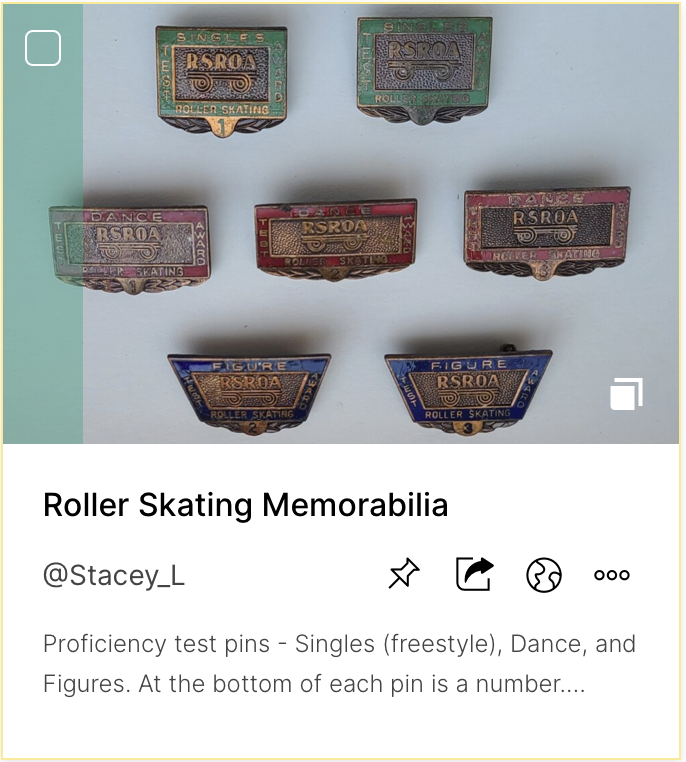
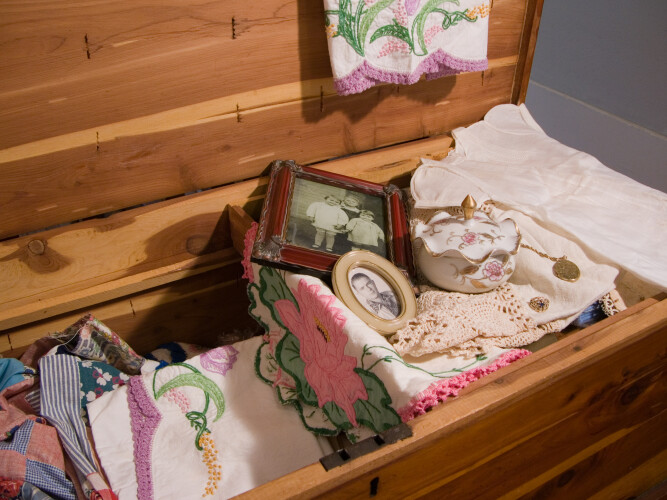
If you’ve been following along on our social channels, you’ve seen how powerful a single object can be when paired with a story. An old photograph. A travel souvenir. A well-loved family quilt. These aren’t just “things.” They’re touchstones to the people, places, and moments that shaped us. 


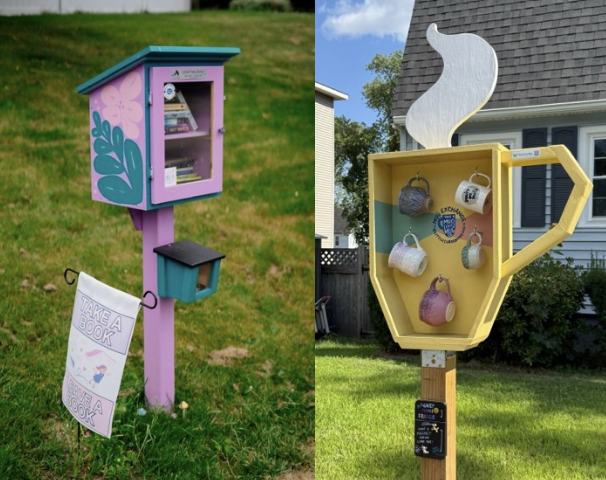
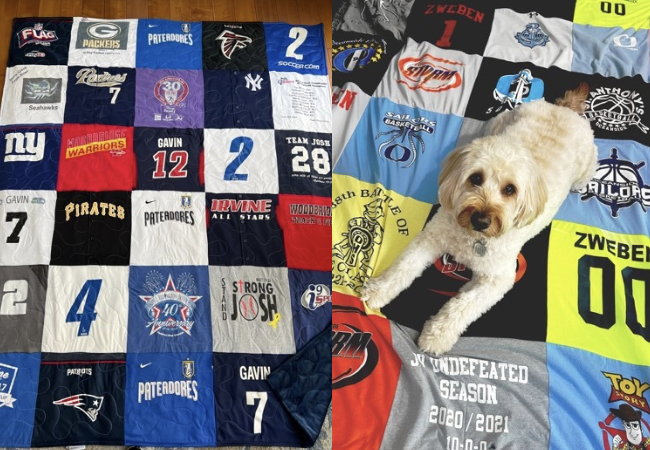
The first four days of our 12 Days of Artifcts challenge. Objects with stories, your stories!

That’s what the 12 Days of Artifcts is all about—and we’d love for you to join in the fun. 

Are You Up for a Challenge? 

We promise, our “challenge,” doesn’t involve Tik Tok or ice buckets, and it’s simple enough to do even if you’ve never done one of those “I-saw-it-on-the-evening-news" challenges before. 

Over 12 days, we share 12 different themes, one per day via our Facebook and Instagram pages. Each theme invites you to choose a meaningful item from your life and Artifct it—capture a photo, add the story behind it, and preserve the memory digitally for yourself and for the people you love. 

By the end of the challenge, you’ll have: 

  • 12 Artifcts
  • 12 memories preserved
  • 12 stories ready to share with family and friends—now or for generations to come 

There’s no right or wrong way to participate. Some people choose deeply sentimental items. Others lean into lighthearted or unexpected objects. Every Artifct tells a story worth saving. 

Every Artifct tells a story worth saving. 

A Theme for Every Kind of Memory and Artifct 

Each day’s theme offers a gentle nudge to look at your life through a new lens. One day might spark a story about family traditions. Another might bring back a personal milestone, a favorite place, or a meaningful relationship. Some themes make you smile instantly; others may surprise you with memories you hadn’t thought about in years. That’s part of the magic. 

You don’t need museum-worthy artifacts. The beauty of Artifcts is that meaning isn’t measured by monetary value—it’s measured by connection. If an item holds a story only you can tell, it belongs here. 


Pick a theme that works for you and join in the fun as we count down the 12 Days of Artifcts!

Why Participate? 

Because memories fade—but stories don’t have to. 

The 12 Days of Artifcts is more than a creative challenge. It’s an opportunity to pause during a busy season and reflect. To document the moments that matter. To create something lasting that you can revisit, share, and pass on. 

Many participants tell us that once they start, they can’t stop. One Artifct leads to another. One memory unlocks three more. Before you know it, you’re building a living archive of your life (and your holidays!)—your way. 

Share the Joy 

One of our favorite parts of the challenge is seeing how people share their Artifcts with others. Share yours on social media, tag us, and use #12DaysofArtifcts to be part of the community countdown. Or keep them private, sharing only with family and close friends. However you participateyou’re contributing to something meaningful. 

And don’t worry, this isn’t about perfection. It’s about presence, and preserving lasting memories and stories during the holidays.

It’s Not Too Late to Start 

If you’re reading this and thinking, “I missed a day… or five,” take a deep breath. You’re right on time. 

The 12 Days of Artifcts isn’t a race. Start today. Pick the theme that speaks to you most. Go back and fill in the others when you’re ready. The stories will wait for you. All that matters is beginning. 

As we count down the 12 Days of Artifcts, we invite you to reflect, remember, and create. At the end, you won’t just have a collection of items—you’ll have a collection of stories that only you can tell. 

So choose your first theme. Find your first item. And Artifct that {old photo, handmade ornament, special gift} or other holiday keepsake. From all of us at Artifcts, happy holidays and happy Artifcting! 

###

© 2025 Artifcts, Inc. All Rights Reserved.
Read more
Articles Themes
Contact the Editor
Have feedback? Artifacts to feature? We’d love to hear from you.
Your privacy

This website uses only essential cookies to provide reliable and secure services, streamline your experience, allow you to share content from this website on social media, and to analyze how our Site is used. Learn more about these cookies and cookie settings.

Accept & Continue
Oops! This Web Browser Version is Unsupported

You received this warning because you are using an unsupported browser. Some features of Artifcts will not be available or will be displayed improperly until you update to the latest version or change browsers.

Close
Image for unsupported banner Oops! This Web Browser is Unsupported

You received this warning because you are using an unsupported browser. Some features of Artifcts will not be available or will be displayed improperly until you update to the latest version or change browsers.

Unsupported banner close icon Close