
Give the gift small icon
Give the gift of Artifcts!
HELLO!
Give the gift big icon
Give the gift
of Artifcts

The perfect gift for the person
in your life who has everything.

Give a gift Close

At Artifcts We’re Talking #HabitChange in the New Year

January 07, 2026

As we kick off a brand new year, it’s the perfect moment to reflect on how small shifts in our routines can create lasting change. With 2026 underway, many of us are thinking not just about resolutions, but about building habits that genuinely stick and bring more meaning to our everyday lives.

Changing habits isn’t easy — especially when it comes to creating new ways of preserving memories, stories, and the things that matter most. Whether you’re looking to be more intentional about documenting family histories, organizing meaningful items, or simply wanting to make sure important moments aren’t lost, we're here to help.

At Artifcts, we're big fans of the book, Atomic Habits by James Clear, it's a must read in our view because it speaks to all of us no matter our day-to-day way of living. 

For example, are you the type of person for whom the moment an item is added to your to-do list you ignore it as though it were written in invisible ink? Or do you sweat that list out until it's done, hopefully as soon as possible, and then cross it off your list with great satisfaction? 

Yup, James Clear sees us all and has strategies to help. 

In case you haven't read, or have no interest in reading, his book, we've developed some practical strategies and insights to help you turn #HabitChange into lasting practices, and make 2026 the year you preserve what matters most in ways that are simple, sustainable, and personally meaningful. 

Read on for tips that will help you shape routines that support your goals — from starting new habits to keeping them — and bring purpose and clarity to how you care for the memories and items you treasure.

Three Habit Strategies for our Artifcts Community 

STRATEGY ONE 

Like everything else in life, to create new habits, you need to consider first what “rewards” you want from, in this case, Artifcting. Depending on your situation, maybe you identify with one of these, and it will help guide you to the right habit-based approach to Artifcting and what you do with your Artifct once you create it: 

  • I need to be better organized and in greater control of the ‘stuff’ around me. Consider our 5 Ways to Start Artifcting, room by room, most valuable, most cherished, that closet you hate to open … 
  • I want to make sure my loved one is not forgotten. Artifcting need not be a solo experience. Create an invite-only circle to share and remember those who you have lost. 
  • I want to document and share my family history. Invite-only circles on Artifcts are one place to start so that you can invite family in to see heirlooms, but social media groups are often another great source of information, and you can easily share your Artifcts into social media for more fact and family lore gathering. 
  • I love swapping good stories, laughing and remembering with friends and family. So try sharing an Artifct or two and see how that works for you; add audio or video too so your loved ones can hear your story in your voice.  

STRATEGY TWO 

Frame Artifcting as a "when" activity so it becomes intentional. The key here is to be very specific! 

  • "Every Sunday when my husband watches the football game, I'll grab my phone and create two new Artifcts." 
  • "When I add something into storage, I'll Artifct it first."
  • “When I buy something over $100, I will ask myself, “Is this an Artifct?” and Artifct it on the spot (with receipt!) and fill in the full details later. 
  • "When I unpack my suitcase, I'll Artifct my new mementos along with the photos from the trip." 
  • "Every Friday when my son brings his art folder home, I’ll Artifct his projects with him while he has an after-school snack.” 

STRATEGY THREE 

Try out what Clear calls "habit stacking" to incorporate Artifcting into your regular routines and existing habits. 

  • "Each season when I organize my closet, I'll Artifct any sentimental pieces, and then sort the items into three piles: keep, consignment, or donation." 
  • "As I review my estate plan each year, I will check that my Artifcts are included in the tangible assets memorandum."
  • “As I add an item to my daughter's baby keepsakes box, I will Artifct it. Then I will put the box away immediately.” 
  • "While we put away the holiday decorations each winter, we will take breaks. During the breaks we’ll Artifct special ornaments, cards, etc.” 

The best way to build a new habit is to start small — and start now. Create one Artifct. See how easy it is. No pressure, no perfection required — just one story, one moment, one memory captured.

From there, build a rhythm that works for you, on your schedule. One Artifct a week adds up faster than you might expect. By the end of the year, you’ll have 52 Artifcts, 52 stories, and 52 memories preserved — a meaningful collection of what matters most.

This is how preservation becomes a habit — not a task. Begin today by creating your first Artifct. Happy Artifcting!

###

© 2026 Artifcts, Inc. All Rights Reserved. 
Any mistakes in the interpretation of the habits to Artifcting belong to Artifcts. In fact, we would encourage you to download the free habit cheat sheets from the author at atomichabits.com/cheatsheet

Share With Friends
7 likes
What's New at Artifcts
Decluttering for Dementia

If you’ve ever needed a better reason to stick to or create a resolution to declutter your home, this one might do it: It’s good for your brain. And we’ve seen it firsthand.  

In today’s piece, we talk openly about facing a loved one’s dementia diagnosis, and how, maybe to your surprise, decluttering can help. We are grateful to include specialist insights throughout from Cathy Rice, certified senior move manager and life-long educator.  

________________

Dementia is heartbreaking, terrifying, and, so far, irreversible. Even if a loved one is in many ways themself, we know the disease is slowly changing them and shortening their life. 

Some of us react to this sort of diagnosis with a desire to do something, anything, to help, to make our loved one’s life in any way better, to take the tiniest measure of control over the disease. We dive into a multi-prong tactical to-do list that we must continuously update as together we progress from diagnosis, to sharing that diagnosis with others, to learning how to manage the disease and being as prepared as possible across legal, medical, financial, and insurance fronts.  

As we seek out ou own ways to help, we expect to find information about diet, exercise, and social activities, and we do. What we were surprised to find recently while browsing HFC, Shining a Light on Alzheimer's: 5 Brain Health Habits was the hot mainstream topic of decluttering.  

Benefits of Decluttering for Those With Dementia 

You know decluttering well from TV shows like The Gentle Art of Swedish Death Cleaning and The Home Edit, and books including Matt Paxton’s famous Keep The Memories, Lose The Stuff. Decluttering to support someone with dementia in some ways is like decluttering for people with normal brain health. Too much stuff can literally be dangerous if we cannot safely navigate our homes. Some of us are also more sensitive to feeling drained by too much stuff lying about around us.  

Of course, when you have dementia, decluttering has other benefits, too. 

      • Reduce stress. Stress reduction is imperative when you have mild cognitive impairment or dementia. And decluttering can mean clearing away some of the to-dos that come to mind when people see stuff to tidy, dust, or keep safe. Have you experienced a loved one with dementia hiding things to keep the item safe? I am sure you have because it's an incredibly common behavior. 
      • Improve sleep. Quality sleep is critical for the brain’s nightly reset. Busy surroundings can lead to busy brains and may even sow confusion in bedtime routines.  
      • Safety, safety, safety. We know, decluttering is about aging well in place for all of us as we age, but it’s especially true for people with health conditions, like dementia, that can make them more vulnerable to confusing and distracting surroundings.
      • Avoiding anything close to hoarding. Keep in mind, hoarding disorder is its own condition, but managing even the clutter of daily life is more difficult when you have dementia because of increased challenges in making decisions.  
      • Purpose. We know finding purpose at any age is important. Here we are talking about giving the decluttering process a purpose to help your loved one part with more items than they might otherwise be willing to do. Purpose might be supporting a local shelter, resupplying charitable builders with tools, or reconnecting with loved ones when you pass down items. You get the idea. 

Decluttering for Dementia

We’ve prepared these tips from our own practical experience helping our loved ones with dementia as we try to help make sense of it all, including one’s surroundings.* In some cases our loved ones were also decluttering to downsize and move. In others, it was more of a practical decluttering, for safety and mental health.  

* We are not medical professionals. If you are considering radical changes to your loved one’s home enviornment, you should consult first with a specialist licensed in dementia care.

LIGHTS ...

Before you start your declutter, check the lighting throughout the home. Living like a cave troll generally does no one very good. But dementia is not only about memory. If you can see well what’s around you, it’s easier to make sense of your surroundings (and of course it’s safer). Make it easy to see the light switches, too. Understanding and interpreting surroundings, like a white switch on a white wall, can become an impediment for someone with dementia. 

Cathy’s Insight: Adding felt pads to any lighting fixture to differentiate the feel of the switch from the fixture itself or a simple icon as a visual cue helps to support the brain's understanding of the item with its function.

… CAMERA, ACTION!

Start from the ground, and work your way up.

What’s on the floor? Stacks of stuff? Wandering power cords? Rugs that slip and shift? Take a fresh look. Then move your eye upward to the surfaces of counters and entry tables. If someone needed to quickly grab onto a surface to prevent a fall, would they have a secure place to grab?  Is there a clear and secured place for common objects, like house keys?

Cathy’s Insight: People with dementia often find comfort in knowing that their stuff is close-at-hand. Create a "command center" within easy reach of their favorite chair for essentials (eyeglasses, books, pencils, fidget items, etc.).  

And about those rugs … if you must keep them, use carpet tape to secure edges to the floor. The same applies to small storage trays, which you can secure with surface-safe tape or museum putty.

Favor simple home furnishings.

As we know stress takes its own toll on the brain; let’s try to minimize the stress home décor can accidentally create. One Arti Member told us, “My loved one was disturbed by a decorative lumbar pillow that had a shaggy fur cover. It looked like a small dog.” Sometimes textures and patterns can be difficult for people with dementia to interpret. Likewise distinguishing whether an object is inanimate. This is why some people with advancing dementia find comfort with life-like pets such as those from Joy For All.

Take it down a notch.

This is about audio clutter. Too much and/or competing noises can be incredibly distracting for anyone, particularly someone with dementia. Think about simultaneous noise from the television, washing machine, and someone on a phone call, for example.

Cathy’s Insight: Taking this point a step further, family, friends, and caregivers should practice standing in front of, and at eye level if appropriate, people with dementia before speaking with them. Get their attention by saying their name and then speak simply and succinctly. 

Set it aside, together. Do not remove it. 

Don’t remove it immediately, if you do not have to, that is. Rushes to declutter in support of someone with memory loss could lead to irreversible loss of cherished mementos that also can serve as visual cues for familiarity and comfort. Is there an alternative way to display the items that the person with dementia says they care most about? Maybe try grouping like items on a shelf or table where they will see them often. For photos, you might even consider a digital photo frame, such as those from Nixplay, Aura, or any of the many other options.  

For items that do not make the cut, if space permits, store them in an appropriate box, and set them aside so you can pull them back out later if needed or as part of a monthly or maybe seasonal rotation. We recommend you Artifct them before they go into the box and tag them to easily recall what you've stored. This approach does not apply to duplicates, meaningless bits and bops, or trash. Consult with your loved one always as well as your own good judgement.

Clarity of Purpose for the Win

Our final decluttering tip is about visual chaos. If you open a drawer and see a jumble of socks, pants, and t-shirts, you could get distracted or confused. If a cabinet has five options for plates, and 10 options for cups, which should you choose? Not only should you streamline what’s inside for simpler decision making but consider visually labeling doors to indicate what’s inside. This gadget could help you get started with easy printing of images from your phone.

Cathy’s Insight: As the disease of dementia progresses, consider only placing the clothes needed for that day in the drawer or use a shelf in a bedroom/bathroom as the place for their daily wardrobe.  

Do you have decluttering tips for dementia? We’d love to hear them! You can contact Editor@Artifcts.com.

Happy Artifcting!

_________________

ADDITIONAL REFERENCES

If you are a caregiver or supporting someone who is, you may find it helpful to browse and share these related resources.

Alzheimer's Society, UK: 10 Ways to Make Your Home Dementia Friendly 

US National Institute of Health: Study of Home Modifications for People with Dementia 

Wisconsin Alzheimer's Institute: Communication Strategies in Dementia Care  

Mayo Clinic: Clearing Clutter Benefits Your Health and Well-Being

Psychology Today: The Many Mental Benefits of Decluttering 

AARP Michigan: Dementia Resource Guide for Families

###

© 2026 Artifcts, Inc. All Rights Reserved.
Read more
Thousands of Photos, One Story: How to Make Your Kids’ Sports Photos Matter

September is Save Your Photos Month, and here at Artifcts our team has been struggling with one of life's greatest challenges: what to do with the overwhelming number of digital photos we take, save, and then never revisit. Our CTO alone has over 44,000 photos on his phone. Yikes! 

Some of the biggest culprits? Travel photos, food photos (our older kids really do believe Instagram eats first!), pet photos, and kids photos. 

If you’re a parent with a phone, you probably have thousands of photos of your kids playing sports. Our co-founder Heather knows this firsthand. Her daughter ran cross country, which meant race after race, season after season, and thousands upon thousands of photos.  

The funny thing about photographing a cross-country race is that one photo can look an awful lot like the next. If you're lucky, you get a race bib to help you tell them apart, but that is only at the high school level. Otherwise there's woods, woods, and more woods, and if you're in the right spot at the right time, one or two really good photos of your child in the sea of other runners. 

Was that the race where she had an incredible finish? The one where she was struggling but pushed through? The one where her best friend ran beside her? Or just a random Saturday morning when everyone was cold and muddy? 

Years from now, Heather's daughter may look through those photos and have no idea. That’s the real challenge with digital photos. It’s not simply, "How do I store them?" It’s, "How do I preserve the moments that mattered, and the story behind them?" 

Our Simple Four-Step Approach

  1. Group by category

Start by getting the photos out of the digital mess (umm, we mean pile) that is your phone. Create a folder for the sport, season, team, trip, or event. For example: Soccer Fall 2025, or Basketball Middle School, or Championship Game. 

You don't have to organize every photo perfectly. Just create a meaningful folder or category so you can find the story again. 

  1. Cull the clutter

Now comes the hard part: delete! You don't need 47 nearly identical shots of your daughter coming around the same bend. (We speak from experience here!) Keep the best ones and let the rest go.  

Our friends at The Photo Managers have some good advice for us here: Delete theduplicates and near-duplicates, blurry photos, accidental shots, poor-quality images, and photos where someone is looking away. 

Your goal isn't to preserve everything. It's to preserve what you'll actually want to see, and what will help someone else understand the experience later. 

Your goal isn't to preserve everything. It's to preserve what you'll actually want to see...
  1. Artifctyour favorites 

This is where a photo becomes more than a photo. Pick the images that tell the story, and then Artifct them with the context you'll otherwise forget. 

For a cross-country race, that might be: 

"This was the race where she finally broke 22 minutes after working toward it all season." 

Or: 

"Cold, rainy morning. She didn't want to race. Her teammates convinced her to go—and she ended up finishing third." 

Or maybe it's simply: 

"Her last high school cross-country race." 

Add the date, place, people, photos, and story. If the story is easier to tell than type, capture it in your own voice, because someday, your daughter won't just want to know what she looked like running, she'll want to know why that race mattered. (And she may even love hearing it in your voice!) 

  1. Share with family and friends

Once you've done the work, don't let those photos disappear into your camera roll. 

Share the Artifct with grandparents, teammates, friends, coaches, or—most importantly—the athlete herself. Instead of sending 200 photos from the race, send the Artifct that tells the story. 

That's the difference between having photos and preserving a memory. The goal isn't thousands of perfect photos; rather, it's a handful of meaningful ones that still make sense years from now. 

So go ahead, find that folder of 5,000 cross-country photos. Group them. Cull them. Artifct the favorites. Share the stories. Your future self—and your kids—will be glad you did. 

Happy Artifcting! 


###

Looking for additional tips about Artifcting photos? Check out our How To Artifct That Photo article for inspiration.

© 2026 Artifcts, Inc. All Rights Reserved.
Read more
Game On: How to Artifct Your Sports Memorabilia

Fall is here, and with it comes the return of some of our favorite sports traditions—Friday night lights, weekend soccer games, Saturday morning races, crisp afternoons at the ballpark, and plenty of time gathered around the TV cheering for our teams. 

And whether you’re the athlete, the parent on the sidelines, the lifelong fan, or the person who somehow ended up with a basement full of everyone’s sports stuff, chances are you have some sort of sports memorabilia you’re hanging on to. 

Maybe it’s a championship trophy from high school or a race medal from your first 5K. Or maybe it’s a signed baseball, a jersey with a name and number that instantly takes you back in time, or a team photo or a pair of well-worn cleats 

Whatever the item, there’s a good chance it means more than it looks like it does. That’s where Artifcting comes in. 

Your Sports Memorabilia Is More Than “Stuff” 

A trophy sitting on a shelf can look like a trophy just like a jersey in a storage bin can look like an old jersey. But none of those objects can tell you what happened. 

They can’t tell you about the early-morning practices, the teammate who became a lifelong friend, the coach who changed your life, the race you weren't sure you could finish, or the championship game everyone still talks about. Without context, memorabilia can become anonymous objects over time. The story fades even while the object remains. 

The goal of Artifcting your sports memorabilia isn't to create a digital museum of everything you've ever owned. It’s to capture the meaning behind the pieces that matter—so the memories don't disappear when the physical item eventually does. 

And the best part? You don't have to start with your entire collection. You can start with one item. 

Step 1: Pick Your MVP 

Take a look at your sports memorabilia and ask yourself: which item would I be most upset about losing the story behind? 

Maybe it's your daughter's first soccer trophy. Your father's old baseball glove. The medal from the marathon you trained for all year. The jersey you wore when your team won the state championship. 

Think about your collection the way you would edit a highlight reel. You don't need every play. You want the moments that tell the story. 

Step 2: Capture the Basic Facts 

Before you get nostalgic, start with the basics. 

  • What is the item?
  • When did you get it?
  • Where did it come from?
  • Any other details? 

For a race medal, that might be “Capitol Hill Classic, May 17, 2024, Finish time: 1:10:36.” It can be that simple.  


Our co-founder Heather Artifcts her family's race bibs and medals. Sorry, this Artifct is private!

These details may seem obvious today. But 20 or 50 years from now, they may be exactly what someone needs to understand what they're looking at. 

If the item has potential financial value, you may also want to capture an appraisal, certificate of authenticity, purchase information, or other documentation. 

Step 3: Tell the Story Behind the Item 

Now comes the fun part. The facts tell someone what the item is. Your story tells them why it matters. 

Ask yourself: what was happening in my life when I earned or acquired this? Why did this particular moment matter? Who was there? Who helped me get there? What do I remember that isn't obvious from the object? What makes me smile when I look at it today? 

Don't worry about writing the perfect story. Your story might be a paragraph. It might be a few sentences. It might even be four words, “My first race medal.” If the story is easier to tell than write, say it out loud. Add an audio recording to your Artifct so future generations can hear the story in your voice. 

Step 4: Take Photos—and Don't Stop at One 

Photograph your memorabilia from multiple angles, especially when there are details that tell part of the story. 

For example: 

  • Photograph the front of a trophy and capture the engraved plate.
  • Photograph the front AND back of a jersey.
  • Take a close-up of an autograph. 

Don’t forget to include old photographs, newspaper clippings, programs, or certificates that provide additional context. Think of your photos as evidence and illustration for the story. The physical item may one day deteriorate, get damaged, or eventually leave your home. Your Artifct preserves a record of what it looked like and why it mattered. 


Step 5: Connect the Memorabilia to the Moment 

This is where your Artifct can become especially powerful. If you have a photo of yourself crossing the finish line, pair it with your race medal. If you have a team photo, pair it with the championship trophy. If you have a ticket stub from a game you attended with your dad, tell the story of that day. 

In other words, don't think of your memorabilia in isolation. Think of it in stories. And don’t forget that sometimes a group of related items or a collection tells a better story than any one object can tell on its own. 

Step 6: Decide What Happens to the Physical Item 

Once you've captured the story, you may find that you feel differently about the physical object, and that's okay. Artifcting doesn't mean you have to keep everything. 

In fact, documenting your sports memorabilia can make it easier to curate your collection thoughtfully. 

You might decide to: 

  • Keep and display the pieces that genuinely bring you joy or represent important chapters of your life.
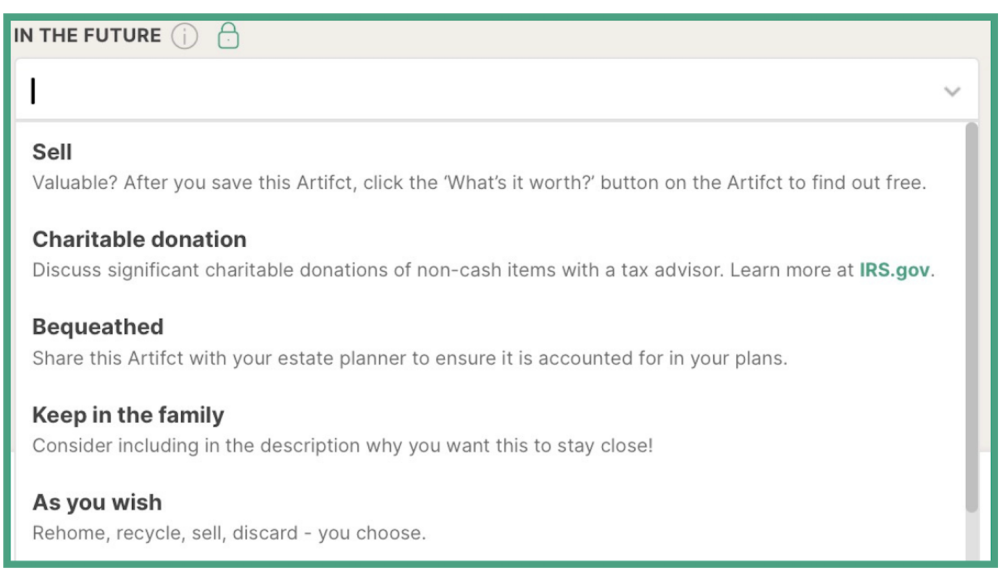
  • Pass down the items if you know who you'd like to have it someday, and if you plan to do so, use the Artifcts In the Future field to document that intention.
  • Repurpose some of the pieces. Old trophy plates can become part of a shadow box or memory display. 
  • Let it go. You can photograph and Artifct the item before donating, selling, recycling, or otherwise letting it leave your home. 

The physical object doesn't have to stay forever for the story to stay. 

Your Sports Collection Is a Highlight Reel of Your Life 

When we talk about sports memorabilia, it's easy to focus on the objects—the trophies, medals, jerseys, balls, cards, photos, and equipment. But the objects aren't really the point. 

The trophy represents the hours of practice. The medal represents the finish line. The jersey represents the team. The baseball represents the game. And sometimes the old, scratched-up piece of sports “stuff” represents a version of yourself you never want to forget. That's what makes sports memorabilia worth Artifcting. 

So, this fall, as you head out to the field, the pitch, the track, the court, or the stands, take a look around your home, too. Find one piece of sports memorabilia that matters. Photograph it. Capture the facts. Tell the story. Add the people, photos, videos, and memories that bring it to life. Then decide what you want to do with the physical item. 

Because the trophy is just a symbol. The story is the legacy, and that story deserves to live on. 

Happy Artifcting! 

###

Looking for additional inspiration and ideas of what to do with all your sports memorabilia? Check out our ARTIcles story titled, Pass It On, Transform It, Or Let It Go, featuring two innovative companies, MemoryStitch and Little Curiosities

© 2026 Artifcts, Inc. All Rights Reserved.

Read more
Your privacy

This website uses only essential cookies to provide reliable and secure services, streamline your experience, allow you to share content from this website on social media, and to analyze how our Site is used. Learn more about these cookies and cookie settings.

Accept & Continue
Oops! This Web Browser Version is Unsupported

You received this warning because you are using an unsupported browser. Some features of Artifcts will not be available or will be displayed improperly until you update to the latest version or change browsers.

Close
Image for unsupported banner Oops! This Web Browser is Unsupported

You received this warning because you are using an unsupported browser. Some features of Artifcts will not be available or will be displayed improperly until you update to the latest version or change browsers.

Unsupported banner close icon Close