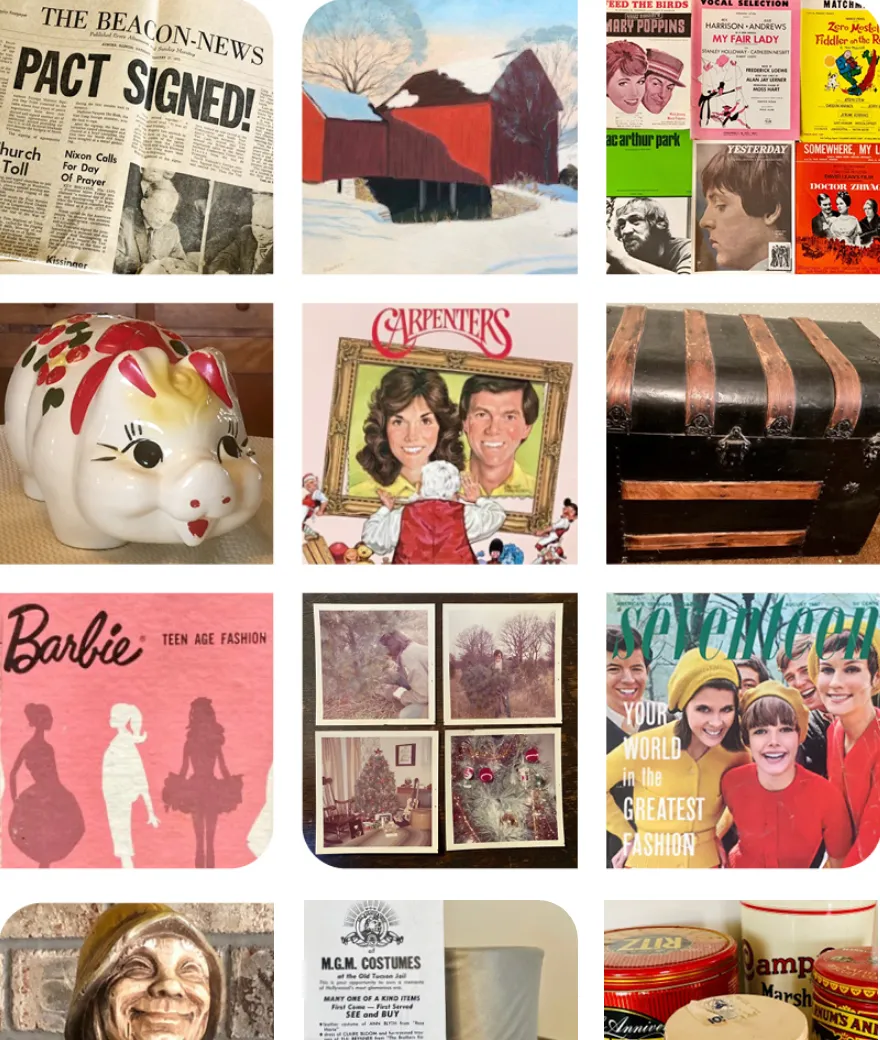

Give the gift small icon
Give the gift of Artifcts!
HELLO!
Give the gift big icon
Give the gift
of Artifcts

The perfect gift for the person
in your life who has everything.

Give a gift Close
This Mother’s Day, get to
know each other a bit better,
with Artifcts.
Take 25% off your Artifcts gift membership
purchases with code MomLove25
Purchase a gift now!
Offer expires 11:59pm EDT May 10, 2026.
Take 25% off and give the mom in your life the gift that means as much as her! Buy now ->

Home Inventory Apps: You Deserve More Than an Inventory of 'Stuff'

January 11, 2023

A Home Inventory App That Captures More Than an Inventory of 'Stuff'

We did say, "It's that time of year again." Many of us are making plans to get organized once and for all. We tell ourselves, "THIS is the year. Yes!" But are you setting yourself up by relying on old habits and processes that never worked before? Why would they work now?  

Case in point: home inventory apps. Is that your tool of choice? Don’t get us wrong, inventory apps are critical across industries and even in private households. But they are unifunctional. These apps are administrative in orientation with not a whisper of fun or human connection. They support management and listing of large volumes of objects with hyper specific meta data fields so you can keep track of them and their value. In our opinion, that’s a lot of work for a very limited scope of value to you.

Let’s Review the Newcomer: Artifcts 

Taking a page out of the book of publications you find online (like this one) that, for a fee, rank “best” tech apps and gadgets, here’s how we’d review Artifcts’ pros and cons compared to home inventory apps: 

PROS:

      • Modern and intuitive interface with multiple view style options, including a searchable timeline view
      • Capture any object or collection with photo, video, and/or audio
      • Uses preset categories alongside custom tags to categorize according to your own preferences 
      • Track important documents, manuals, and more 
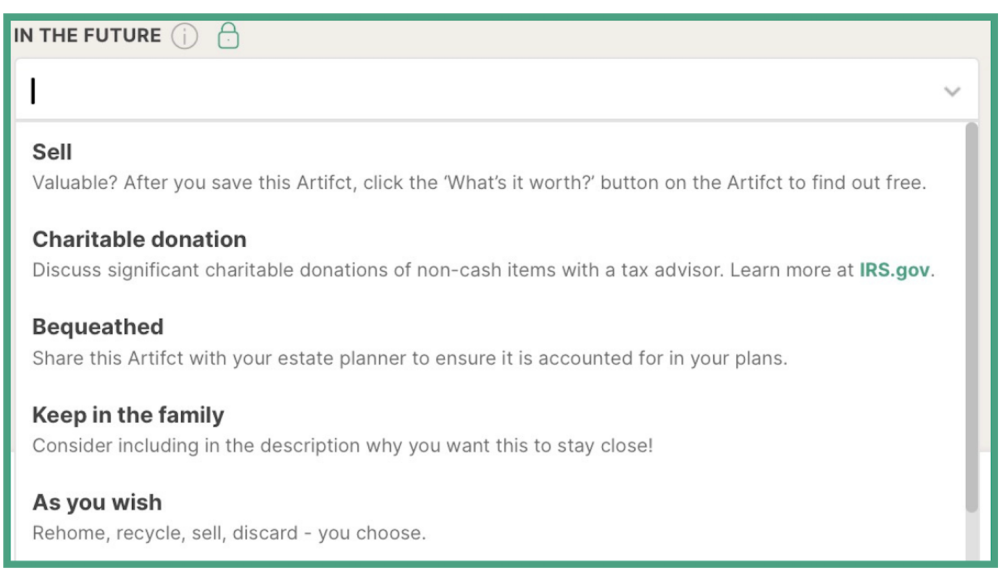
      • Includes built-in optional fields covering smart categories, such as weight, dimensions, location, and even future intentions for the object 
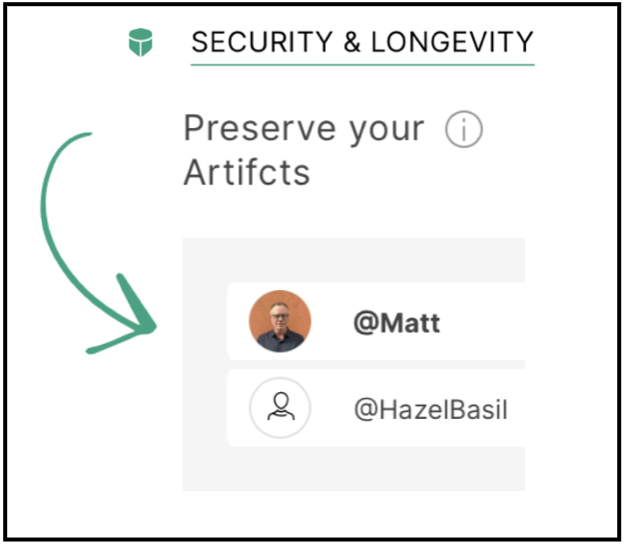
      • Private by default but permissionable and shareable for individuals, groups, and even social media
      • Print a free QR codes from each Artifct to connect the physical item to the digital story and details. No printer? No problem - try Artifcts QR code stickers.
      • No file compression – your files are secure, private, and exactly as you created them 
      • Ad free, and you own your data. Download in a click in multiple formats!

CONS:

      • Intended for personal use; not suited to whole home or business inventories. We did mention fun, right? 
      • Limited to five media files and three documents per Artifct. Focus on what’s meaningful and interlink related Artifcts if you like with the @ feature. 
      • Beta features are released first to desktop. And usually released to mobile within a month, if applicable; we want to ensure each feature meets your expectations. 
      • No barcode scanner. Yes, you got us here. Most 'stuff' people Artifct are too unique for barcodes!

We give Artifcts 4 stars as a home inventory app, but a full 5 stars a tech startup redefining "artifacts" to help transform 'stuff' from a burden to a source of connection, legacy, and financial security.

Where Artifcts and Home Inventory Apps Coexist 

There exists an interesting opportunity for Artifcts and home inventory apps to work for you, together. How do we know? Members of the Arti Community have told us! Here are three recent examples. (Names are changed for privacy.) Let us know if you have others! 

Meet Jeff. He’s spent several months cataloging his personal library using LibraryThing. He stepped back, proud of his work and realized, "Oh, but that one and that one and that one are special. They are gifts from people I admire, they are signed copies, I sought them out in off-the-beaten path shops." Essentially some of Jeff’s books are particularly valuable to him and maybe the world.

  • At Artifcts ... Like Jeff, you can easily attach your inventory to an Artifct as a document, include a link to the inventoried book’s listing in the “location” field of your Artifct, or tag your Artifct #LibraryThing so you know which Artifcts exist in that app as well. 

Meet Sandra. She hired a moving company that offers complementary digital inventory to ensure they know what she is moving and the condition of the items of particular value to her. Great!

  • Sandra (and you!) can Artifct those objects of particular sentimental or financial value and attach the mover’s inventory or cross reference it if it has as a digital presence. And, if you like to keep track of items by room or location, simply tag your Artifcts #livingroom, #teddysbedroom, and #garage for easy future reference. Click the tag and all Artifcts with the same tag in your personal collection will appear. Now, that’s a nifty home inventory app. 

Meet the Shroads Family. This family has traveled far and wide in the world and curated a valuable art collection along the way. They have a file with hardcopy receipts and related documentation as well as a running inventory in Excel that they update faithfully during tax season as part of their general estate management. But the details of the when and where and even the ‘why’ of specific pieces are becoming blurry and not everyone has access to these important supporting documents.

  • Through Artifcts, the documents, the details of each person, and critically the ‘why’ of the moment of the purchase coexist. Now individuals can permission and reference these Artifcts in their planning documents and not worry about how to unite separate bits of information stored in different locations. Learn more about collection management in this ARTIcles by Aritfcts story, with contributions from appraiser Sarah Reeder of Artifactual History.

Happy Artifcting of those home inventories and beyond!

###

© 2023 Artifcts, Inc. All Rights Reserved.

Share With Friends
8 likes
What's New at Artifcts
What Will Your Family Remember? A Modern Family Archive for the Modern Family

In her recent New York Magazine article titled "What Are We Doing About Our Family Archives?" Kathryn Jezer-Morton raises a question many of us quietly avoid: what are we doing with our family stories, memories, keepsakes, and more?  

It’s the kind of question that quietly follows you into the attic, into the basement, into the moments when you open an old box and find yourself holding something that once meant everything to someone you love. A photograph with no names on the back. A recipe written in a familiar hand. A watch, a letter, a ticket stub—objects that feel heavy not because of what they are, but because of what they carry. 

Most of us don’t think of ourselves as archivists. And yet, in some ways, we all are. 

A body of research shows that family archives—photos, letters, heirlooms, even everyday objects—play a powerful role in how families understand themselves and pass meaning across generations. 

But here’s the challenge: most family archives are fragmented, overwhelming, and at risk of being lost. That’s where Artifcts offers a refreshingly modern approach. 

Your Family Archive, Reimagined 

Family archives are rarely neat or complete. They’re scattered across shelves and drawers, split between relatives, tucked into albums or forgotten in envelopes. And even when we hold onto the objects, the stories behind them begin to soften, blur, and eventually disappear. 

You might know what something is—but not why it mattered. That’s the quiet loss that happens over time. 

Artifcts offers a different way forward. Not by asking you to hold onto more things, but by helping you hold onto what matters most: the stories, the context, the meaning. 

Turning Moments Into Memories That Last 

Using Artifcts feels less like archiving and more like remembering—intentionally. 

When you create an Artifct, you’re not just cataloging an item. You’re pausing long enough to ask: Why is this part of my story? And then you answer it, in your own words, in your own voice. 

It might be an old photograph—one you’ve seen a hundred times but never really documented. You upload it, and suddenly you’re recalling the beach, the summer heat, the way your brother always stood just out of frame until someone insisted he joined. Maybe you don’t know everyone in the picture, but you know enough. And that’s enough to begin. 

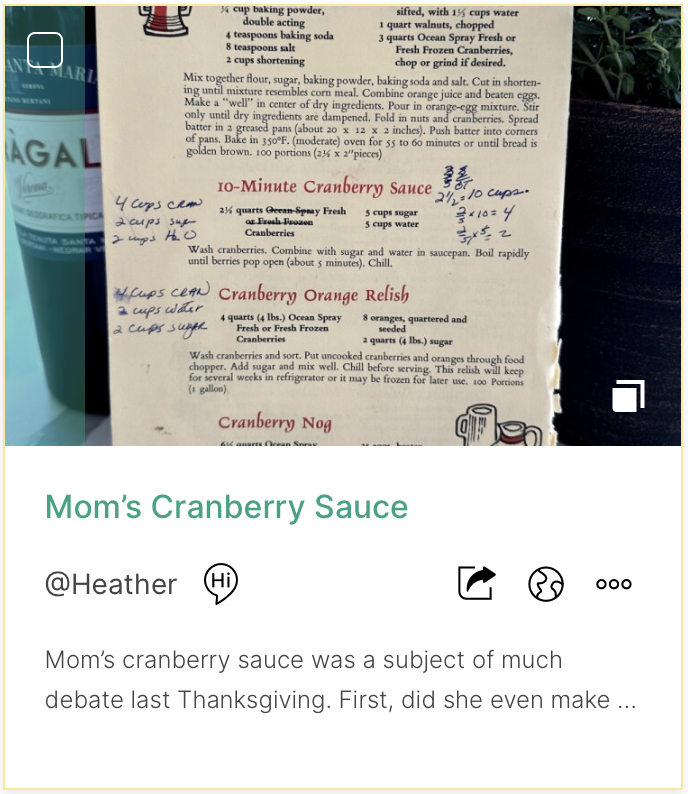
Or maybe it’s a recipe. Not just ingredients and steps, but a ritual. The way the kitchen smelled. The way no one was allowed to sit down until everything was “just right.” You write it down, and then you add something more—a short video, perhaps, of someone in your family making it. Or an audio recording of you explaining why it matters. And don’t forget those “unwritten rules,” Grandma never did. Extra cinnamon, yes please! 


And just like that, something ordinary becomes something lasting. 

Hearing the Past, Seeing the People 

There is something powerful about hearing a voice again; seeing someone’s gestures, their expressions, the way they tell a story only they could tell. Artifcts allows you to add audio and video to your memories, and this changes everything. 

A written story is meaningful—but a spoken one feels alive. 

A written story is meaningful—but a spoken one feels alive. 

Imagine a future grandchild not only reading about a family tradition, but hearing it described in your voice. Seeing the way you smiled when you talked about it. That’s not just preservation. That’s a connection across time. 

Watching Your Story Unfold 

As you begin to add Artifcts, something unexpected happens. The moments start to connect. 

With our Artifcts Timeline feature, your memories are automatically arranged across years, decades, even generations. What once felt like isolated pieces becomes something more like a story unfolding. 

You begin to see patterns. Traditions that repeat. Moves, milestones, turning points. You see how one moment led to another, how a family becomes over time. Your kids and grandkids can see what made you “you.” And the entire family can better understand what matters most to you by the very fact of what you chose to Artifct.  

With Artifcts Timelines, your family archive is no longer just a collection. It’s a narrative pieced together by you over time. 

Letting Go Without Losing Anything 

If you’ve read this far and you’re dreading ending up with a basement full of everyone else’s stuff, fear not. One of the hardest parts of being the keeper of family history is the weight of it all—the responsibility, the volume, the feeling that letting go of something might mean losing it forever.  

Artifcts makes it possible to preserve the meaning of an item even if you decide not to keep the item itself. You can document it fully—its story, its significance, its place in your family—and then choose to pass it on, donate it, or simply let it go. 

What remains is what mattered all along. Not the object, but the memory it carried. 

A Living Archive, Not A Finished One 

Your family archive isn’t something you complete. It’s something you will continue. It grows as you remember more, as you ask questions, as you take the time to capture what might otherwise slip away. It becomes a shared space where stories live—not just for you, but for everyone who comes after you. 

And maybe that’s the real answer to the question Kathryn Jezer-Morton asked. 

We don’t need perfect archives. We don’t need everything organized and complete. We just need to begin. One photo. One recipe. One piece of jewelry. One story. 

Because in the end, it’s not the things we pass down that define us. It’s the meaning we choose to remember—and the care we take to make sure it isn’t forgotten. 

###

© 2026 Artifcts, Inc. All Rights Reserved.
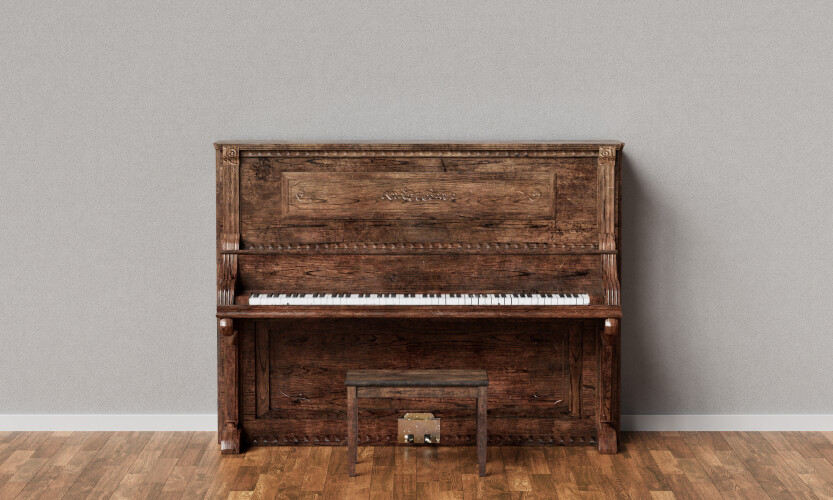
Read more
Eco-Decluttering Made Easy: How to Clear Your Space Without Creating Waste

Today is Earth Day—a perfect moment to take a fresh look at the way we live with our stuff. In honor of Earth Day, we’re tackling eco-decluttering, a thoughtful approach to clearing your space that’s as kind to the planet as it is to your peace of mind. Because decluttering shouldn’t just make your home feel lighter—it should reduce waste, extend the life of everyday items, and help build a more sustainable future.

Decluttering used to come with a nagging question: Where does all this stuff actually go? If your answer has ever been “uh… the trash,” you’re not alone. A 2024 Talker Research report found that although 77% of respondants claim to make efforts to be as sustainable as possible, respondants average throwing away 12 items a day! That's a LOT of stuff. 

Welcome to eco-decluttering, where clearing your space and caring for the planet go hand in hand. At Artifcts, we like to think of it as a three-step process: remember, release, and rehome. Because the goal isn’t just less stuff—it’s less waste, more meaning, and a lighter environmental footprint.


🌱 Step 1: Declutter with intention (not impulse)

Before you start tossing things into bags, pause. Not forever, just long enough to decide what truly matters.

Artifcts reminds us that many of the hardest items to part with aren’t junk at all—they’re memory-filled objects: travel mementos, old books, heirlooms, or even that outfit from a milestone moment.

Instead of letting guilt or nostalgia stall your progress, try this:

  • Capture the story first (photos, audio, or a quick written memory)
  • Keep a few meaningful items
  • Let the rest move on

This approach helps you avoid the all-or-nothing trap and makes decluttering feel less like loss and more like curation.


♻️ Step 2: Sort smarter—think beyond the trash bag

A classic decluttering tip still holds up: sort items into clear categories like donate, recycle, repair, or sell. Even professional organizers recommend prepping these pathways before you begin so nothing lingers in limbo.

But eco-decluttering adds an extra layer: default to reuse whenever possible.

Ask yourself:

  • Could someone else use this as-is?
  • Can it be repurposed creatively?
  • Is there a responsible recycling option?

If the answer to all three is no, then it’s time to let it go.


🌍 Step 3: Give your items a second life (the Artifcts way)

Here’s where our Artifcts Going Green Guides really shine. Once you’ve decided to part with something, you have more options than you might think:

1. Donate with purpose
Many everyday items are in high demand:

Even hospitals, universities, and disaster relief groups often accept specific items like blankets, gowns, or toys.

2. Share locally
Your “declutter” pile might be someone else’s jackpot:

  • Offer items to neighbors or community groups
  • Use local “buy nothing” networks
  • Pass things directly to friends or family

3. Repurpose and upcycle
Before you donate, consider whether an item could live a new life:

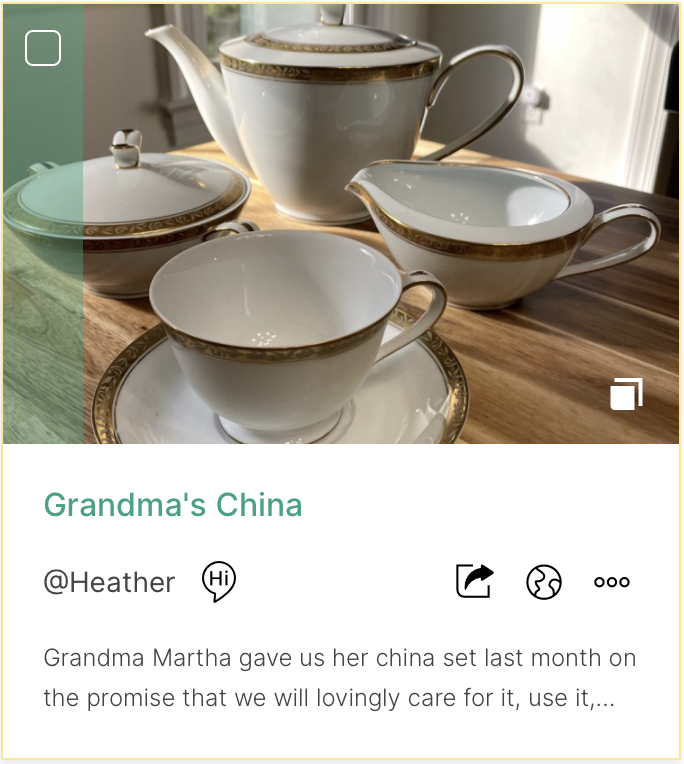
  • Turn old china into wall art
  • Reuse glassware creatively
  • Transform sentimental fabrics into keepsakes, such as quilts or pillow coverings

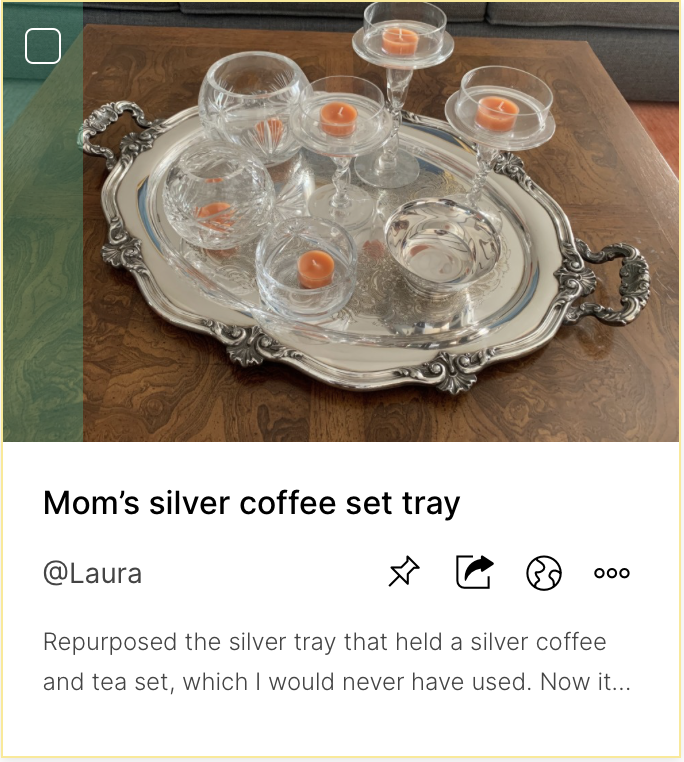
Sometimes, breaking up a set or reimagining a use makes all the difference. Sarah Reeder, founder of Artifactual History, offers some creative tips for repurposing old silver sets on one of our previous Evenings with Artifcts episodes. 

4. Recycle responsibly
For items like electronics or worn-out goods, skip the trash:

  • Check municipal recycling programs
  • Use retailer take-back programs
  • Look for specialty recyclers

The key here being that your local landfill is the last resort, not the default.


💡 Bonus: The “Artifct Before You Let Go” Rule

On the fence about whether to rehome, recycle, or otherwise part with an item? Maybe it's got a great story, or evokes fond memories. One of the most powerful ideas from Artifcts’ Going Green philosophy is simple: Capture the story before the item leaves.

When you do this, you can preserve the meaning without keeping the clutter, feel more confident letting go, and create a digital legacy that’s easier to share with loved ones and friends. 

Suddenly, decluttering isn’t about getting rid of things—it’s about keeping what matters in a better way.


🌿 The Bigger Picture

The average home holds far more than it needs, and much of it eventually ends up in landfills. Eco-decluttering flips that script. It’s not just about organizing your space—it’s about participating in a more thoughtful cycle of ownership.

So the next time you pick up an object and wonder, “Should I keep this?” try a better question:

“What’s the best next life for this?”

Because when your clutter becomes someone else’s treasure—or gets a second life entirely—you’re not just tidying up. You’re doing a little good for the world, one drawer at a time.

###

© 2026 Artifcts, Inc. All Rights Reserved.
Read more
Spring Cleaning: The Clothing Edition

Spring has sprung and our closets are ready to spring forth as well. Clothing has a sneaky way of taking up space in our hearts AND in our closets, which is why this year we’re offering up some tips and tricks for spring cleaning dedicated to clothing and accessories.

Our expert tip on all things clothing? Artifct it, of course, and include a photo of you wearing it back in the day, if possible, to help you keep the memories, while you let go of the items you haven’t worn in years, if not decades.

But Artifcting is not the be all, end all. Are you ready to free up closet space? Let’s get started!

Seasonal Items

As you get ready to put your winter clothing into storage and take out your spring essentials consider what you actually wore this past winter and what you kept, thinking you WOULD wear.

In our household we make two piles—the “yes, I wore it” pile, and the “nope, never touched it pile.” We then take a hard look at that second pile to determine the reason WHY we never wore it. Was it not cold enough this winter? Does the item no longer fit? If the answer is yes to the latter, we consider who else might need or want it (nieces, nephews, etc.) or we pick our favorite charity to donate the item.

We also take a hard look at winter gear that has stood the test of time for years but may be on its way out. I broke down in tears this year over my husband’s beloved Patagonia down jacket. The memories, the adventures! However, it was hard to ignore the feathers seeping out of every seam. I found myself having to vacuum after every wear. We took it back to Patagonia hoping they’d be able to repair it as part of their Worn Wear Program, but alas, it was beyond repair. We agreed to let Patagonia recycle the jacket although not before Artifcting it!


Professional Clothing (aka Life Before COVID)

Remember when we used to get dressed up EVERY day and go into the office? The actual office. Not just our home office. Although memories fade, the clothing lingering in our closet(s) serves as a constant reminder of, “Oh yeah, I used to actually wear that stuff.”

This year I took a hard look at our professional clothes to determine what has a realistic chance of being worn again, and what can be relegated to the “life before COVID” bin (aka donation bin). We donate most professional clothing items to Dress for Success and sell a handful of items with TheRealReal. It’s amazing the closet space and hangers we regained this year when we were realistic about what we would wear post-COVID.

I admit there were some items I was reluctant to let go of because of the memories. My first pair of heels and my favorite ballet flats fell into this category. Both had been worn past any useful lifespan and yet, I didn’t want to let go. So, what’s a girl to do? You guessed it, I Artifcted them. And then I felt a little less guilty getting rid of them. Artifcts enabled me to keep the memories and let go of the actual ‘stuff.’


Kid Clothing

They grow so fast! My daughter’s closet is a ready target when it comes to spring cleaning. She’s now old enough to help with the process, and she knows once the items are donated she gets to pick out replacement items that fit. Extra motivation! And even together time since she’s now at the age when she loves to shop.

We usually donate the clothing she has outgrown to our local Goodwill store, although there are some items she’ll ask to keep and repurpose. She stunned us one year when she repurposed her old ballet tutu into a modern work of art!

T-Shirts

Yes, they deserve their own category. My dear husband has a way of coming home from every trip, conference, and work event with another t-shirt. We’ve relegated his t-shirt collection to one drawer and one under-the-bed bin. And yet. There are so many!

Although this go-around with spring cleaning most of his t-shirts were spared. Why? Because he wears them, all of them.

I, however, discovered that I had been holding on to a t-shirt in MY t-shirt bin that I hadn’t even worn. Not once. I was getting ready to Artifct it (and include photos and video of the event) when our youngest swooped in to claim it for herself. Being two sizes too big, it was declared “tres, tres chic.” Success! T-shirt re-homed. We often joke here at Artifcts that the best vintage shop in the world is probably Grandma’s closet! (Or in this case, my closet!)


Accessories

Since when did we own two dozen hats?

Like t-shirts, accessories tend to multiply like bunnies at least in our household. Hats, socks, and re-usable bags tend to be the worst offenders. Companies love to gift accessories as promotional materials, and most members of my household LOVE to accept those gifts. You see where this is going.

We have a bin dedicated solely to reusable bags, and another to hats. I took a hard look at both this past month and lovingly put out for free a dozen reusable bags and a half dozen hats. Much to my delight they were picked up within minutes of setting them out.

______________

On a roll? If you need some donation ideas outside the usual, check out the clothing section of Going Green. With Artifcts.

If instead you're ready for tips on decluttering and organizing beyond clothing, you may love our 15 Decluttering Targets for Artifcters or one of our Evenings with Artifcts episodes with Matt Paxton!

###

© 2026 Artifcts, Inc. All Rights Reserved.
Read more
Your privacy

This website uses only essential cookies to provide reliable and secure services, streamline your experience, allow you to share content from this website on social media, and to analyze how our Site is used. Learn more about these cookies and cookie settings.

Accept & Continue
Oops! This Web Browser Version is Unsupported

You received this warning because you are using an unsupported browser. Some features of Artifcts will not be available or will be displayed improperly until you update to the latest version or change browsers.

Close
Image for unsupported banner Oops! This Web Browser is Unsupported

You received this warning because you are using an unsupported browser. Some features of Artifcts will not be available or will be displayed improperly until you update to the latest version or change browsers.

Unsupported banner close icon Close