
Give the gift small icon
Give the gift of Artifcts!
HELLO!
Give the gift big icon
Give the gift
of Artifcts

The perfect gift for the person
in your life who has everything.

Give a gift Close
This Mother’s Day, get to
know each other a bit better,
with Artifcts.
Take 25% off your Artifcts gift membership
purchases with code MomLove25
Purchase a gift now!
Offer expires 11:59pm EDT May 10, 2026.
Take 25% off and give the mom in your life the gift that means as much as her! Buy now ->

Minimalism Techniques that Can Help Us All

January 17, 2024

A decade or so ago when Zoë Kim, of Raising Simple, began taking small steps toward a more minimalist lifestyle, it was her kitchen that was her motivator. How could she function when there was so much stuff, food stuff to use and not waste, but also stuff to fit into cupboards, wash and dry, and generally even remember to use! Why did she even have five wooden spoons when a few would do?


"That {stuff} began to weigh on me as I started to grow my family." - Zoë Kim

Back then, minimalism was not the popular theme it is today. There weren't podcasts, checklists, blogs, and books at every turn telling you how to start down this path. Advice was lacking that was practical, especially for this mom of two. No way was she going to tackle her whole house never mind start counting how many she had of each item in her home.

Fast forward to 2023. She's the mom to seven children in a blended family with her partner Matt Paxton. While he had spent nearly his entire career helping hoarders, supporting people who need to clean out their houses and others who were downsizing, he was never a minimalist. He liked his stuff, and the stuff from his dad - so many paintings! - and his grandfather. He liked it all so much that as he wrestled with how to pack it up to combine households with Zoë, he almost didn't move! (Read more about that experience in his book Keep the Memories, Lose the Stuff.)

The key for me was recognizing I had enough. Enough is the important word. I did not need more. - Matt Paxton

Minimalist Hacks for Daily Life (with Kids!)

Zoë and Matt appeared recently on an episode of Evenings with Artifcts, and they shared their combined insights on parenting as practical minimalists.

At the heart of this way of living for their family is that they have dramatically reduced the number of decisions they have to make on a daily basis, from getting dressed to setting the table for dinner. And for people like Zoë who are naturally disorganized, it's hard for her to make much of a mess when she only owns three pairs of jeans. And she can fold them any which way she pleases, and they'll fit in her drawer!


Practical minimalism helped Zoë, who is disorganized at heart, live a fuller, less stressful life!

See if any of these hacks from Zoë and Matt can help you!

      • Create a space for things. It will fill up, then you'll have to clear it out. This is great for kids (a locker, cubby, or drawer) and kids at heart, too. Artifcts cofounder Ellen Goodwin loves these bright, recycled, collapsible crates that come in multiple sizes.
      • Use it or lose it. It's been multiple seasons or years? Give it to someone who needs it or will at least put it to go use today. And stay tuned, because we'll have a great guide for you this Earth Day (April 22).
      • One in, one out. That applies to nearly anything: t-shirts, hats, shoes, books! And pause to Artifct the sentimental ones first! Who needs all these t-shirts anyway?
      • Model the behavior you want to see. Let "them," whomever that is in your life, see you make those same hard choices and let go of things. 
      • Give a fixed time limit. Your spouse or child says they want to sell it? Okay, set a limit of 48 hours and then move it on out, one way or another.
      • Capture the stories. Telling the stories helps us let go of items. You'll find you don't need the item itself as much as you thought you do. Artifct it; let it go. Here's one man's story of capturing stories in order to downsize.
      • Collections can exist, but maybe not all at once. You might not have room to display it all without drowning your space. Rotate monthly which items in your collection you display, whether that's a statute or a painting. Here's the painting Matt Paxton currently has on his office wall.
I give credit to Marie Kondo on this one. I think it's important to frame it not as what you are letting go of but what you are deciding to keep. - Zoë Kim

At the end of the day, Zoë and Matt are united in the view that they have a better life because they have less stuff. 

We encourage any of you seeking additional practical daily living tips to read Zoë's book, too. Maybe buy the digital version - an act that means one less book enters your home! 

Happy Artifcting!

###

© 2024 Artifcts, Inc. All Rights Reserved.

Share With Friends
5 likes
What's New at Artifcts
What Should You Do with Old Trophies?

Dusty shelves. Packed boxes. Maybe even a forgotten bin in the attic. Old trophies have a way of quietly accumulating over the years. We keep them because they are symbols of effort, achievement, teamwork, and growth. And yet, when it comes time to declutter, they can leave you wondering: Do I keep them? Toss them? Hide them away?

If that sounds familiar, you’re not alone. At Artifcts, we often say: it’s not about the object, it’s about the meaning. And trophies? They’re packed with meaning.

Let’s explore how to thoughtfully decide what to do with them—without losing what matters most.

Why Trophies Are So Hard to Let Go

Unlike everyday clutter, trophies represent moments when you showed up, pushed yourself, and were recognized. Whether it was a childhood soccer season, a debate championship, or a workplace milestone, each trophy holds a story.

But here’s the catch: over time, the object stays… while the story fades.

We’ve seen this happen with photos and albums, too. One generation later, people often can’t identify the faces or remember the context. The same is true for trophies. Without context, they risk becoming anonymous objects—metal, plastic, and wood with no voice, no story, no memory.


So before you decide what to do with them, start with this mindset shift: Your goal is not to preserve every trophy. Your goal is to preserve the meaning behind the ones that matter.

Step 1: Curate—You Don’t Need Them All

Take a deep breath: you do not need to keep every single trophy. In fact, trying to keep everything often leads to overwhelm and inaction. A more effective approach? Curate.

Choose a handful that truly represent:

  • A first (first win, first season, first breakthrough)
  • A peak moment (championship, personal best)
  • A meaningful memory (team, coach, or experience that shaped you)

Think of it like editing a photo collection—you’re keeping the highlights, not the duplicates or blurry extras. 

Step 2: Capture the Story Before It’s Lost

Here’s where the magic happens. A trophy without a story is just an object. But a trophy with a story becomes a lasting legacy. Ask yourself (or your family member, if they’re the one who earned it):

  • What was happening in your life at that time?
  • Why did this achievement matter to you?
  • Who was involved? Teammates, coaches, friends?
  • What did you learn from the experience?

Even a few sentences can bring a trophy back to life. At Artifcts, we call this adding context—and it’s the difference between something being forgotten and something being cherished.


Step 3: Decide What Stays (and What Goes)

Once you’ve curated and captured the stories, it becomes much easier to decide what to physically keep. Here are some options to help you along the way:

1. Keep a Select Few
Display the most meaningful trophies where they can spark conversation and reflection—not gather dust. Consider incorporating one as a bookend on a bookcase.

2. Artifct and Let Go
Take photos of the trophies you’re ready to part with and pair them with their stories. Our App makes it super easy to snap a photo, record a story, and share with family. This way, you keep the memory without the physical bulk.

3. Repurpose Creatively
Remove engraved plates and incorporate them into a shadow box or memory display. Alternatively, think about ways you can regift them, creating new memories and stories. 

One of our members shared with us that they hosted a family Olympics last summer, and gave out old trophies for the winners! Fastest swimmer, most excellent hula-hooper, champion of the ice cream eating contest. He said, “not only did I get rid of all the kids old trophies, we made new memories in the process.” That sounds like a win-win to us!

4. Donate or Recycle
Some organizations, schools, or clubs can reuse old trophies by replacing nameplates. You may be able give the trophy a second life—and someone else a moment of pride. Check with local schools, libraries, recreation centers, and Boys and Girls clubs. 

Step 4: Share the Stories

Stories are meant to be shared, not stored away. When you document and share the meaning behind a trophy, something powerful happens: others begin to see its value. We’ve seen time and again that once a story is known, an item that “no one wanted” suddenly becomes meaningful to someone else.


Maybe your child never realized how much that award meant to you. Maybe a grandchild will see themselves in your story of perseverance. Objects connect generations—but stories make that connection stick. With Artifcts, you can easily (and privately) share the stories with loved with a single click. 

A Final Thought: It Was Never About the Trophy

At the end of the day, the trophy itself was never the point. It was about:

  • The early mornings and late practices
  • The wins and the losses
  • The people who supported you
  • The person you became along the way

The trophy is just a symbol. The story is the legacy.

The trophy is just a symbol. The story is the legacy.

So whether you keep one, ten, or none at all, make sure you hold onto what truly matters.

And if you can, Artifct it—so those stories live on, ready to be discovered, shared, and remembered for generations to come.

###

Looking for more downsizing tips? You might also enjoy reading these related ARTIcles:

What Should You Do with Old Photo Albums? 

What Should You Do with Old Scrapbooks?

How Swedish Death Cleaning Helps You During a Move

© 2026 Artifcts, Inc. All Rights Reserved.
Read more
What Will Your Family Remember? A Modern Family Archive for the Modern Family

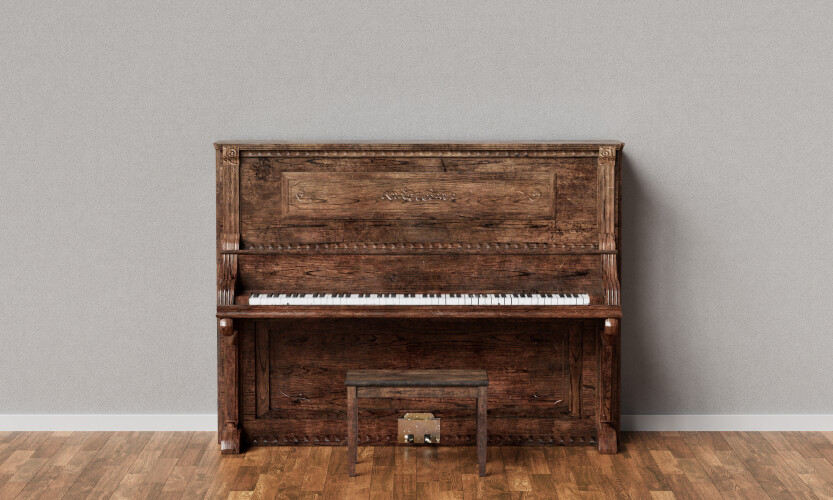
In her recent New York Magazine article titled "What Are We Doing About Our Family Archives?" Kathryn Jezer-Morton raises a question many of us quietly avoid: what are we doing with our family stories, memories, keepsakes, and more?  

It’s the kind of question that quietly follows you into the attic, into the basement, into the moments when you open an old box and find yourself holding something that once meant everything to someone you love. A photograph with no names on the back. A recipe written in a familiar hand. A watch, a letter, a ticket stub—objects that feel heavy not because of what they are, but because of what they carry. 

Most of us don’t think of ourselves as archivists. And yet, in some ways, we all are. 

A body of research shows that family archives—photos, letters, heirlooms, even everyday objects—play a powerful role in how families understand themselves and pass meaning across generations. 

But here’s the challenge: most family archives are fragmented, overwhelming, and at risk of being lost. That’s where Artifcts offers a refreshingly modern approach. 

Your Family Archive, Reimagined 

Family archives are rarely neat or complete. They’re scattered across shelves and drawers, split between relatives, tucked into albums or forgotten in envelopes. And even when we hold onto the objects, the stories behind them begin to soften, blur, and eventually disappear. 

You might know what something is—but not why it mattered. That’s the quiet loss that happens over time. 

Artifcts offers a different way forward. Not by asking you to hold onto more things, but by helping you hold onto what matters most: the stories, the context, the meaning. 

Turning Moments Into Memories That Last 

Using Artifcts feels less like archiving and more like remembering—intentionally. 

When you create an Artifct, you’re not just cataloging an item. You’re pausing long enough to ask: Why is this part of my story? And then you answer it, in your own words, in your own voice. 

It might be an old photograph—one you’ve seen a hundred times but never really documented. You upload it, and suddenly you’re recalling the beach, the summer heat, the way your brother always stood just out of frame until someone insisted he joined. Maybe you don’t know everyone in the picture, but you know enough. And that’s enough to begin. 

Or maybe it’s a recipe. Not just ingredients and steps, but a ritual. The way the kitchen smelled. The way no one was allowed to sit down until everything was “just right.” You write it down, and then you add something more—a short video, perhaps, of someone in your family making it. Or an audio recording of you explaining why it matters. And don’t forget those “unwritten rules,” Grandma never did. Extra cinnamon, yes please! 


And just like that, something ordinary becomes something lasting. 

Hearing the Past, Seeing the People 

There is something powerful about hearing a voice again; seeing someone’s gestures, their expressions, the way they tell a story only they could tell. Artifcts allows you to add audio and video to your memories, and this changes everything. 

A written story is meaningful—but a spoken one feels alive. 

A written story is meaningful—but a spoken one feels alive. 

Imagine a future grandchild not only reading about a family tradition, but hearing it described in your voice. Seeing the way you smiled when you talked about it. That’s not just preservation. That’s a connection across time. 

Watching Your Story Unfold 

As you begin to add Artifcts, something unexpected happens. The moments start to connect. 

With our Artifcts Timeline feature, your memories are automatically arranged across years, decades, even generations. What once felt like isolated pieces becomes something more like a story unfolding. 

You begin to see patterns. Traditions that repeat. Moves, milestones, turning points. You see how one moment led to another, how a family becomes over time. Your kids and grandkids can see what made you “you.” And the entire family can better understand what matters most to you by the very fact of what you chose to Artifct.  

With Artifcts Timelines, your family archive is no longer just a collection. It’s a narrative pieced together by you over time. 

Letting Go Without Losing Anything 

If you’ve read this far and you’re dreading ending up with a basement full of everyone else’s stuff, fear not. One of the hardest parts of being the keeper of family history is the weight of it all—the responsibility, the volume, the feeling that letting go of something might mean losing it forever.  

Artifcts makes it possible to preserve the meaning of an item even if you decide not to keep the item itself. You can document it fully—its story, its significance, its place in your family—and then choose to pass it on, donate it, or simply let it go. 

What remains is what mattered all along. Not the object, but the memory it carried. 

A Living Archive, Not A Finished One 

Your family archive isn’t something you complete. It’s something you will continue. It grows as you remember more, as you ask questions, as you take the time to capture what might otherwise slip away. It becomes a shared space where stories live—not just for you, but for everyone who comes after you. 

And maybe that’s the real answer to the question Kathryn Jezer-Morton asked. 

We don’t need perfect archives. We don’t need everything organized and complete. We just need to begin. One photo. One recipe. One piece of jewelry. One story. 

Because in the end, it’s not the things we pass down that define us. It’s the meaning we choose to remember—and the care we take to make sure it isn’t forgotten. 

###

© 2026 Artifcts, Inc. All Rights Reserved.
Read more
Eco-Decluttering Made Easy: How to Clear Your Space Without Creating Waste

Today is Earth Day—a perfect moment to take a fresh look at the way we live with our stuff. In honor of Earth Day, we’re tackling eco-decluttering, a thoughtful approach to clearing your space that’s as kind to the planet as it is to your peace of mind. Because decluttering shouldn’t just make your home feel lighter—it should reduce waste, extend the life of everyday items, and help build a more sustainable future.

Decluttering used to come with a nagging question: Where does all this stuff actually go? If your answer has ever been “uh… the trash,” you’re not alone. A 2024 Talker Research report found that although 77% of respondants claim to make efforts to be as sustainable as possible, respondants average throwing away 12 items a day! That's a LOT of stuff. 

Welcome to eco-decluttering, where clearing your space and caring for the planet go hand in hand. At Artifcts, we like to think of it as a three-step process: remember, release, and rehome. Because the goal isn’t just less stuff—it’s less waste, more meaning, and a lighter environmental footprint.


🌱 Step 1: Declutter with intention (not impulse)

Before you start tossing things into bags, pause. Not forever, just long enough to decide what truly matters.

Artifcts reminds us that many of the hardest items to part with aren’t junk at all—they’re memory-filled objects: travel mementos, old books, heirlooms, or even that outfit from a milestone moment.

Instead of letting guilt or nostalgia stall your progress, try this:

  • Capture the story first (photos, audio, or a quick written memory)
  • Keep a few meaningful items
  • Let the rest move on

This approach helps you avoid the all-or-nothing trap and makes decluttering feel less like loss and more like curation.


♻️ Step 2: Sort smarter—think beyond the trash bag

A classic decluttering tip still holds up: sort items into clear categories like donate, recycle, repair, or sell. Even professional organizers recommend prepping these pathways before you begin so nothing lingers in limbo.

But eco-decluttering adds an extra layer: default to reuse whenever possible.

Ask yourself:

  • Could someone else use this as-is?
  • Can it be repurposed creatively?
  • Is there a responsible recycling option?

If the answer to all three is no, then it’s time to let it go.


🌍 Step 3: Give your items a second life (the Artifcts way)

Here’s where our Artifcts Going Green Guides really shine. Once you’ve decided to part with something, you have more options than you might think:

1. Donate with purpose
Many everyday items are in high demand:

Even hospitals, universities, and disaster relief groups often accept specific items like blankets, gowns, or toys.

2. Share locally
Your “declutter” pile might be someone else’s jackpot:

  • Offer items to neighbors or community groups
  • Use local “buy nothing” networks
  • Pass things directly to friends or family

3. Repurpose and upcycle
Before you donate, consider whether an item could live a new life:

  • Turn old china into wall art
  • Reuse glassware creatively
  • Transform sentimental fabrics into keepsakes, such as quilts or pillow coverings

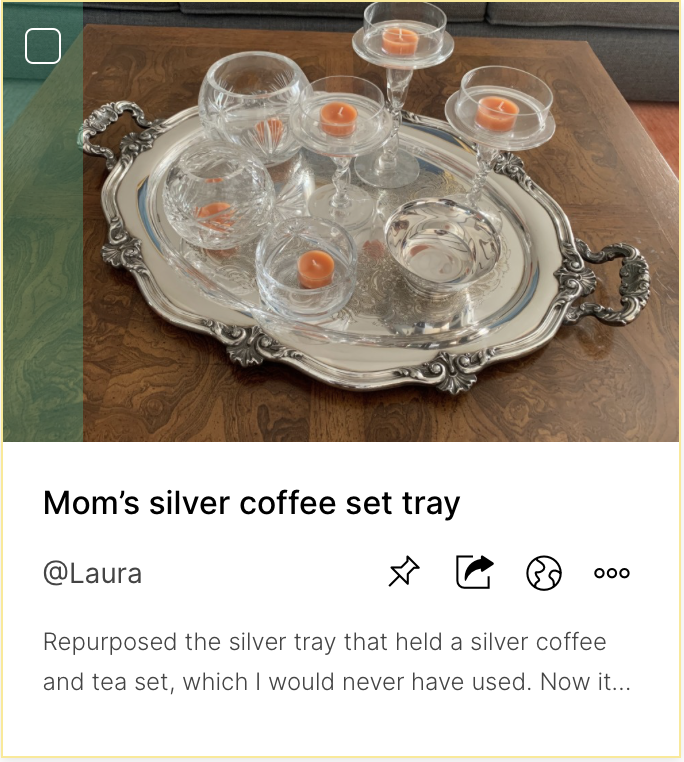
Sometimes, breaking up a set or reimagining a use makes all the difference. Sarah Reeder, founder of Artifactual History, offers some creative tips for repurposing old silver sets on one of our previous Evenings with Artifcts episodes. 

4. Recycle responsibly
For items like electronics or worn-out goods, skip the trash:

  • Check municipal recycling programs
  • Use retailer take-back programs
  • Look for specialty recyclers

The key here being that your local landfill is the last resort, not the default.


💡 Bonus: The “Artifct Before You Let Go” Rule

On the fence about whether to rehome, recycle, or otherwise part with an item? Maybe it's got a great story, or evokes fond memories. One of the most powerful ideas from Artifcts’ Going Green philosophy is simple: Capture the story before the item leaves.

When you do this, you can preserve the meaning without keeping the clutter, feel more confident letting go, and create a digital legacy that’s easier to share with loved ones and friends. 

Suddenly, decluttering isn’t about getting rid of things—it’s about keeping what matters in a better way.


🌿 The Bigger Picture

The average home holds far more than it needs, and much of it eventually ends up in landfills. Eco-decluttering flips that script. It’s not just about organizing your space—it’s about participating in a more thoughtful cycle of ownership.

So the next time you pick up an object and wonder, “Should I keep this?” try a better question:

“What’s the best next life for this?”

Because when your clutter becomes someone else’s treasure—or gets a second life entirely—you’re not just tidying up. You’re doing a little good for the world, one drawer at a time.

###

© 2026 Artifcts, Inc. All Rights Reserved.
Read more
Your privacy

This website uses only essential cookies to provide reliable and secure services, streamline your experience, allow you to share content from this website on social media, and to analyze how our Site is used. Learn more about these cookies and cookie settings.

Accept & Continue
Oops! This Web Browser Version is Unsupported

You received this warning because you are using an unsupported browser. Some features of Artifcts will not be available or will be displayed improperly until you update to the latest version or change browsers.

Close
Image for unsupported banner Oops! This Web Browser is Unsupported

You received this warning because you are using an unsupported browser. Some features of Artifcts will not be available or will be displayed improperly until you update to the latest version or change browsers.

Unsupported banner close icon Close