
Give the gift small icon
Give the gift of Artifcts!
HELLO!
Give the gift big icon
Give the gift
of Artifcts

The perfect gift for the person
in your life who has everything.

Give a gift Close

Do You Celebrate a Cancer-versary?

Ellen Goodwin, Artifcts
May 13, 2025

Do you celebrate a cancer-versary? Are you wondering what is a cancer-versary?

Well, that depends a bit on the person. For me, I have two cancer-versaries I can’t forget, even if I want to. One is January 2nd, the day I received my diagnosis. The other is March 6th, the day I became cancer free (to the best of my knowledge and that of a highly skilled team of doctors). Others, particularly those with metastatic breast cancer, may celebrate other milestones, like beating certain odds they were given. While still others, due to recurrence, may have many more dates that they recognize in some form.

I meant to write an update to share what it’s like now at my one-year cancer-free cancer-versary, but life had other plans. My hope had been that I'd be feeling similar to a friend who three-years after her mastectomy told me by text, “[Having breast cancer] is hardly something I remember. It’s like it never even happened.” 

text message exchange

My path is different from hers. As my one-year anniversary approached, the writing was already on the wall – I would need more surgery. My life was not at risk, you could call it maintenance really, but still, surgery is surgery. And as it turned out, I needed two more surgeries. In a “let’s get this over with” decision, I elected (foolishly) to have them back-to-back in April.  

And now, it’s May, and exactly the right moment to talk again publicly because May is Mental Health Awareness Month. I think it’s important to acknowledge how much cancer can weigh on a person’s mind and alter your entire sense of self. You can feel like your body is not your own, like it’s betrayed you, and you do not recognize it anymore. And how we all process that change is as varied as, well, I don’t know, snowflakes? And it can shift, too. 

As October’s National Breast Cancer Awareness Month drew to a close, I’ll admit that I took off the necklace I wore daily to signal, “I’m opening to talking about breast cancer.” I was exhausted by it. I needed a break from all things cancer. 

gold necklace with heart icons on breasts


Sweet necklace gifted to Ellen by a fellow survivor. It's called "Twins," by HeyHarper.

Now on the other side of these latest issues, I feel that call to engage again in the cancer community and raise my hand to ask, “How can I help?” People look for silver linings in the darkness, finding ways to help is mine.

How can breast cancer survivors help each other?

If you’re also looking for ways to connect with or support others in the breast cancer (or another!) community the answer is simple: Show up! 

Volunteer. Did you know some infusion centers allow volunteers to sit with people as they receive their chemo treatment or to help transport them to/from appointments? Yes, there’s a bit of red tape, but you can do it!  

If you’re thinking, nope, not for me, what can I do from home? Consider volunteering your health data, sharing it quickly, easily, securely via the ShareForCures breast cancer research registry by Susan G. Komen. 

For me, it was a no brainer to securely share my health data for research. We give away our data every day for less! We give it away so we can have a social media account without ads. We give it away for tiny 10 and 15% discounts. We give it away so we can use an app we can't live without. So why not give your data, not for profit, but to save lives in the future? Learn more -> 


CLICK THE IMAGE to read the 2025 Susan G. Komen Impact Report, and check out Ellen and her dog Sherlock, too!

Share publicly. Sharing your cancer story does not mean announcing any or every detail of your experience on social media or on a podcast. It certainly can mean that.  

I chose to share publicly even though I have a lukewarm relationship at best with social media. I did it so I could immediately reach the most people with two messages: I am here to help, and I beg you, get your screenings. Sadly, despite some truly astounding improvements in detection and treatments, modern medicine remains best equipped to treat cancer that’s caught early. 

I have well behave breast cancer post, Instagram


CLICK THE IMAGE to view the post on Instagram.

Sharing your cancer experience can also be about opening up in more intimate one-on-one conversations or group settings.  

My neighbor confessed to skipping a 6-month follow-up scan after I privately shared my cancer diagnosis with her. She immediately scheduled her scan and luckily remains cancer free. Early detection matters and your story can make that difference for someone! 

I was in San Diego recently for work and the conference organizers mentioned a free yoga class. I signed up as did five others from the conference, a couple of whom I had met before. I shared that I had just had surgery linked to my cancer and needed some move modifications. One thing led to another and it turned out that four of the six of us had already gone through breast cancer. I was the youngest by some margin, but four out of six! I was stunned. We started swapping stories and tips. I even bought a new scar cream to try as a result.

Pick up the phone. Have a friend going through treatment? Answer when they call. Text them when they have appointments. Make plans together that fit their treatment and recovery schedules. 

Even as a cancer survivor, it can be so easy to worry about what is the right thing to say to someone going through cancer treatment that we say nothing at all. Unless you really go unhinged with claims that are not backed by science, religious dogma, or all the reasons why you think they brought this on themselves, I’m fairly certain that they will hear your concern and not judge you for what you do or do not say. 

Just show up. That’s enough.

How We’re Helping at Artifcts

When it comes to making lemonade from the lemons that are cancer, I’m in the less common position of being the co-founder of a company. And not just any company, but a company that cancer patients, survivors, and thrivers can use throughout their journeys as a sort of private digital scrapbook.

2024 – We Were Just Getting Started 

Last year, Team Artifcts raised more than $8,000 through fundraising for the Susan G. Komen MORE THAN PINK walks in Washington D.C. and Austin, Texas. Not only did friends and family join us at these walks but members of the Artifcts community and business partners, too. That’s the difference between caring for not only what you’re building, but how and why you’re building it, too.   

Ellen, Heather, and Erin walk D.C.

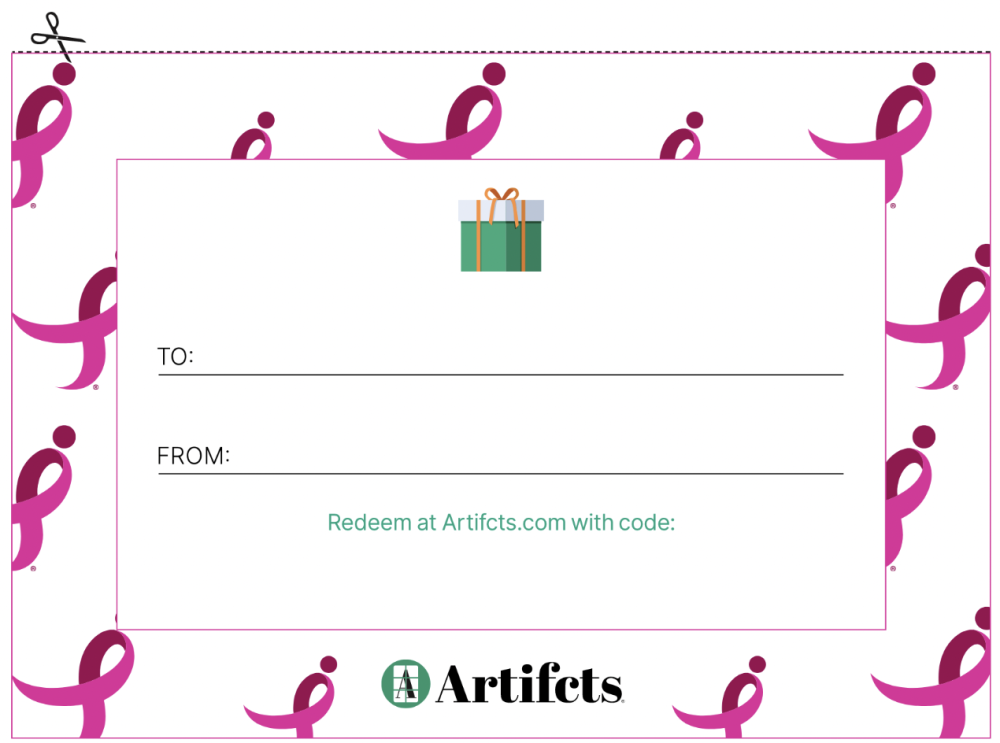
Artifcts also raised $2,500 as a partner through Artifcts gift memberships sold here. You can even choose a pink ribbon themed gift!

And I served on the Executive Leadership Committee for the MORE THAN PINK walk in Austin, Texas, to help bring in corporate sponsorships.

2025 – We’re In This for the Long Haul

As we look ahead, Artifcts has renewed its Friends of Komen agreement with Susan G. Komen. Buy a membership for yourself or as a gift and we’ll donate to Susan G. Komen. Buy or a gift a membership today -->  

gift cards for Artifcts memberships

I will also serve on the Susan G. Komen MORE THAN PINK walk Executive Leadership Committe again, this year turning my dreamer nature to a local marketplace filled with products and experiences beneficial to cancer patients, survivors, and supporters. 

We’ll also continue to share new resources we learn about to help all those affected by cancer. One of our favorites is We Got This (wegotthis.org), which is a gift registry for cancer thrivers and supporters. The founder Elissa Kalver’s story is one that at the start reminds us all to listen to our bodies and fight for our voices to be heard. But as We Got This and the movement around it grows, we’re in constant awe at what one person with a mission and vision can do to help so many.

Last but not least, I am announcing here and now my standing offer to provide free virtual workshops for cancer communities. During these workshops, I share my own surprising use of Artifcts as a private, digital scrapbook to document all things breast cancer. We walk through examples of how you can privately Artifct in a journal format or scrapbook style (all the gifts, cards, flowers and more) and create sharing lists and circles with others in your network. We each create an Artifct together during the workshop, with the option to share live with other participants.

If you need someone to talk with, reach out. I am here for you: Ellen@Artifcts.com.

###

© 2025 Artifcts, Inc. All Rights Reserved.

Share With Friends
4 likes
What's New at Artifcts
Be Present Now, Preserve the Memories Forever: Graduation Moments That Matter

There’s something magical about graduation season. Maybe it’s the tiny caps perched on kindergarteners with missing front teeth, the proud smiles of high school seniors standing on the edge of adulthood, or the emotional walk across a college stage after years of hard work and late-night studying. Graduation is more than a ceremony—it’s a milestone wrapped in emotion, hope, and memories. 

And yet, in the rush of planning parties, snapping photos, and making sure everyone gets to the ceremony on time, it’s easy to miss the very moments we want to remember forever. 

That’s why this graduation season, we want to encourage families to do two things: 

Be fully present in the moment.  

And when the celebration quiets down, take time to preserve the stories behind the memories. 

At Artifcts, we believe every graduation milestone deserves to be remembered—not just through photos and keepsakes, but through the stories attached to them.  

Every Graduation Tells a Story 

Graduation memories begin long before the diploma. 

  • It’s the handmade kindergarten artwork tucked into a folder somewhere in the attic.
  • It’s the middle school band recital program signed by friends.
  • It’s the high school letter jacket that still smells faintly like Friday night football games.
  • It’s the college graduation cap decorated with inside jokes, dreams, or tributes to loved ones. 

These objects may seem ordinary over time. But years later, they become emotional time capsules. 


One day, your child may hold their kindergarten graduation photo and laugh at how oversized the cap looked. A college graduate may rediscover the tassel they almost threw away and suddenly remember the exact feeling of hearing their name announced. 

The object matters. But the story behind it matters even more. As we often say at Artifcts: the story is the legacy. 

The Best Graduation Gift? Being Fully Present 

Graduation days can feel like a blur. Between coordinating family, finding seats, taking pictures, and hosting celebrations, many parents and graduates feel like the day disappears too quickly. Our co-founder Heather knows this all too well—four recitals and two graduations later she and her husband are still trying to figure out which photo goes with which program, and who exactly was in attendance at all those dinners!

So before worrying about the perfect centerpiece or party décor, pause. 

Watch your child walk across that stage. Notice the nervous excitement in their smile. Listen to the cheers from grandparents and friends. Take mental snapshots in addition to the photos on your phone. Relish the moment and the emotions (and keep the Kleenex close at hand).

Some of the most meaningful graduation celebrations aren’t the elaborate ones—they’re the personal moments families remember years later. In fact, a recent USA Today poll showed that many people say the most memorable parts of graduations are the photos, handwritten notes, and shared stories that connect generations together AFTER the event.   

The decorations will come down. The cake will be eaten. But the emotions of the day deserve a permanent place in your family story. 

From Kindergarten to College: Every Milestone Counts 

One of the beautiful things about graduation is that every stage of life brings its own kind of pride. 

Kindergarten Graduation 

The first tiny milestone. The first cap and gown. The first glimpse of how quickly childhood moves. 

Years from now, that little paper diploma may remind you of how proudly they waved at the audience or how they mispronounced half the songs during the ceremony. 

High School Graduation 

A season full of “lasts.” Last varsity game. Last school dance. Last time living under one roof together. 

These are often the years filled with memorabilia: yearbooks, medals, prom tickets, dried flowers, jerseys, handwritten notes from friends. They deserve context before memories begin to fade.

College Graduation 

A celebration not only of achievement, but perseverance. 

For some, the path was traditional. For others, it took unexpected turns, pauses, transfers, or years longer than planned. But every journey carries a story worth preserving and celebrating before your graduate makes their way into the "real world."

No matter the age or stage, graduation marks a turning point in a family’s story. 

Don’t Just Save the Stuff—Save the Meaning 

A graduation cap in a box eventually becomes “just an old hat” unless someone explains why it mattered. That’s where Artifcts comes in. 

Instead of simply storing keepsakes away, Artifcts helps families preserve the stories behind them. Upload a photo of the item, add written memories, include audio or video if you’d like, and create a digital legacy your family can revisit for generations. 

Imagine future grandchildren hearing: 

  • Why Mom chose that quote for her graduation cap;
  • How Grandpa worked night shifts while earning his degree;
  • Or why a faded kindergarten certificate still makes everyone smile.

Those stories transform ordinary memorabilia into family history. 

It’s Never Too Late to Document the Stories 

Here’s the good news: even if the graduation happened years ago, it’s not too late. You can still sit down with your graduate today and ask: 

  • What do you remember most about that day?
  • Who supported you along the way?
  • What challenges did you overcome?
  • Which keepsakes matter most—and why? 

Sometimes the stories become even richer with time. A tassel stored in a drawer for twenty years can suddenly unlock memories no one realized were still there. A forgotten class ring can reopen conversations about friendships, ambitions, and personal growth. 


Sometimes hindsight gives you the ability to understand why something mattered or still matters today. A couple of years out from the actual event, and you are better able to understand how decisions taken "way back then" have shaped and molded you into the person you are today.

The beauty of memory preservation isn’t perfection. It’s simply beginning. 

Simple Ways to Preserve Graduation Memories 

Inspired by graduation celebration ideas and memory-sharing traditions families already love, here are a few meaningful ways to preserve this season beyond the party itself:  

  • Create a photo timeline from childhood through graduation
  • Ask family and friends for handwritten advice cards for the graduate (Pro Tip: Get them to record an audio of their advice and Artifct that for the graduate! There is something super meaningful about being able to hear Grandmom's voice give you advice from miles away.)
  • Artifct meaningful keepsakes like tassels, medals, caps, and letters
  • Record a short video interview with the graduate about their hopes for the future
  • Preserve and Artifct graduation party invitations, programs, or speeches
  • Create a graduation t-shirt quilt for the graduate to take off to college with them 

The goal isn’t to save everything. It’s to save what tells the story. 


Celebrate the Moment. Preserve the Legacy. 

Graduation reminds us how quickly life moves.  One moment you’re packing kindergarten snacks. The next, you’re helping pack a college dorm room and worried about whether or not your graduate has enough laundry detergent (until you realize they probably won't even be doing laundry the first semester). And somewhere in between are thousands of little moments that deserve to be remembered. 

So this graduation season: 

  • Celebrate fully.
  • Be present deeply.
  • Take the photos.
  • Laugh hard.
  • Cry if you need to. 

And when the day is over, don’t let the memories fade into forgotten boxes. Because whether it’s kindergarten, high school, college, or beyond—every graduation story deserves to live on. 

###

© 2026 Artifcts, Inc. All Rights Reserved.
Read more
What Should You Do with Old Trophies?

Dusty shelves. Packed boxes. Maybe even a forgotten bin in the attic. Old trophies have a way of quietly accumulating over the years. We keep them because they are symbols of effort, achievement, teamwork, and growth. And yet, when it comes time to declutter, they can leave you wondering: Do I keep them? Toss them? Hide them away?

If that sounds familiar, you’re not alone. At Artifcts, we often say: it’s not about the object, it’s about the meaning. And trophies? They’re packed with meaning.

Let’s explore how to thoughtfully decide what to do with them—without losing what matters most.

Why Trophies Are So Hard to Let Go

Unlike everyday clutter, trophies represent moments when you showed up, pushed yourself, and were recognized. Whether it was a childhood soccer season, a debate championship, or a workplace milestone, each trophy holds a story.

But here’s the catch: over time, the object stays… while the story fades.

We’ve seen this happen with photos and albums, too. One generation later, people often can’t identify the faces or remember the context. The same is true for trophies. Without context, they risk becoming anonymous objects—metal, plastic, and wood with no voice, no story, no memory.


So before you decide what to do with them, start with this mindset shift: Your goal is not to preserve every trophy. Your goal is to preserve the meaning behind the ones that matter.

Step 1: Curate—You Don’t Need Them All

Take a deep breath: you do not need to keep every single trophy. In fact, trying to keep everything often leads to overwhelm and inaction. A more effective approach? Curate.

Choose a handful that truly represent:

  • A first (first win, first season, first breakthrough)
  • A peak moment (championship, personal best)
  • A meaningful memory (team, coach, or experience that shaped you)

Think of it like editing a photo collection—you’re keeping the highlights, not the duplicates or blurry extras. 

Step 2: Capture the Story Before It’s Lost

Here’s where the magic happens. A trophy without a story is just an object. But a trophy with a story becomes a lasting legacy. Ask yourself (or your family member, if they’re the one who earned it):

  • What was happening in your life at that time?
  • Why did this achievement matter to you?
  • Who was involved? Teammates, coaches, friends?
  • What did you learn from the experience?

Even a few sentences can bring a trophy back to life. At Artifcts, we call this adding context—and it’s the difference between something being forgotten and something being cherished.


Step 3: Decide What Stays (and What Goes)

Once you’ve curated and captured the stories, it becomes much easier to decide what to physically keep. Here are some options to help you along the way:

1. Keep a Select Few
Display the most meaningful trophies where they can spark conversation and reflection—not gather dust. Consider incorporating one as a bookend on a bookcase.

2. Artifct and Let Go
Take photos of the trophies you’re ready to part with and pair them with their stories. Our App makes it super easy to snap a photo, record a story, and share with family. This way, you keep the memory without the physical bulk.

3. Repurpose Creatively
Remove engraved plates and incorporate them into a shadow box or memory display. Alternatively, think about ways you can regift them, creating new memories and stories. 

One of our members shared with us that they hosted a family Olympics last summer, and gave out old trophies for the winners! Fastest swimmer, most excellent hula-hooper, champion of the ice cream eating contest. He said, “not only did I get rid of all the kids old trophies, we made new memories in the process.” That sounds like a win-win to us!

4. Donate or Recycle
Some organizations, schools, or clubs can reuse old trophies by replacing nameplates. You may be able give the trophy a second life—and someone else a moment of pride. Check with local schools, libraries, recreation centers, and Boys and Girls clubs. 

Step 4: Share the Stories

Stories are meant to be shared, not stored away. When you document and share the meaning behind a trophy, something powerful happens: others begin to see its value. We’ve seen time and again that once a story is known, an item that “no one wanted” suddenly becomes meaningful to someone else.


Maybe your child never realized how much that award meant to you. Maybe a grandchild will see themselves in your story of perseverance. Objects connect generations—but stories make that connection stick. With Artifcts, you can easily (and privately) share the stories with loved with a single click. 

A Final Thought: It Was Never About the Trophy

At the end of the day, the trophy itself was never the point. It was about:

  • The early mornings and late practices
  • The wins and the losses
  • The people who supported you
  • The person you became along the way

The trophy is just a symbol. The story is the legacy.

The trophy is just a symbol. The story is the legacy.

So whether you keep one, ten, or none at all, make sure you hold onto what truly matters.

And if you can, Artifct it—so those stories live on, ready to be discovered, shared, and remembered for generations to come.

###

Looking for more downsizing tips? You might also enjoy reading these related ARTIcles:

What Should You Do with Old Photo Albums? 

What Should You Do with Old Scrapbooks?

How Swedish Death Cleaning Helps You During a Move

© 2026 Artifcts, Inc. All Rights Reserved.
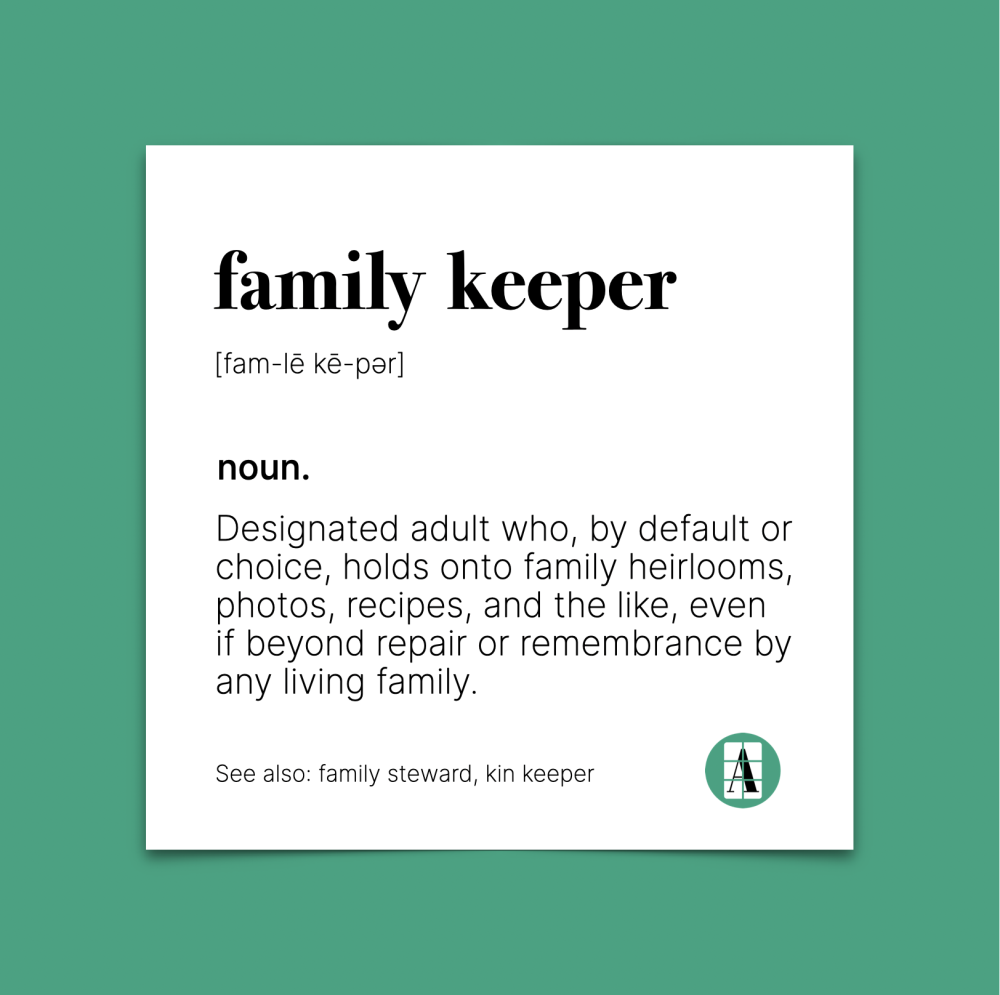
Read more
What Will Your Family Remember? A Modern Family Archive for the Modern Family

In her recent New York Magazine article titled "What Are We Doing About Our Family Archives?" Kathryn Jezer-Morton raises a question many of us quietly avoid: what are we doing with our family stories, memories, keepsakes, and more?  

It’s the kind of question that quietly follows you into the attic, into the basement, into the moments when you open an old box and find yourself holding something that once meant everything to someone you love. A photograph with no names on the back. A recipe written in a familiar hand. A watch, a letter, a ticket stub—objects that feel heavy not because of what they are, but because of what they carry. 

Most of us don’t think of ourselves as archivists. And yet, in some ways, we all are. 

A body of research shows that family archives—photos, letters, heirlooms, even everyday objects—play a powerful role in how families understand themselves and pass meaning across generations. 

But here’s the challenge: most family archives are fragmented, overwhelming, and at risk of being lost. That’s where Artifcts offers a refreshingly modern approach. 

Your Family Archive, Reimagined 

Family archives are rarely neat or complete. They’re scattered across shelves and drawers, split between relatives, tucked into albums or forgotten in envelopes. And even when we hold onto the objects, the stories behind them begin to soften, blur, and eventually disappear. 

You might know what something is—but not why it mattered. That’s the quiet loss that happens over time. 

Artifcts offers a different way forward. Not by asking you to hold onto more things, but by helping you hold onto what matters most: the stories, the context, the meaning. 

Turning Moments Into Memories That Last 

Using Artifcts feels less like archiving and more like remembering—intentionally. 

When you create an Artifct, you’re not just cataloging an item. You’re pausing long enough to ask: Why is this part of my story? And then you answer it, in your own words, in your own voice. 

It might be an old photograph—one you’ve seen a hundred times but never really documented. You upload it, and suddenly you’re recalling the beach, the summer heat, the way your brother always stood just out of frame until someone insisted he joined. Maybe you don’t know everyone in the picture, but you know enough. And that’s enough to begin. 

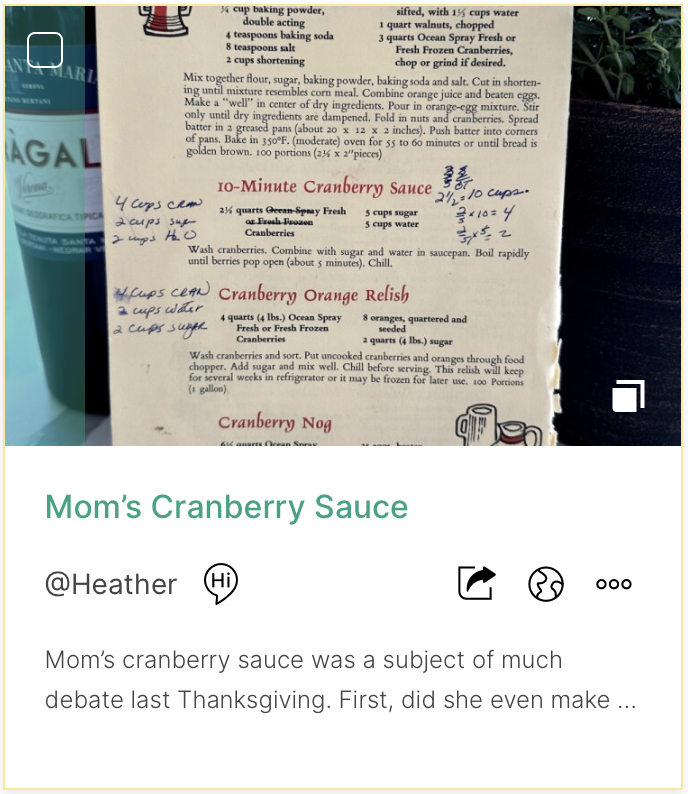
Or maybe it’s a recipe. Not just ingredients and steps, but a ritual. The way the kitchen smelled. The way no one was allowed to sit down until everything was “just right.” You write it down, and then you add something more—a short video, perhaps, of someone in your family making it. Or an audio recording of you explaining why it matters. And don’t forget those “unwritten rules,” Grandma never did. Extra cinnamon, yes please! 


And just like that, something ordinary becomes something lasting. 

Hearing the Past, Seeing the People 

There is something powerful about hearing a voice again; seeing someone’s gestures, their expressions, the way they tell a story only they could tell. Artifcts allows you to add audio and video to your memories, and this changes everything. 

A written story is meaningful—but a spoken one feels alive. 

A written story is meaningful—but a spoken one feels alive. 

Imagine a future grandchild not only reading about a family tradition, but hearing it described in your voice. Seeing the way you smiled when you talked about it. That’s not just preservation. That’s a connection across time. 

Watching Your Story Unfold 

As you begin to add Artifcts, something unexpected happens. The moments start to connect. 

With our Artifcts Timeline feature, your memories are automatically arranged across years, decades, even generations. What once felt like isolated pieces becomes something more like a story unfolding. 

You begin to see patterns. Traditions that repeat. Moves, milestones, turning points. You see how one moment led to another, how a family becomes over time. Your kids and grandkids can see what made you “you.” And the entire family can better understand what matters most to you by the very fact of what you chose to Artifct.  

With Artifcts Timelines, your family archive is no longer just a collection. It’s a narrative pieced together by you over time. 

Letting Go Without Losing Anything 

If you’ve read this far and you’re dreading ending up with a basement full of everyone else’s stuff, fear not. One of the hardest parts of being the keeper of family history is the weight of it all—the responsibility, the volume, the feeling that letting go of something might mean losing it forever.  

Artifcts makes it possible to preserve the meaning of an item even if you decide not to keep the item itself. You can document it fully—its story, its significance, its place in your family—and then choose to pass it on, donate it, or simply let it go. 

What remains is what mattered all along. Not the object, but the memory it carried. 

A Living Archive, Not A Finished One 

Your family archive isn’t something you complete. It’s something you will continue. It grows as you remember more, as you ask questions, as you take the time to capture what might otherwise slip away. It becomes a shared space where stories live—not just for you, but for everyone who comes after you. 

And maybe that’s the real answer to the question Kathryn Jezer-Morton asked. 

We don’t need perfect archives. We don’t need everything organized and complete. We just need to begin. One photo. One recipe. One piece of jewelry. One story. 

Because in the end, it’s not the things we pass down that define us. It’s the meaning we choose to remember—and the care we take to make sure it isn’t forgotten. 

###

© 2026 Artifcts, Inc. All Rights Reserved.
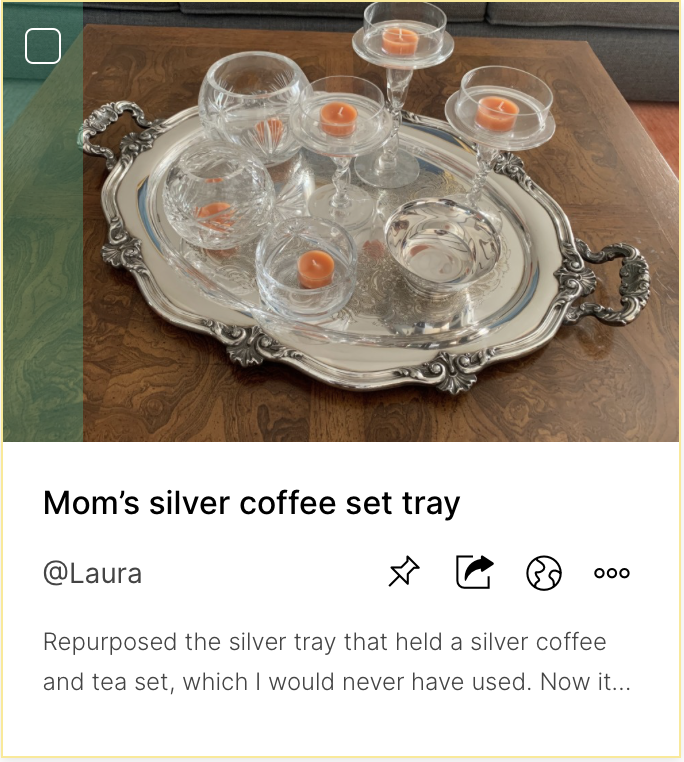
Read more
Your privacy

This website uses only essential cookies to provide reliable and secure services, streamline your experience, allow you to share content from this website on social media, and to analyze how our Site is used. Learn more about these cookies and cookie settings.

Accept & Continue
Oops! This Web Browser Version is Unsupported

You received this warning because you are using an unsupported browser. Some features of Artifcts will not be available or will be displayed improperly until you update to the latest version or change browsers.

Close
Image for unsupported banner Oops! This Web Browser is Unsupported

You received this warning because you are using an unsupported browser. Some features of Artifcts will not be available or will be displayed improperly until you update to the latest version or change browsers.

Unsupported banner close icon Close