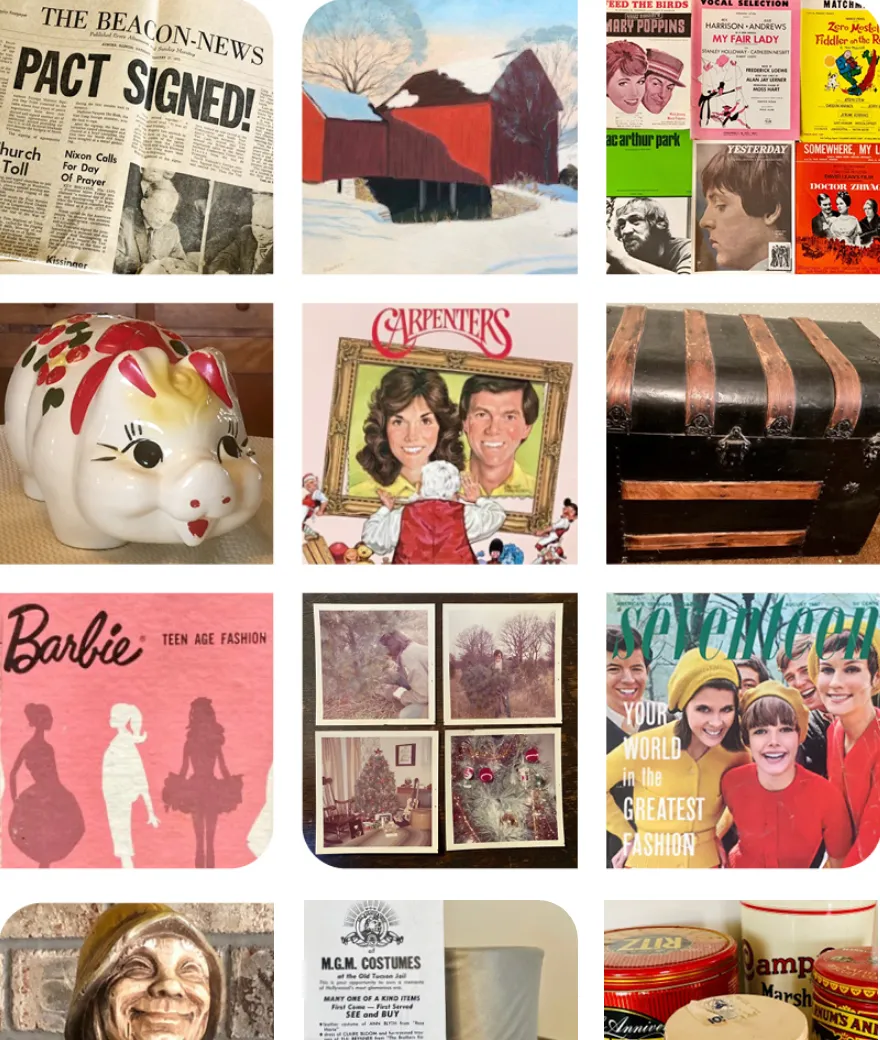


Give the gift small icon
Give the gift of Artifcts!
HELLO!
Give the gift big icon
Give the gift
of Artifcts

The perfect gift for the person
in your life who has everything.

Give a gift Close
Exclusive articles, interviews, and insights covering downsizing & decluttering, genealogy, photos and other media, aging well, travel, and more. We’re here to help you capture the big little moments and stories to bring meaning and order to all of life’s collections and memories for generations.
Share With Friends
CONVERSATIONS
Three Tips for Elevating Your At-Home Artifcts Photography

From the Artifcts Vault!

This week, as our focus on collections continues, we asked interiors and brand photographer Linda Pordon to share three tips to help elevate your at-home Artifcts photography.

Linda is a recognized interiors and brand photographer based out of the New York/New Jersey area. Her work has been published in outlets including Better Homes and Gardens, Domino, Elle Decor, and the NY Times. Additionally, Linda is the owner and founder of Proppe Shoppe, a collection of curated vintage and one-of-a-kind decorative objects and furnishings for the home. (Maybe you'll nod with understanding when you see some of these one-of-a-kind finds didn't even make it to the store front but are instead futured in Linda's public Artifcts collection!)

Through her photography, Linda aims to convey the feel and depth of the pieces and spaces she photographs but, more importantly, she aims to create emotional connections to these subjects through her lens.

Hear from Linda directly for a few easy tips you can try at home to elevate the photography of your cherished objects without any fancy equipment (or frustration!). 

1. FIND THAT LIGHT

Let's start off by going against what you may think ... the "best light" does not necessarily mean find the brightest light possible (or upping your exposure on your phone editing mode) to make it all "light and bright."  I have photographed and sold $800 sculptures that look like they were taken inside a dark closet. But oh they were sexy. The shadows made you feel something when you looked at it. Sometimes, less is more. So a few tips for lighting:

It may seem counterintuitive but TURN YOUR LIGHTS OFF. Use natural and only natural light if you can.

      • Bring objects outside. The perfect weather to photograph items is an overcast, cloudy day.  It gives even but bright-enough light.  If it’s sunny out, find a spot in the shade to place your object.  When outdoors, you want to make sure your light is even and not too bright.  Watch out for dark shadows that will overpower your images and distract.
      • When photographing inside, just open your shades and set up near a window ... just not directly in the sun.  If your brightest room is too bright, use a bedsheet to hang or tape over the window to diffuse the light a bit. Get creative!
      • If you can't move your object, make sure you try to minimize the artificial lighting that is needed or opt to bring lights closer vs have the orange glare and reflection of overhead lights.

Play with (gasp) shadows.  

I said it. Use objects near or in front of your light to create shadows. A window pane. Hold a stem of flowers in front of the light. A raffia hat. You get the point. This is so easy to do and creates such high drama and can be done with things you have around the house. Your images will be looking "editorial" in no time.

White wood interior home staircase down to open foyer with pale oak flooring


I was photographing my Artifcts on a very rainy and dark day, so I used the space in our home that has the most windows and late afternoon light - our foyer.
 
 
© 2023 Linda Pordon. All Rights Reserved.


2. KEEP YOUR BACKGROUND SIMPLE AND MAKE IT CONSISTENT

If you're photographing several objects or an ongoing collection, try to make sure your color story and mood are consistent.

Do you want all bright pops of color behind your objects? Simple white? Dark and moody? The world is your oyster. My absolute favorite backgrounds are Replica Surfaces Boards (not sponsored but they should be!) which are lightweight and completely wipeable. The marble truly looks like marble and I have photographed it in every lighting possible. I wouldn't lie to you.  

If you don't want to invest in purchasing backgrounds, you can grab cheap poster board and keep it white or paint it any color or texture you feel like. Or hang a sheet against a wall and drape it down onto the floor. You would be shocked at how many brands are keeping their backgrounds pretty organic and homemade these days, but the images still look stunning and professional. 

Bright open foyer with small table and ti-fold white paper board


Here I just added a table for height (even any stool with a fabric over it would do) and then a rather cheap white tri-fold poster board to cover the trim work detail on the back wall.
 
 
© 2023 Linda Pordon. All Rights Reserved.


3. THINK (AND PAUSE) BEFORE YOU SNAP

The biggest advice I would give you is take your time. Really think about your shot. Take your time holding your camera (even if it's your iPhone).  Look around at the light. When my kids photograph with me for fun, I always have them walk around and take pictures with their hands to really see things before they get distracted with clicking the shutter. Think before you get snap happy!

A few concrete things to focus on:

Composition: This is a really big part of photography and a hard thing to break down succinctly, but try to be mindful of the following:

      • Leave negative space. It lets the eye breathe and actually makes your object more of a focal point.
      • Group smaller objects closer together to give them more "weight" on camera (groups of 3 are generally pleasing to the eye).
      • Vary up your angles. Make sure you get at least one head-on shot. Stand on a stool and take some overhead.
      • Watch your sight lines. Make sure key details aren't blocked. Try to see what your eye is drawn to and how it moves across an image.  

GIF carousel of photos of the same object from different angles


All taken by an iPhone 11 Pro Max (yes, I'm waiting for the new phone); edited on Lightroom mobile.
 
 
© 2023 Linda Pordon. All Rights Reserved.

Gridlines: My #1 tactical PLEASE PLEASE do this is get your picture straight.

If you are taking pictures crooked, panned up or down and not taking a minute to get as straight as possible, your images are always going to look more amateur. I can forgive almost any sin above the crooked image. An iPhone trick here is to turn your gridlines on (Settings -> Camera -> Grid set to green), and voila! The Lightroom app (available on iOS and Android) also has a great feature to auto correct gridlines (Geometry -> Upright click this toggle -> keep to "Auto," generally).

Editing: If you looked at a professional photographer's images, they should look pretty good SOOC (straight out of camera), but we would all be lying if we said post-production editing isn't a large part of the creative process.

There are some horrible filters out there, but there are also some good free and cheap phone apps you can use for your camera phone photos.  Lightroom is my favorite for photo editing. I also love Color Story. Your iPhone's built-in camera editing tools aren't all that shabby either. Try to keep your highlights down, your shadows up, and play with the contrast and warmth as much as you want. If you find settings you love using, try to consistently apply them to your images.  

iPhone vs DLSR - Which final photo would you choose?

Taken by iPhone 11 Pro Max; edited on Lightroom mobile  Taken by Nikon Z6 mirrorless DSLR; edited on Lightroom desktop


(LEFT) Taken by iPhone 11 Pro Max; edited on Lightroom mobile.
 
 
(RIGHT) Taken by Nikon Z6 mirrorless DSLR; edited on Lightroom desktop.
 
 
© 2023 Linda Pordon. All Rights Reserved.


Last, but not least, have fun with it.

Photography is such a beautiful way to tell a story about something or someone you love. My favorite photos are the ones where I wasn't overthinking, I wasn't hyper focused on the technical pieces, and I was just inspired by what I was shooting. Enjoy the gift of translating things you love for others to see and enjoy.  

Original Clay Sculpture, Earth, Linda Pordon


Pop over to Linda Pordon's public Artifcts collection to view the "finished" Artifct from her rain-filled day of Artifcts photography. A bonus Artifct is there awaiting you with an oh-so-sweet story.

Share with us Artifcts you've created putting some of Linda's tips to the test at Editor@Artifcts.com. Or share directly with Artifcts on Facebook or @artifcts.official on Instagram - we love videos too!

Want to learn more from Linda? Watch our Evenings with Artifcts event replay!

Happy Artifcting!

###

ABOUT THE FEATURED PHOTOGRAPHER

Linda Pordon is an interior and commercial brand photographer based out of Ho-Ho-Kus, New Jersey. She has a B.S. in Finance and started her career in forensic investigations at PricewaterhouseCoopers before pivoting to marketing as an executive at American Express in the premium product space for 15 years. Linda draws on her 20-year tenure in corporate marketing and strategy to enable her to better translate the visions and stories of businesses in her photography work. When she's not behind the lens, Linda has her hands full with her favorite ever-moving subjects, her three young sons, 5, 7, & 9 years old.

© 2023 Artifcts, Inc. All Rights Reserved.

Read more
Genealogy for the New, the Frustrated, and the Reluctant: Our Conversation with a Professional

Reading time: 7 minutes 

We see you! You’re curious about something in your family history but are no genealogy pro. You are strapped for time and fear the complexities and cost involved in getting started and doing the research right.

The good news is that you do not need to become a genealogist to benefit from the voluminous records available online and via traditional hardcopy archives of old. We always encourage you to start “old school” with what you may have at home. Check out our Genealogy Gems checklist.

Notebook paper with list of genealogy research items in your home

In today’s conversation, you’ll learn about how professional genealogists can support your efforts to gain new information no matter if you are a highly experienced researcher or an amateur family historian who loves a good story. Who doesn’t after all? Myths, legends, campfire tales are all about good stories. Even better when they stories are your family’s stories!

Genealogy Research with the Pros

Sheri Bennett, a professional genealogist and project manager with Legacy Tree Genealogists, knows a thing or two about genealogy. A practicing professional for nearly two decades with a degree from Brigham Young University (BYU) and first-hand research experience in Mexico and Chile, she’s seen a lot. Enjoy our chat with Sheri as we explore what professional genealogists bring to the table to resolve your family history puzzles and curiosities. 

Ellen Goodwin: It’s not every day I get to chat with a professional genealogist. I’m hardly even a hobbyist. More an admirer! And you have a deep professional background and interesting specialties, too.

Sheri Bennett: Well, you’re in good company with Legacy Tree Genealogists, because we work with all types of people interested in genealogy. But, yes, you gave my technical background, and that’s been bolstered by my own family research while I was at BYU and over the course of my career. My dad was from Tennessee and my husband the south as well, so between researching their ancestry and my own time in Chile and Mexico, I have developed specialties in the US South and Midwest as well as supporting Spanish-language research.

Goodwin: In your experience, is there a common theme as to why clients hire professional genealogists?

Bennett: The specifics vary but, in general, they simply want to know – what are our stories, who were my people, where did they live and work, why did they move? They want concrete answers.

Sometimes to get these answers you need help that stretches beyond a passive hobby, because as we all know, not all information is created equal. I was shocked when a professor once told me that all those many many many family trees out there are only ~40% accurate! People think they are related to people they are not related to if they accept others’ trees.

Goodwin: That sounds … messy. Does that mean you spend a lot of time correcting trees?

Bennett: A lot of time, no, not necessarily, but it is a very common request from clients. We use two documents per relationship to validate and/or correct a relationship. One document is never enough. Someone else’s tree is never enough.

Goodwin: I think that’s a major draw for people like myself: In seeking these answers, you offer reassurance. Your work meets standards that mean your clients have concrete answers and can avoid passing down inaccurate information.

Bennett: As professional genealogists, the genealogical proof standards from the Board for Certification of Genealogists are the cornerstone of our work and our core values at Legacy Tree Genealogists, too: Care – Cooperation – Accuracy – Respect – Efficiency.

We have an obligation to undertake “reasonable exhaustive research.” The key word being exhaustive. What record could contain the needed information? Tax records, probate, … may all be relevant. And what archive, where, would hold that document?

Goodwin: I love how excited and passionate you get about this work as we’re chatting. Even a document is not just a document to you. For so many, it’s hard to breathe life or context into a piece of paper.

Bennett: Documents are so exciting. It’s a connection! They aren’t just paper – if you know how to interpret them, they can tell a story. Where they were born, to whom, was dad not even listed and was that normal for the time? If you’re lucky, like in some Latin countries, even grandparents are listed in a birth certificate, and you get three generations in one document!

Audio icon on beige background labeled "Listen in!"

Stories are there, hidden in those documents.


Goodwin: I’m excited just imagining what all that information you research could mean for today’s descendants. I can picture it: here's the city so-and-so was born and raised in, and the church where she was married—see their signatures on the marriage license—and the location where the bakery she and her family operated once stood, and so on.

Bennett: Yes, seeing it all in black and white, it’s amazing. And to your point of envisioning it, we even map those locations out for clients. You could use it to plan a family heritage trip! It’s another way we can bring the research to life for our clients – real people, real places, real relations and roots of yours.

Goodwin: Your specialties, local knowledge, and archival access across your global team must be an incredible asset to your clients. I know that in my mother’s family, the paternal line was the subject of a self-published book in 1992, but the author mentions at the outset all sorts of gaps where no matter how many letters she wrote to archives in England, Germany, and elsewhere, she never found certain records.

Bennett: Absolutely. We have researchers who specialize in different areas across the world. Often when hobbyists or amateur genealogists hit brick walls like your family member did, it’s because they are working online and cannot access the old churches, tax offices, and other archives where original records are kept.

Goodwin: Thinking about those original records, validating places of birth and marriage, for example, are more black and white sorts of records searches. Surely people also come to you with information more akin to family lore that they want you to explore?

Bennett: Ha, yes. And I’m sure you read a lot of family lore at Artifcts, too. Curiosity certainly motivates people. They want to know if the family legends are true. Do we have a Cherokee princess in the family line? Are we really related to Jessie James? Did my ancestors come over on the Mayflower? They are curious, but they don’t have time to unearth this information themselves.

They want to know, are the legends true?

Goodwin: In seeking these answers, you deliver insights and the proof we spoke about earlier. Clients receive a written report, along with a fan chart, copies of the original documents, and even a data file that they can upload to genealogy software to update their tree. Did I miss anything?

Bennett: All of our findings are delivered in a binder and a password protected website, too. And, keep in mind, it's all the research findings along the way, too.

One of our clients in Cuba was trying to trace his family’s origins back to Spain. But it wasn’t as simple as going one or two generations back. Ten generations back and at last we landed his family in Spain. All of our research discoveries along the way, even the dead ends, were valuable and validating.

Nil results are still progress!


Goodwin: What’s one detail about family history and genealogy research that people might easily overlook?

Bennett: The photos. Often clients want us to find photos of their ancestors, and here there’s an important “yes, but” to consider.

Audio icon on beige background

Was your ancestor in the newspaper? That would help.


Goodwin: I know exactly what you mean about the feeling of connection when you discover new details and context. I Artifcted a family brooch after a lengthy episode of chasing family history and had I known more about it earlier, I would have worn it on my wedding day.

If I were a client of yours, could I share that Artifct with you to support your research? 

Bennett: Yes! We prefer clients to share files with us digitally, if possible, so we can easily access and review them and avoid duplicating any progress they may have already made in their family research.

We certainly do not want you to send us a brooch or original photo or document. If those resources are Artifcted, all the better! We can weave Artifcts into the biography along with the photos and documents within each Artifct, too.

<<End Interview>>

There’s that age old saying, working smarter not harder. And sometimes, yes, that means calling in a professional genealogist for a course correction, powering through a brick wall, or inspiring your search down paths you’ve never even caught a glimpse of. We love that your Artifcts can capture and boost those genealogy discoveries and sharing and hope you’ll have a lot of fun as you continue your family history research!

Happy Artifcting!

______________

You may also enjoy these additional ARTIcles by Artifcts:

Did You Know Great Grandpa was an Inventor?

Grandma's Secret, Not-So-Secret, Coin Collection

She's the Last of Her Generation

###

© 2023 Artifcts, Inc. All Rights Reserved.

Read more
How Two Sisters Overcame the Guilt to Lighten the Load of Family Heirlooms

Up until a few years ago, Rachel Donnelly, founder and CEO of AfterLight, and her family owned their old family home that had been in their family since 1890. Imagine the history those walls could tell! This home, in Eastern Tennessee, was where Rachel’s great-grandparents lived, where her grandmother was born, and where her mother was raised.  
 
After Rachel’s mother died, the family made the difficult decision to sell this beloved turn-of-the-century Victorian home that was in Rachel’s words “slap full of absolutely everything from our family's life. China, silverware, crystal, knickknacks, handwritten letters, newspaper clippings, coin collections, and of course, countless pieces of big brown furniture. You name it, it was in this house.”  
 
Buckle up, ladies and gents, we're going on a guilt trip. 
 
Rachel and her sister grew up with the expectation that the items filling this family home would one day fill their own homes, including the big brown furniture. Their mother made them swear they'd never get rid of these items that, in her mind, were priceless and irreplaceable. So, for years, Rachel and her sister were on a never-ending guilt trip.  
 
Fast forward, and the sisters’ homes have indeed become orphanages for the big brown furniture and knickknacks that their mother passed down. But guess what? Guilt be darned - the sisters are fed up! The time has come for them to unload the stuff of generations past to homes where families will cherish the pieces of their mother’s estate that simply do not fit with their own lifestyles. 

The sisters’ homes have become orphanages for the big brown furniture and knickknacks that their mother passed down.

We can all do better for the next generation.
 
What if we skip the proverbial guilt trip we create by unloading our stuff on our family, intentionally or not, and instead make a plan that will allow everyone to enjoy a trip down memory lane instead? At AfterLight, Rachel guides her clients down these planning paths every day. In honor of Make-A-Will Month this August, read on to learn some ins and outs that may help you on your way.   
 
Ellen Goodwin: I imagine that based on that fun introduction to our conversation, people can easily picture you and your family in good ol’ southern U.S.A. And that’s really important context for our readers. Our family relationships as well as the types of ‘stuff’ we tend to collect and pass down as family heirlooms often differs by region. 
 
Rachel Donnelly: Even though dealing with it was quite burdensome, I feel so fortunate to have had our family home as part of my childhood. This home was beloved by generations of my family and was full of so much history. The town in which the home was located was referred to as the "Utopia of Temperance," as it was a planned community where alcohol (aka the Devil's Drink) was strictly prohibited and any trace of liquor would lead to the property's confiscation by the city. Well, if walls could speak, they'd have tales to tell! I've always cherished the stories behind the various items in the house and what they symbolized in our heritage. My grandmother was an incredible cook and one of my prized possessions is her index box of recipes.  
 
Goodwin: What is universal in life is loss. And you are at the very forefront of helping people in modern times get through the planning and after-loss realities. It’s complex! Please help our readers understand the “why” and “what” of AfterLight. 
 
Donnelly: I like to say I received an immersive MDA (Master of Death Administration). After my own experiences with loss, including the death of my parents, and serving as the primary caregiver for and eventual executor of my uncle’s estate, I struggled to manage all the unavoidable administrative tasks that accompany aging, end-of-life, and after loss.  
 
It can take over 500 hours of effort and 100+ tasks for an executor to settle an estate. And executors are expected to complete these tasks, which are for the most part ones they have never done before, all while trying to grieve, work, take care of their family and/or prioritize their mental health. 
 
I searched for help with the tasks, paperwork and logistics in the weeks and months after my losses but struggled with where to turn. I experienced this struggle personally and noticed that there was a gap in the market of businesses meeting this need. 
 
They say that need is the mother of invention, … At AfterLight, our goal is to provide overwhelmed executors with practical, personalized support. We’re on a mission to help the living deal with dying, fostering lighter hearts and lighter loads. AfterLight assists clients in managing the unavoidable administrative tasks associated with after loss and legacy planning. Whether you’re facing an unexpected loss or want to prepare your legacy so your family can grieve in peace and settle your affairs with ease, AfterLight is the answer to your overwhelm. 

After my own experiences with loss, [...] I struggled to manage all the unavoidable administrative tasks that accompany aging, end-of-life, and after loss.

Goodwin: An interesting parallel between your work at AfterLight and the act of Artifcting is that both are about human behavior and habits. If we want better outcomes, we have to take steps proactively to do something about it, whatever the “it” is. What do you find are the one or two most challenging steps for people to take in terms of planning and preparedness? 
 
Donnelly: In my opinion, the primary challenge is our discomfort with the fact that we know how this ends – i.e., that we’re all going to die someday. Therefore, many people avoid thinking about it or taking action, as though doing so might somehow become a self-fulfilling prophecy. 
 
The second challenge is that organizing one's affairs can be overwhelmingly complex, because people don’t really understand how it works and therefore, it's easy to be unaware of all of the steps they need to take to not leave a flaming dumpster fire for their family. Along the same vein, legacy planning is often filled with misconceptions. I've come across various attitudes, from "My kids are smart, they'll figure it out," to "My estate isn't significant enough to warrant planning," or even "I'll be dead and won't care."

I've come across various attitudes, from "My kids are smart, they'll figure it out," to "My estate isn't significant enough to warrant planning," or even "I'll be dead and won't care."

Goodwin: So, it is Make-a-Will month. Obviously, some people don’t even have wills (yet), while others simply need to update their wills. But there are also those of us who have wills that check the box only. Wills can and should do more to help people through grief by very intentionally addressing legacy, memories, and even anticipated points of … ahem, contention … among family members and other heirs. In your view, how can folks take a good, better, best approach to life preparedness this month? 
 
Donnelly: I believe that approaching life preparedness with intentionality and strategy, rather than simply treating it as a checklist of documents, leads to a more comprehensive and meaningful end-result. 
 
When working with our clients one-on-one, we take on the roles of accountability partner, coach, and organizer. Our aim is to help our clients to explore critical questions they may not have considered, procrastinated on, or underestimated the importance of. Some of these important questions include:

    • If you do have estate planning documents (such as a will, trust, financial power of attorney, and advance directives for healthcare), does your family know how to access them? Where are these documents located?
    • Have you shared the unlock codes for your phone and computer with a trusted contact?
    • Are your beneficiaries correctly designated and up to date?
    • Do your loved ones know your funeral wishes?
    • Have you communicated with your family about who will inherit specific items of personal property and when? (Hello! Get going on Artifcts!)
    • There’s no better solution to convey what everything is, what it means to you and your family, and WHY you are gifting it to the person you’ve chosen.)
    • Does your family have a clear understanding of your debts and assets, including a comprehensive list?

@rbdonne is a "family keeper" for family heirlooms big and small.

An antique cricket cage

By addressing these questions and actively engaging in the planning process, we can each achieve a more well-rounded and thoughtful approach to securing our legacies and ensuring our loved ones are better prepared for the future. And who knows, you might even have some fun in the process, especially if you share as you go via Artifcts.

______________

You may also enjoy these additional ARTIcles by Artifcts:

Gift Your Loved Ones a "Why"

What Have You Done for Your Legacy Lately?

Storytellers, Beware!

###

© 2023 Artifcts, Inc. All Rights Reserved.

Read more
Because Who Wants 300 Miniature Pianos!

There's a fear factor motivating some adult children to prematurely help - some more aggressively and/or cheerfully than others - their parents downsize, whether to downsize and literally move into a smaller home or downsize at home to more minimal possessions. The end goal for these adult children is sort of "Not it!" Do not send all that stuff to me. I don't have room for all my own stuff, never mind your stuff, too. 

The question for the parent in this scenario becomes one of legacy - will you leave a burden of stuff, or one of memories, rich with who you were in your lifetime, and who you were together, too? Shared now and shared later, maybe through these stories and memories you’ll help release people from holding onto so much stuff that the stuff becomes that burden the adult children fear, clouding the memories. 

A blue bowl and red handle thin metal spatula


Simple everyday objects, with meaning. But will you keep them always, or maybe just the memories?  

On that note, meet Sue, a member of the Artifcts Community. And not just any member. As she approaches her first anniversary with Artifcts, she is also our top Artifcter, surpassing even the founders of Artifcts who had a head start and a natural predilection for Artifcting. 

Who is Sue? If you search @Sue on Artifcts, you'll see only a single Artifct. We did promise everyone that your Artifcts need not be made public. Everything is private by default, and Sue loves this freedom. 

Artifcts co-founder Ellen Goodwin sat down with Sue to learn who she is, what she Artifcts, and most important of all why she Artifcts. It was such a treat to chat with an Arti Community member directly and a fascinating conversation. Enjoy! 

_________________

Ellen Goodwin: Hello Sue! We want to know all about you. Who are you, and what brought you to Artifcts? 

@Sue: I am a piano teacher. One of my personal collections is miniature pianos. I am also my family’s keeper and a genealogist. I have collections from both sets of grandparents, my parents, and of course my collections as well as my husband’s. This house is like a museum! Name anything, practically, and I probably have something of that. 

I keep wanting my daughter to come down to North Carolina and go over things with me. Find out what she wants, and what she’s not interested in so I can do something with it. But there’s never enough time. And my son-in-law really doesn’t want all this stuff. So he gave me Artifcts as a Christmas present last year. 

Sue shared this reality with grace and humor. Watch now!

Goodwin: What did you Artifct first? 

@Sue: Christmas ornaments! Well, all things Christmas, really. I have heirloom ornaments, multiple Santa Claus figurines, and other items, so before I packed them up last year, I Artifcted them.  

Goodwin: And then you continued Articting, focusing on collections or at random? 

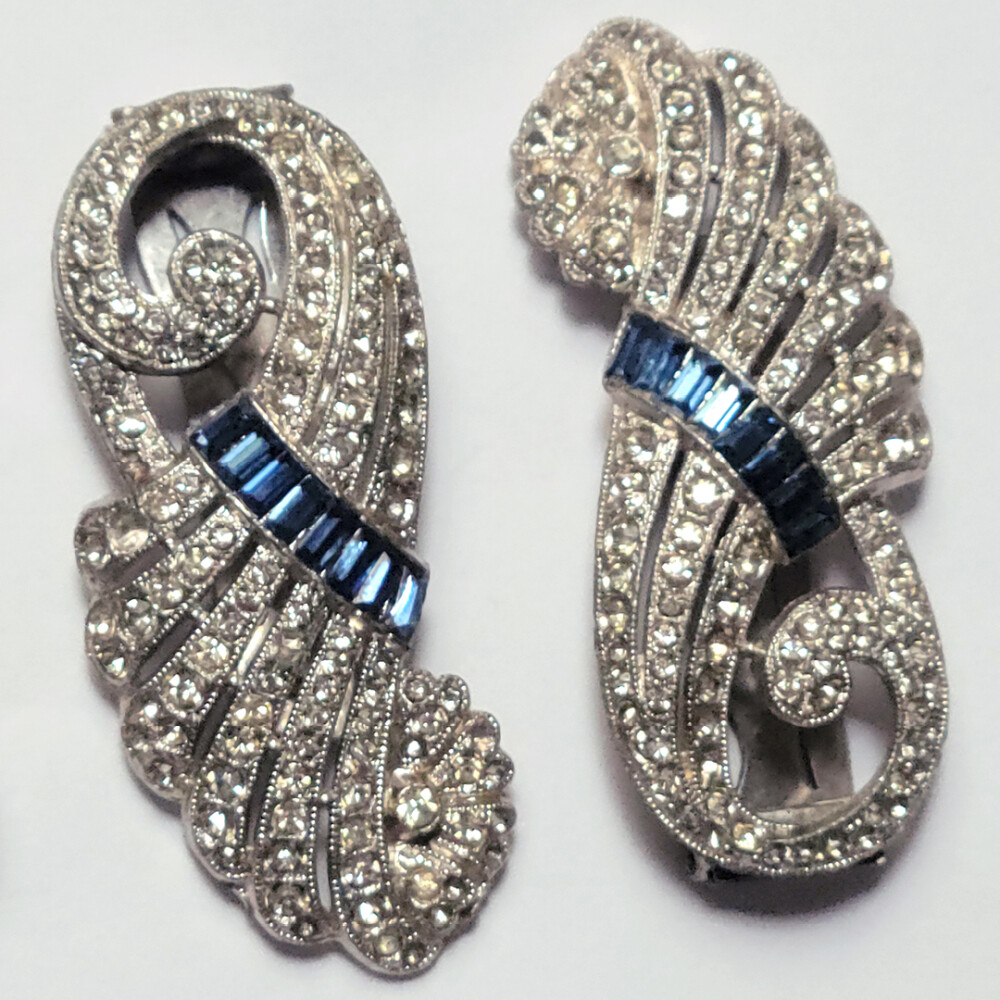
@Sue: As I have bits of time here and there, I have just started. No particular order. Just what my eyes light on in a moment in time. Sometimes Artifct collections. I laid out all my jewelry one day and enjoyed working my way through it, sometimes Articting pieces individually, sometimes Artifcting collections, like brooches. 

Costume jewelry - rhinestone brooch

I have Artifcted my grandfather’s weapons collection as well, including antique knives, some of which date back to the late 1800s. My grandson caught sight of the knife collection, and was interested, so he’ll inherit them. His great grandfather’s collection!  

Goodwin: And we hope you’ll share the “why” behind this knife collection with your grandson, as well as the “why” of all of your own collections, like your pianos! 

@Sue: Piano has been a passion of mine for a long time. I found out recently through my genealogical research that my middle name Beth is for Beth of Little Women, the pianist of the family. I don’t remember who gave me my first miniature, but my mother kept adding to it, and then I did eventually, too. Each is very different. Now my senior graduating piano students get to choose one from the collection, a remembrance from me to take with them. I have only Artifcted the very unusual pianos, like one from ivory, another from Dresden. I am Artifcting the ones that are special so my daughter knows which are which.  

Read our story about gifting your loved ones a why > 

Goodwin: You told me that you Artifcted a collection of family bibles, nearly a dozen. I’m curious. What’s next for them?  

@Sue: I inherited 40 boxes of heirlooms, pictures and genealogy papers, which I am still going through. These bibles were among the boxes and now sit in the open air on top of a family cabinet in my genealogy research room.  I love the Cheatham Apocrypha Bible in particular, so that is the one I’ll definitely keep. It’s also the only one that still has the family pages in it. As for the rest, I don’t know what to do with them. I might see if the state genealogy archives wants them.

Goodwin: You have 100s of Artifcts. Are there some really marvelous stories among them that stand out? 

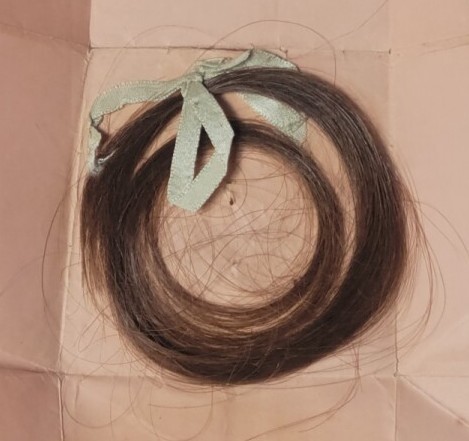
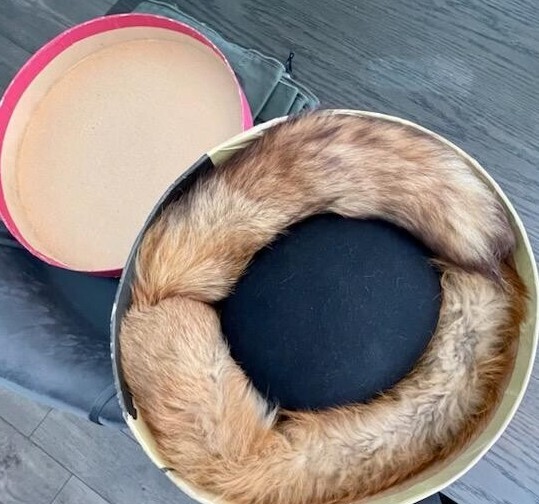
@Sue: Yes! Well, it’s all in the eye of the beholder, I guess. I was really surprised to find a lock of Gertrude’s hair. Oh, and great grandfather’s bowler hat. That’s an heirloom with a great story. 

A lock of hair tied with a blue ribbon

@Sue: "I found this in one of the boxes that I inherited (all genealogy based).
 
 
With it was a card signed by Gertrude which probably dates to the same year, 1904.
 
 
Gertrude Cheatham married August Johnston 24 Apr 1905." 

Bowler hat in hat box, padded with fox scarf

@Sue: This hat belonged to John Mortimer Cheatham who lived in Missouri his whole life (1843-1915).
 
 
The hat box is signed by Eugene Scherman of New York, so I imagine this is who made the hat.
 
 
Today, Grandmother Gertrude's fox lives with the hat. 
Even co-founder Ellen Goodwin discovered a lock of hair her mother squirreled away. Read her humorous take on it. > 

Goodwin: How do you Artifct? Do you use the app, a tablet, both?

@Sue: I take the pictures on my phone, because it allows me to skip the step of transferring the photos from my nice camera to my computer. If I want to add more details or long stories, then I edit the Artifcts later on my desktop computer. 

Goodwin: Have you tried new features as Artifcts has announced them? 

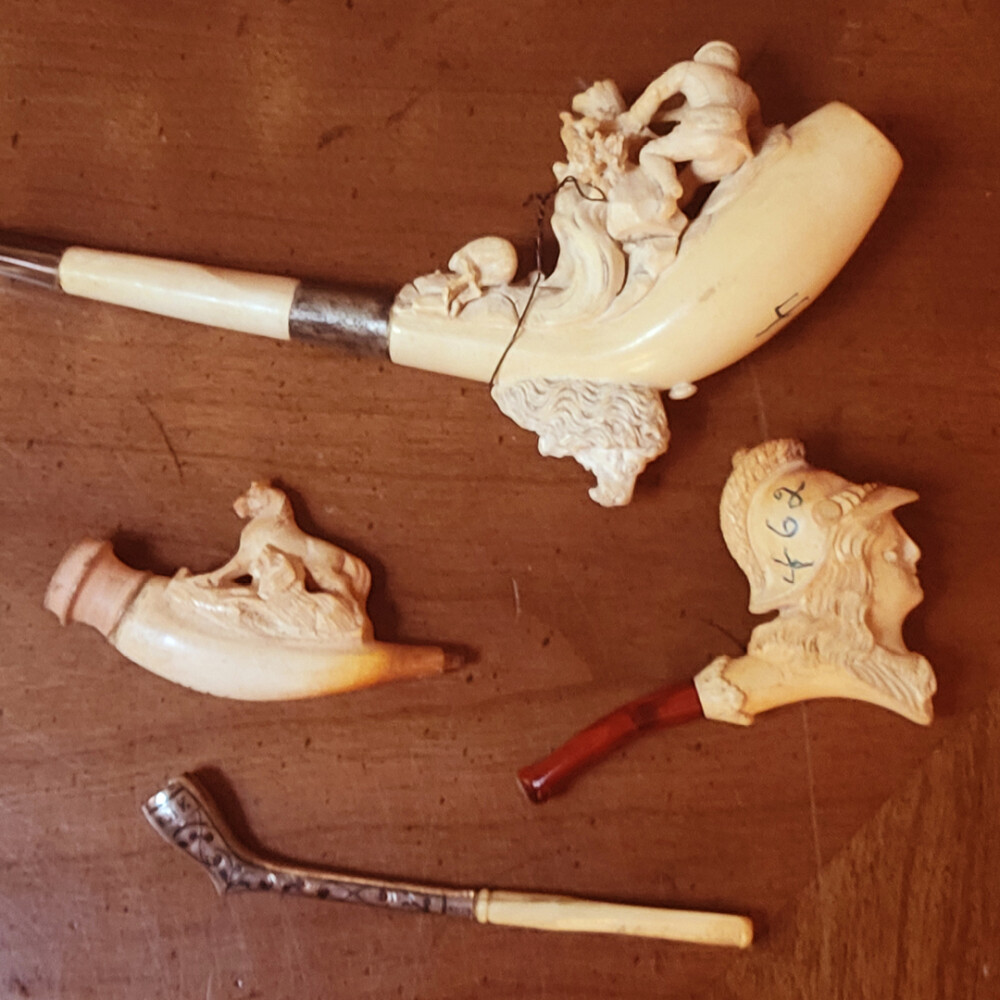
@Sue: There is so much I haven’t fully taken advantage of yet, but I did recently ask for my first estimate from Heritage Auctions with your “What’s it worth?” feature. It was a set of four meerschaum smoking pipes. Each used. They had significant market value! 

a set of four meerschaum smoking pipes

My daughter and extended family will inherit the items they wish to keep; she can always sell the remaining items. I think it’s important, however, to keep at least some of these things in the family—especially the older things. Maybe someone will choose the pipes. 

Goodwin: As the co-founder of Artifcts, I'd be remiss not to ask ... What would you tell those who have yet to Artifct? Why should they do it?

@Sue: Watch and listen to her response! (Or read below.)

It’s mainly the stories about the stuff. Nobody else is going to know what it is. I am trying so hard to get them written down and on Artifcts with the pictures, too, because otherwise once I’m gone, the story is gone. I think it’s important for the children to know what was the most important to me, what meant the most to me, and why.  

Now, they may not want to keep it, but if it’s Artifcted, it’s there FOREVER. So, they will always have that memory even though they may not have that item, because who wants 300 miniature pianos?! 

And on that note, what's your equivalent of "300 miniature pianos?"

Happy Artifcting!

###

© 2022 Artifcts, Inc. All Rights Reserved.

Read more
Show Me the Favorite Moment in Your Home

From mementos to heirlooms, your home’s interior can be as colorful as you and your Artifcts. Some of us skew maximalist in nature, maybe because life is busy and we accumulate stuff, maybe because we’re our family keepers and don’t want to let go of it. Others of us tend toward minimalism, but maybe still rebuff the idea of a strict minimalist home lifestyle. Personally, I need to be surrounded by color, texture, and 3D ‘stuff’ that is meaningful to me. Don't tell me to digitize all of my stuff and be happy to let it go either. 

Now, don't get me wrong, like many, I dream of hiring an interior designer to simplify and beautify my space. I follow several on social media. But I’ve also always imagined a designer’s work to be incredibly challenging. Or is it only a client like me that's challenging? 

The last thing I want is a house full of thingamabobs from your local mega chain store, upscale design house, or otherwise. It feels impersonal, as though I’m living in a hotel - brilliant (maybe) but benign enough to please most. I want to be surrounded by family, friends, and memories, and that takes custom "Been there, done that," "She gave it to me when I was 10," "I got it when I traveled through Italy," stuff. The stuff of Artifcts. 

So, I met up recently with a couple interior architects and designers to ask, almost like therapy, “Am I difficult?” It turns out that, no, I’m not difficult or alone in this quest for meaningful stuff and life moments to surround me in my home.  

Allison Shields, Founder of AM Shields based out of Santa Fe, New Mexico, shared with me how a home interior she designed recently moved her to reflect on how very different her personal design view sometimes is from her clients’ perspectives. And guess what? ‘Stuff’ was at the heart of it. 

"Everything I own has a specific story, a relationship to where it started. An object can throw me into a vortex of remembrance of that trip I went on. Even as a child, everything was curated and meaningful to our family. This client I had recently was the opposite. It was a shocking experience. They were not just minimalists. There wasn’t a book they’d read or photo of a family member incorporated into their new home. Nothing personal, and yet they loved the results.” 


Hallway with gallery of dozens of framed artwork on a deep red wall@AMSHIELDS "Hallway to Heaven" featuring her mother's art collection.

This type of depersonalized living is probably on the extreme end of home interior design. Maryana Grinshpun, the Founding Partner and Design Director at Mammoth Projects NYC, remarked that often people in NYC, no matter their wealth, do not have the luxury of stuff and clutter. There’s just no space! 

But even then, some piece or another will typically make an appearance in the design. “Clients usually will tell me even before I show up that they have something important, something that connects them with their story, that needs to be incorporated. For one client it’s grandma’s stool from the old country; for another, a surfboard. And why not? Telling stories through objects is compelling. And my job is to see the world through my client’s eyes, create that curated view, and build a design story around it.” 

Maryana and Allison agreed, too, that the greatest challenge as designer is that you start with a blank page each time. And the first line can be the hardest to put down. It starts to reveal the character of the people who live in a space and the space itself.  

Each Artifct can help define the first line in a more personal way than any Pinterest board you might pull together. As you look around at the moments that fill your space, we want to leave you with a few thoughtful tips and a few of our own personal Artifcted moments in our spaces to help inspire you: 

  • Here's a quick and easy fix: Try re-arranging. Space at a premium? No budget for a new look. Ask a friend or neighbor for ideas on how they would rearrange a key room in your home, like the living room. Then try each arrangment. You might be suprised how it breathes new life into your space. 
  • Sometimes it's not the space. It’s how you’re living in it. Don’t love living in your space anymore? Has stuff been relegated to the back of your closet or other storage space when it would bring you more happiness to be able to display and enjoy it? Might be time for a little help for a designer who can help you balance what comes out and make it pleasant and functional, too.
  • If you bring in a pro, try oversharing. You might have a lot of stuff, even too much stuff, but little or no inclination towards design. That’s okay. Be honest about your obstacles to date in designing your living space and bring the stuff into the discussion. Let the designer know, “This art is meaningful to us. Can you do something with it?” 
  • Objects can help with tight budgets. Few people have five and six figure budgets to commit to home interior design, so then what? Look again at what you already own and consider how your possessions can play into a new look and feel for your home. You might just realize you have this thing or a collection of those things that will help get the job done whether you're doing it on your own or bringing in professional reinforcements! 


Click any image for a peek into a "favorite moment" incorporated into one of our co-founder's homes.  

We’d love to be inspired by your Artifcted moments at home, too! Share with us on Instagram (@theartilife) or on Facebook (Artifcts). 

Happy Artifcting! 

### 

ABOUT THE FEATURED DESIGNERS

A.M. Shields. A design and interior architecture firm creating thoughtful, inspiring and unexpected spaces for commercial and residential clients. The A.M. Shields web site and portfolio are under their own redesign at amshields.com and am.shields.interiors (Instagram). Contact Allison at allison@amshields.com for a consult. 

Mammoth. A NYC-based design-build studio and one-stop shop for a seamless renovation, including interior design, construction, and furnishing. Check out Mammoth online at mammothnewyork.com or mammoth_projects (Instagram).

© 2022 Artifcts, Inc. All Rights Reserved.

Read more
Capturing Family Stories, One Video Biography at a Time

I’ve had the pleasure of knowing Lori Roux, founder of Whole Story Productions (WSP), for many years. In fact, Lori was one of our earliest sounding boards as we contemplated building a community around all things “stuff” and “stories.”

Aside from being a die-hard skier and former New Englander, Lori was an Emmy-award winning team member of ESPN’s X Games and the creative genius behind WSP. Lori and the WSP team help families bring to light the stories, memories, and histories that make them who they are today through beautifully directed family videographies. 

We saw an immediate fit between Artifcts and WSP—we couldn’t help but think about all that family “stuff” as we listened to Lori talk about the families she has worked with and the stories she has helped them tell over the years.

Sure enough, families, “stuff,” and stories go hand in hand. Whether it is a collection of old photos from the turn of the century or Grandma’s china or an assortment of antique silver. Those objects all represent lives lived, adventures had, and the very essence of what it is to be us, to be alive.

I sat down with Lori for a virtual conversation last month and wanted to share with you some of our key takeaways.

Heather Nickerson: Tell us a bit about your typical client. 

Lori Roux: Usually I’m working with a family, but once in a while there may be more of a corporate lean, where the story is more business oriented. Many clients have had successful family businesses and are telling the story of how it started, where, and when. Then we progress through family evolution, historical aspects, philanthropy, and legacy.

I also had a project for a museum exhibition – that creates challenges around length, how long can you keep people’s attention while standing at a kiosk of some sort.

Nickerson: How do clients typically find you?

Roux: Clients usually find me by word of mouth, so somebody knows somebody who knows somebody who I’ve worked with. I’ve also met clients through their other service providers – attorneys, accountants, financial advisors. I am listed as a service provider with large and small financial institutions.

Nickerson: You’ve said that people often tell you that they are not interesting enough to do a video. How do you convince people that they are?

Roux: Almost to a tee people will say, “Oh, there’s not much to tell.” Or, “We’re not really that interesting.” But I try to explain that to their audience, their family and friends, it’s incredibly interesting. It’s a story for the rising generations. A story of who they are, their successes and failures, and what their message is for those that they may never meet.

As one client said to their hesitant father/patriarch, “It’s not about you Dad. It’s about us. It’s FOR us.”

It’s not about you Dad. It’s about us. It’s FOR us

Nickerson: Can you share a story or two that stands out from the families you’ve worked with?

Roux: There are a number of stories, so I’ll pick one of my favorites.

I had a family that I worked with in Australia with eight adult children. The family tells a story debating whether they were “free settlers or convicts” when their ancestors came from the Isle of Skye. There were multiple versions of the story depending on who in the family you asked. I don’t usually do the research, but I was searching for an image of a ship from the 1800s to include to help the visuals of the story. I happened to come upon the original manifest of the ship’s passengers. It listed a number of the family names with a $ fee next to it, which means they paid for passage! Not sure it put to rest the argument, however, as they genuinely like the mystery and family lore!

Nickerson: Getting people to talk about their most intimate family details has to be challenging. How do you get people to trust you? 

Roux: You know, that’s something that I work really hard at. It all starts at that first meeting – trying to talk about the project while also expressing your own humanity and sharing a story of your own that might apply. Even offering a comparison – like, my own family immigrated from Eastern Europe and though they thought they really didn’t know much about their history, it turned out, the more questions they asked each other, the more they discovered they knew collectively!

I also talk about their privacy, and how they will end up including other family members, and how we keep their final product secure. 

It’s all about them… and I try and express that it’s not a “gotcha moment” when we do an interview. It’s all preplanned and preapproved so the final film is what they envisioned.

Nickerson: Explain how you incorporate other keepsakes in a video (e.g., photos, letters, music). 

Roux: Some of the most important parts of a project are the photos, videos, letters, and other family records. You know the saying, “A picture is worth a thousand words.” Well, that’s so true! We can tell so much of someone’s story with a few photographs and some music, without even a word being said. We try and include whatever is meaningful and significant to each family – whether it’s a business contract or a love letter.

Nickerson: You know the story of Artifcts. How do you think Artifcts could help you in your work with your clients?

Roux: With all the photos and keepsakes that people share, that we include, Artifcts is a great place for them to find a home. When the project is complete, all the photos can be archived on Artifcts so family members can then go and peruse them at their leisure. When it’s in the film, you might only see something for five seconds. All the people in the photo might be recognizable, but in the film, the images fly by so quickly. Having organized, archived access for everyone who the family wants to share with will be invaluable. It’s like a secure online photo album shared with the entire family, accessible any time, only the family can then add documents, stories, and all the details that you typically don’t get with a photo album.

< End of interview >

We know that when it comes to our personal lives and histories “someday” often turns into never or maybe simply too late. We hope you will think about those pieces of you that should be Artifcted and archived to pass to friends and family and future generations before it’s too late. Take it one object at a time. If you get stuck, see if some of our partners and membership organizations can help you!

Interested in creating a family video biography? You can reach out to Lori at Whole Story Productions  to start the conversation. 

© 2022 Artifcts, Inc. All Rights Reserved.

Read more
Articles Themes
Contact the Editor
Have feedback? Artifacts to feature? We’d love to hear from you.
Your privacy

This website uses only essential cookies to provide reliable and secure services, streamline your experience, allow you to share content from this website on social media, and to analyze how our Site is used. Learn more about these cookies and cookie settings.

Accept & Continue
Oops! This Web Browser Version is Unsupported

You received this warning because you are using an unsupported browser. Some features of Artifcts will not be available or will be displayed improperly until you update to the latest version or change browsers.

Close
Image for unsupported banner Oops! This Web Browser is Unsupported

You received this warning because you are using an unsupported browser. Some features of Artifcts will not be available or will be displayed improperly until you update to the latest version or change browsers.

Unsupported banner close icon Close