
Give the gift small icon
Give the gift of Artifcts!
HELLO!
Give the gift big icon
Give the gift
of Artifcts

The perfect gift for the person
in your life who has everything.

Give a gift Close

Cheers to 2025!

Heather Nickerson, Artifcts
January 01, 2025

Dear Readers,  

As we begin the New Year, I wanted to take a moment to thank you for your support, encouragement, and feedback, whether you’ve been with us since the beginning or are just joining. I also want to share more about our exciting new pilot study on brain health with a major US university and some of the fun things 2025 has in store for our Artifcts community.  

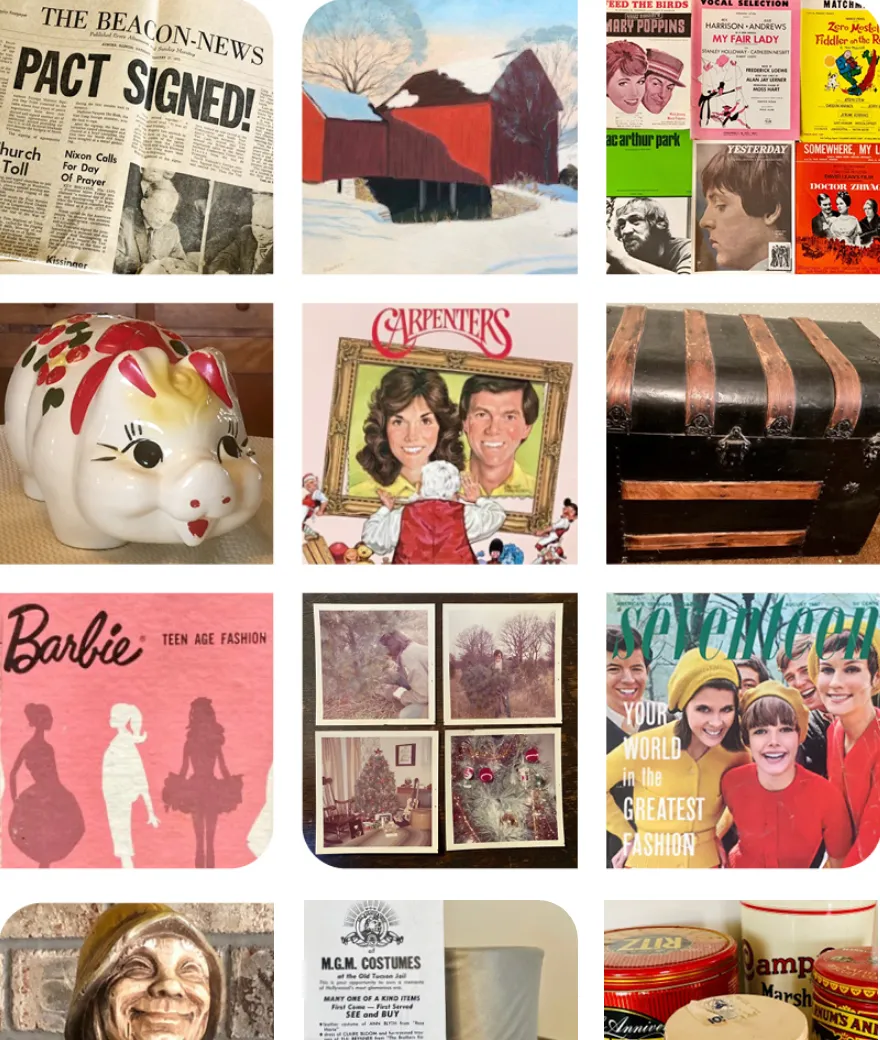
Ellen and I created Artifcts to change the conversation around ‘stuff’ and to help us all preserve what matters most, whether that be the history and documentation behind great grandma’s wedding ring or the oh-so-funny video snippet of your loved one explaining the story behind a cherished photo. Here at Artifcts, we believe that family lore is just as important as the actual, factual stories, and that each of us is in our own way our family’s keeper.  

This year has been one of great growth for Artifcts—we've doubled our membership base, including members across the United States and in over a dozen countries and counting. More members have created more Artifcts, and some of our members have even out-Artifcted Ellen and me, which is no easy feat considering we each have 300+ Artifcts!  

Even as we’ve grown, we’ve remained true to our core, putting you, your data privacy, and your security first and foremost in all that we do. We know you place a great deal of trust in us as you create your Artifcts and it’s important to reaffirm that we’ve got your back, always. We’ll be rolling out enhanced security features in 2025 and exploring technologies to help protect unique content you create here at Artifcts beyond our existing copyright policies. 

We’ve also pushed headlong into the brain health arena this past year, embarking on a pilot study with the University of Massachusetts (UMass) Chan Medical School. We hope to prove that Artifcts and the process of Artifcting serve as a powerful screening tool for brain health. We’ve already had our first tranche of participants complete the required steps in the study, and our partners at UMass will begin analyzing the first sets of data early this year. We still have limited space available in the study so, if you are 65 or older and interested in participating, click here to learn more about the study and to sign up. Each of us can play an important role in ultimately preventing and/or slowing the advancement of cognitive decline due to dementia.  

We’ve also received some much-deserved recognition, beginning in February when Time Magazine named Artifcts as one of the top seven tools to help with decluttering. That was quickly followed by the Mom’s Choice Gold Award and an award from Family Tree Magazine naming Artifcts as one of the best genealogy tech tools of 2024. Ellen and I were also honored to be selected to participate in MassChallenge, the largest non-equity-based business accelerator program in the world. Bottom line, the word is getting out: ‘Stuff’ and legacy matter, and Artifcts is leading the charge.

Word is getting out: 'Stuff’ and legacy matter, and Artifcts is leading the charge.  

As for the here and now, the Artifcts team is hard at work ensuring Artifcts is where you need it, when you need it. Stay tuned for a couple of carefully researched and designed new product features in the first half of 2025, publication of our spring “Evenings with Artifcts” series schedule, and announcements of new partnerships spanning organizing and decluttering, estate planning, insurance, and beyond as we transform our relationships with ‘stuff’ together.  

With that, Ellen and I invite you to join us in a virtual toast as we say, “Cheers to 2025!” May it be a year of great growth and great fun.   

Happy Artifcting, 

Heather

###

© 2025 Artifcts, Inc. All Rights Reserved.

Share With Friends
3 likes
What's New at Artifcts
Game On: How to Artifct Your Sports Memorabilia

Fall is here, and with it comes the return of some of our favorite sports traditions—Friday night lights, weekend soccer games, Saturday morning races, crisp afternoons at the ballpark, and plenty of time gathered around the TV cheering for our teams. 

And whether you’re the athlete, the parent on the sidelines, the lifelong fan, or the person who somehow ended up with a basement full of everyone’s sports stuff, chances are you have some sort of sports memorabilia you’re hanging on to. 

Maybe it’s a championship trophy from high school or a race medal from your first 5K. Or maybe it’s a signed baseball, a jersey with a name and number that instantly takes you back in time, or a team photo or a pair of well-worn cleats 

Whatever the item, there’s a good chance it means more than it looks like it does. That’s where Artifcting comes in. 

Your Sports Memorabilia Is More Than “Stuff” 

A trophy sitting on a shelf can look like a trophy just like a jersey in a storage bin can look like an old jersey. But none of those objects can tell you what happened. 

They can’t tell you about the early-morning practices, the teammate who became a lifelong friend, the coach who changed your life, the race you weren't sure you could finish, or the championship game everyone still talks about. Without context, memorabilia can become anonymous objects over time. The story fades even while the object remains. 

The goal of Artifcting your sports memorabilia isn't to create a digital museum of everything you've ever owned. It’s to capture the meaning behind the pieces that matter—so the memories don't disappear when the physical item eventually does. 

And the best part? You don't have to start with your entire collection. You can start with one item. 

Step 1: Pick Your MVP 

Take a look at your sports memorabilia and ask yourself: which item would I be most upset about losing the story behind? 

Maybe it's your daughter's first soccer trophy. Your father's old baseball glove. The medal from the marathon you trained for all year. The jersey you wore when your team won the state championship. 

Think about your collection the way you would edit a highlight reel. You don't need every play. You want the moments that tell the story. 

Step 2: Capture the Basic Facts 

Before you get nostalgic, start with the basics. 

  • What is the item?
  • When did you get it?
  • Where did it come from?
  • Any other details? 

For a race medal, that might be “Capitol Hill Classic, May 17, 2024, Finish time: 1:10:36.” It can be that simple.  


Our co-founder Heather Artifcts her family's race bibs and medals. Sorry, this Artifct is private!

These details may seem obvious today. But 20 or 50 years from now, they may be exactly what someone needs to understand what they're looking at. 

If the item has potential financial value, you may also want to capture an appraisal, certificate of authenticity, purchase information, or other documentation. 

Step 3: Tell the Story Behind the Item 

Now comes the fun part. The facts tell someone what the item is. Your story tells them why it matters. 

Ask yourself: what was happening in my life when I earned or acquired this? Why did this particular moment matter? Who was there? Who helped me get there? What do I remember that isn't obvious from the object? What makes me smile when I look at it today? 

Don't worry about writing the perfect story. Your story might be a paragraph. It might be a few sentences. It might even be four words, “My first race medal.” If the story is easier to tell than write, say it out loud. Add an audio recording to your Artifct so future generations can hear the story in your voice. 

Step 4: Take Photos—and Don't Stop at One 

Photograph your memorabilia from multiple angles, especially when there are details that tell part of the story. 

For example: 

  • Photograph the front of a trophy and capture the engraved plate.
  • Photograph the front AND back of a jersey.
  • Take a close-up of an autograph. 

Don’t forget to include old photographs, newspaper clippings, programs, or certificates that provide additional context. Think of your photos as evidence and illustration for the story. The physical item may one day deteriorate, get damaged, or eventually leave your home. Your Artifct preserves a record of what it looked like and why it mattered. 


Step 5: Connect the Memorabilia to the Moment 

This is where your Artifct can become especially powerful. If you have a photo of yourself crossing the finish line, pair it with your race medal. If you have a team photo, pair it with the championship trophy. If you have a ticket stub from a game you attended with your dad, tell the story of that day. 

In other words, don't think of your memorabilia in isolation. Think of it in stories. And don’t forget that sometimes a group of related items or a collection tells a better story than any one object can tell on its own. 

Step 6: Decide What Happens to the Physical Item 

Once you've captured the story, you may find that you feel differently about the physical object, and that's okay. Artifcting doesn't mean you have to keep everything. 

In fact, documenting your sports memorabilia can make it easier to curate your collection thoughtfully. 

You might decide to: 

  • Keep and display the pieces that genuinely bring you joy or represent important chapters of your life.
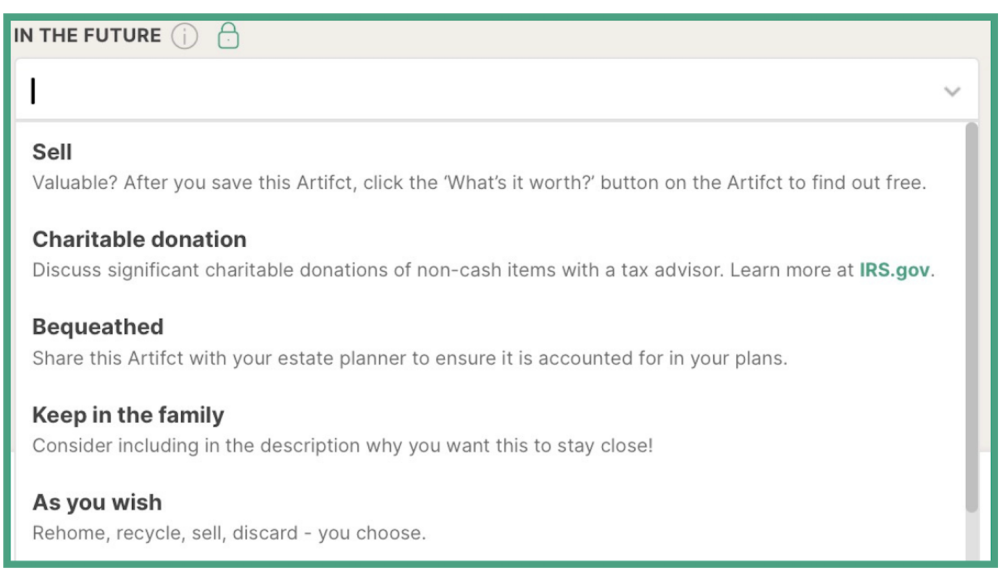
  • Pass down the items if you know who you'd like to have it someday, and if you plan to do so, use the Artifcts In the Future field to document that intention.
  • Repurpose some of the pieces. Old trophy plates can become part of a shadow box or memory display. 
  • Let it go. You can photograph and Artifct the item before donating, selling, recycling, or otherwise letting it leave your home. 

The physical object doesn't have to stay forever for the story to stay. 

Your Sports Collection Is a Highlight Reel of Your Life 

When we talk about sports memorabilia, it's easy to focus on the objects—the trophies, medals, jerseys, balls, cards, photos, and equipment. But the objects aren't really the point. 

The trophy represents the hours of practice. The medal represents the finish line. The jersey represents the team. The baseball represents the game. And sometimes the old, scratched-up piece of sports “stuff” represents a version of yourself you never want to forget. That's what makes sports memorabilia worth Artifcting. 

So, this fall, as you head out to the field, the pitch, the track, the court, or the stands, take a look around your home, too. Find one piece of sports memorabilia that matters. Photograph it. Capture the facts. Tell the story. Add the people, photos, videos, and memories that bring it to life. Then decide what you want to do with the physical item. 

Because the trophy is just a symbol. The story is the legacy, and that story deserves to live on. 

Happy Artifcting! 

###

Looking for additional inspiration and ideas of what to do with all your sports memorabilia? Check out our ARTIcles story titled, Pass It On, Transform It, Or Let It Go, featuring two innovative companies, MemoryStitch and Little Curiosities

© 2026 Artifcts, Inc. All Rights Reserved.
Read more
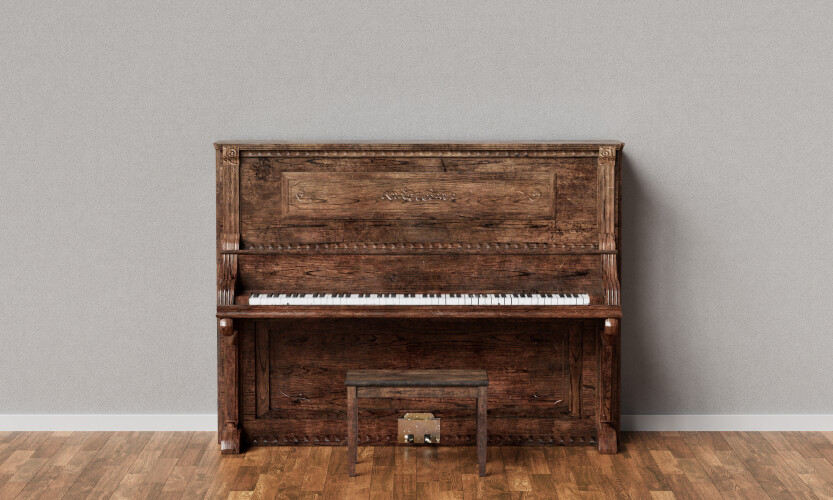
What Should You Do With Old Photo Albums?

Dusty albums. Bulky albums. What do we do with you? We want to lighten our loads and declutter without guilt. 

Who among us compiles physical photo albums anymore? "Back in the day” a store like Target would have had a huge photo department. You could purchase and process film and buy photo frames and albums, along with supplemental inserts in a dizzying array of designs and sizes. 

No, not so anymore.

As we’ve shifted to digital photos, we’ve likewise replaced physical albums with digital-friendly options, including build-your-own photo books, shared digital albums on social media and cloud storage sites, and digital photo frames, like the beautiful frames from Aura. Physical photo albums today are usually reserved for major milestone events, like weddings, trips, and anniversaries, when we feel it’s worthwhile to sit down and thoughtfully curate those experiences.  

Those of us with photo albums tucked in our closets and bookshelves, those that we have created and inherited, not to mention the albums our parents and grandparents own and we’ll inherit one day, need solutions. What do we do with all the existing albums, so they avoid landing in a craft shop or, worse, a dumpster when the details about the people and stories within are lost to time? 

Photo Albums Have Problematic Similarities to Scrapbooks 

Like scrapbooks, photo albums are designed to be shared, in person, and talked through, reminiscing about and reliving with the telling the places you’ve been, the experiences you have had, and more. Unfortunately, also like scrapbooks, photo albums present long-term challenges: 

      1. Do you know the stories behind the photos? (We have tips for that!) Will you remember them? Scrapbooks tend to at least provide more leeway to add notes and stories than photo albums. Stories behind the photos are incredibly vulnerable to being forgotten. We can animate photos in interesting verging on creepy ways, but they cannot remember for us the stories lost. Look back through your albums. Do you recall all the people and events in a way that’s meaningful anymore? 
      2. Albums, the pages within, and the photos will deteriorate. Little known fact outside the photo industry: Those photo prints you ordered in single and even triplicate were never meant to last more than a dozen years, and that's for the highest quality pritns! That’s why the colors change as the chemicals used to create the images degrade and the paper eventually becomes more fragile, too. 
      3. Your album is singular and unique, unless you have access to the negatives. But even then, those are decaying with every passing day as well, so ... 
      4. Albums can be bulky. Do you have room to continue to store them? What about those you may inherit? They are substantial in size and often uncooperative with short shelves and shallow storage. In the words of one Artifcts Community member, "I’m in my 40s and my albums are still at my parents’ house. I didn't feel the need to take them with me, but, yes, someday I’ll hold onto them. I don’t want to throw them away."

How Can You Preserve Photo Albums?  

And maybe even let some photo albums go ... 

Share the love. At the risk of making a lot of people very angry, we have to say it: You are not beholden to anyone to hold onto your own albums or anyone else's albums. Ask! Do YOU want them? 

Don’t fall for the guilt trip you are getting or think you’ll get. Ideally, you should consider yourself a steward of the history within those albums and as such, ask family members if they want the albums before you take them apart or get rid of them. It’s the kind thing to do. But beyond that, ...

... Digitization has never been easier or more affordable. We have shared tips about digitization in general. You can buy machines to do it yourself, but there’s a catch. We turned to Cathi Nelson, founder of The Photo Managers, to explain: 

"Many people created scrapbook photo albums during the decades of scrapbooking and those albums are often 12x12, which is too big for traditional flatbed scanners. You can outsource this project to a professional photo manager whose scans allow them to capture the entire page and individual photos.  

If that is not in your budget, and you have a flatbed scanner, such as the Epson v600 scan each page and use photo stitching software to magically merge the pages.  

Another option is to carefullly remove the photos and scan them (front and back). If they are stuck to the pages, you can use a butter knife or dental floss to gently remove the photos."

We want to also celebrate the amazing ease with which apps from modern photo companies like Photomyne can slice up each photo on the page into its own file photo or image file. No need to take the pages apart or tediously scan them one by one. This is great for do-it-yourselfers! You can also link a front and back of a photo together into a single experience, so you can digitally flip the photo over to read the back.

Digitization Wisdom

Before you and as you digitize, keep three things in mind:  

  • Photo layouts may be a part of the story. Some albums may be chronological or thematic. Others are designed for people to arrange photos in a way that may inherently help them to share stories, too. Take this example:

yellowed photo album page with baby photos

Had I scanned each photo and then disassembled the photo album, I would have disconnected these photos from the story of that day, zapping their collective ability to convey a piece of my childhood. Instead, I could photograph or video the album before dismantling, if that’s what I decide to do with the album.

  • Capture ALL the details. You scanned the fronts to get the job done quickly, but did you even look at the backs? Now that you have, how will you preserve the additional details on the back with the photo? In a good-better-best plan, this could be: 
      • Create an index as you go for your photos with the file name and other details you care about (location, people, event, ...) or edit the photo metadata (e.g. date, location, and other information stored with the image file) with the additional information; 
      • Transform the album into a photo book and add the information in the image captions;  
      • Artifct the photos and include what you know about them. Check out our interrogation techniques for photos.
  • Share the stories behind the photos. CONNECT with your loved ones. Don’t be annoying and share 100s of photos from a single trip. Tell them the “best of” or most meaningful moments. Artifct the best ones! Artifcts are easy to share, helping you get the story out there so it can live on. You might also share the Artifct with a friend who is going on a trip to the same place you went and want your tips! You can also easily share an Artifct to a friend’s or family member’s digital photo frame. Ask them how.  

If you are taking the time to create photo albums, maybe take time to create an additional Artifct or two to go with each album, even if the Artifct is of the album itself, and is your story of why you created it, what it means to you, etc. Bonus, you can include audio and video and bring your photo album to life for the next generation.

### 

Other ARTIcles by Artifcts you may enjoy: 

Photos + Stories Go Better Together: A Conversation with Cathi Nelson, CEO of The Photo Managers

Storytellers, Beware!

Rescue Mission: That’s More Than a Photo

© 2026 Artifcts, Inc. All Rights Reserved.
Read more
Pass It On, Transform It, or Let It Go. Give the Things You Love a Second Life

We all have them: things we once loved, used, wore, collected, or enjoyed that no longer quite fit our lives. 

Maybe it’s a stack of puzzles your family has finished countless times. A favorite mug that deserves more use than it gets. A drawer full of old T-shirts from vacations, concerts, school functions, sports teams, or priceless family milestones. 

The question becomes: What do you do with the things that still hold meaning when you’re ready for them to move on? 

Sometimes the answer is to pass them along. Sometimes it’s to transform them. And sometimes, it’s simply to preserve their story before letting them go. 

Pass It On: Little Curiosities 

In Hudson, Massachusetts, a group of friends has turned community sharing into something a little more whimsical. 

Hudson Little Curiosities began after founder Elissa saw a mug exchange on Pinterest and wondered: What if the idea behind a Little Free Library could extend to all sorts of things?


Photo Credit: Stephanie Rita (Book Library photo)  

Today, Little Curiosities includes themed community exchanges where neighbors can discover and share everything from books and trinkets to mugs, magnets, and other small treasures. 

And people have embraced it. 

Their puzzle trade outside the Hudson Public Library has never been empty. One especially sought-after anime figurine even inspired someone to travel two hours to Hudson to find it. 

But what the Little Curiosities team loves most is the connection these exchanges create. There’s something comforting, they told us, about knowing that an item you once enjoyed might be loved by someone else in your own community instead of simply disappearing into a donation bin. 

As for the future? One day, the Little Curiosities team hopes to create a map of all the trades on their website, continue improving the site itself, and welcome new additions, including a dog toy trade.  

They are also excited about the possibility of collaborating with community spaces like the Hudson Senior Center and the Boys and Girls Club, creating Curiosities tailored to the people they serve. It’s a thoughtful vision for the future, one that stays true to their goal of growing organically and keeping the project rooted in community.

Transform It: MemoryStitch 

Other objects might be ready for a new chapter without actually leaving the family. That’s where MemoryStitch comes in. 

MemoryStitch transforms meaningful clothing, including T-shirts, baby clothes, uniforms, jerseys, and other garments, into handcrafted memory quilts and keepsakes. Their goal is not simply to reuse fabric, but to preserve the stories connected to it.  

Think about the shirts tucked away in your own closets. The college T-shirt. The kids’ sports jerseys. The concert shirt you couldn’t possibly throw away. The clothes belonging to someone you miss. 

Individually, they may spend years packed into drawers and bins. Together, they can become something useful again, and something a family can continue to enjoy. 

MemoryStitch puts it simply: every quilt is more than fabric and stitching. It’s a story.

What also makes MemoryStitch’s approach meaningful is the care they put into the process itself. They understand that sending away irreplaceable clothing can feel like a big step, so they’ve designed the experience to feel simple and supportive from beginning to end.  

With different quilt styles, sizes, and price points, families can find a way to preserve everything from baby clothes and school shirts to uniforms, jerseys, and milestone T-shirts in a form they can actually use, share, and enjoy for years to come.

Preserve the Story: Artifct It First 

Whether you pass something along, transform it, donate it, sell it, or ultimately decide to keep it, there’s one step worth taking first: preserve the story. 

Before the T-shirts become a quilt, capture where they came from. Before the puzzle or trinket finds a new home, remember why you kept it. Before you let go of something that has been part of your life for years, save the detail that no future owner could possibly know just by looking at it. 

Because giving something a second life doesn’t have to mean losing its first one. Pass it on. Transform it. Let it go. Just keep the story. 

###

© 2026 Artifcts, Inc. All Rights Reserved.
Read more
Your privacy

This website uses only essential cookies to provide reliable and secure services, streamline your experience, allow you to share content from this website on social media, and to analyze how our Site is used. Learn more about these cookies and cookie settings.

Accept & Continue
Oops! This Web Browser Version is Unsupported

You received this warning because you are using an unsupported browser. Some features of Artifcts will not be available or will be displayed improperly until you update to the latest version or change browsers.

Close
Image for unsupported banner Oops! This Web Browser is Unsupported

You received this warning because you are using an unsupported browser. Some features of Artifcts will not be available or will be displayed improperly until you update to the latest version or change browsers.

Unsupported banner close icon Close