


A promotion. A deployment. A mission accomplished. A moment of recognition from a commanding officer. A handshake with someone whose leadership left a lasting impression.
For many members of the military and intelligence communities, these moments are commemorated with something small enough to fit in the palm of your hand, a challenge coin.
But what exactly are challenge coins, and why do they mean so much?
According to a 2017 US Department of Defense News article, the tradition of military challenge coins is commonly traced back to World War I, although its precise origins are debated. One popular story tells of an American pilot who carried a bronze medallion bearing his squadron's insignia. After being captured and escaping behind enemy lines, the medallion helped him prove his identity to French soldiers who might otherwise have mistaken him for the enemy. Whether or not that story is entirely true, the tradition of carrying coins as symbols of belonging, pride, and camaraderie took hold.
Over time, challenge coins became an important part of military culture. They are often presented by commanders and senior leaders to recognize outstanding service, commemorate special events, celebrate achievements, or welcome someone into a unit or organization. Some represent an entire military branch or unit, while others commemorate a particular deployment, mission, promotion, or milestone.
And here's what makes them so special—no two collections necessarily tell the same story.
As we recognize Veterans Day, it's worth remembering that our military members serve our country day in and day out. Their sacrifices, accomplishments, friendships, and experiences are woven into the fabric of our nation's history. Yet so many of their stories go unnoticed or untold.
Challenge coins offer a wonderful starting point for changing that. They're more than collectible pieces of metal. They're tangible reminders of the people, places, experiences, and moments that shaped someone's military journey.
So, if you have a collection of challenge coins tucked away in a drawer, displayed on a shelf, or sitting in a box waiting to be rediscovered, let's talk about what to do with them—and, more importantly, how to preserve the stories behind them.
Why Challenge Coins Are So Much More Than Coins
At first glance, a challenge coin might look like a small, decorative token. But ask the person who received it, and you'll quickly discover there's often a lot more to the story.
Unlike traditional medals or military decorations, challenge coins are frequently given as personal gestures of appreciation and recognition. They may commemorate a successful mission, acknowledge exceptional performance, mark a promotion, or simply recognize someone who went above and beyond.
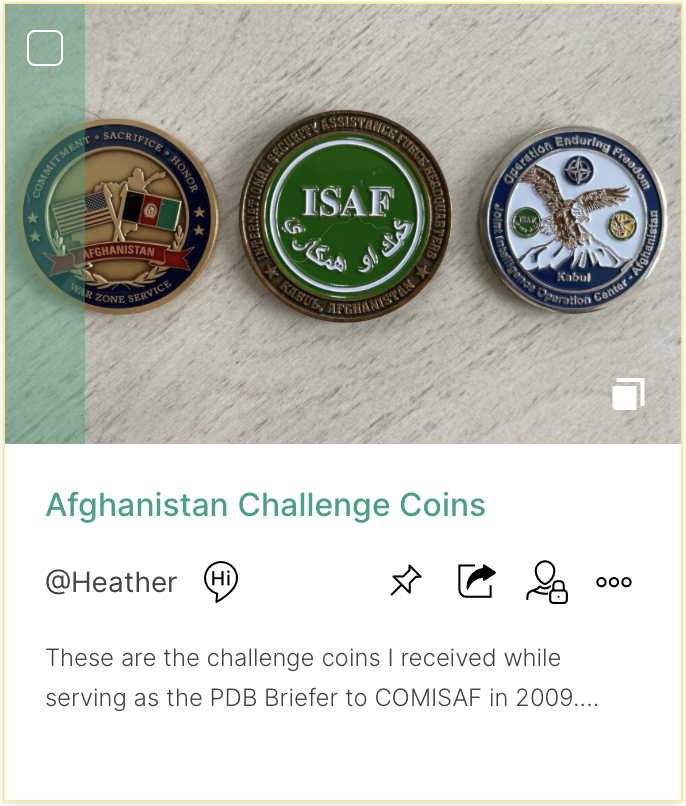
Some are given by commanding officers. Others are exchanged between service members, presented during ceremonies, or collected during visits to different bases and installations.
And sometimes, the most meaningful coin isn't the one from the highest-ranking official or the most prestigious assignment. It's the one that reminds someone of a friend, a particularly challenging experience, or a moment when they realized just how much their service mattered.
But here's the catch, over time, the coin stays...while the story can fade.
Your children or grandchildren might discover a beautiful coin bearing an unfamiliar insignia. They might recognize the branch of service but have no idea what the coin represents, who presented it, or what was happening in your life when you received it.
Without context, a meaningful piece of military history can become just another unidentified object in a drawer.
At Artifcts, we believe it's not about the object. It's about the meaning. And challenge coins? They're packed with meaning.
Step 1: Curate Your Collection—You Don't Need to Keep Every Coin
If you've served for several years, or even decades, chances are you have accumulated quite a collection. And if you're helping a parent, spouse, or other veteran organize their belongings, you might be surprised by just how many coins they've collected along the way!
The good news? You don't have to preserve every single one to preserve your story.
Start by spreading out your collection and taking some time to revisit each coin. Look for the ones that represent particularly meaningful moments in your life.
Consider prioritizing:
- A first: Your first unit coin, first deployment coin, or first coin received from a commanding officer.
- A major milestone: A promotion, graduation, retirement, or completion of a significant assignment.
- A special recognition: A coin presented by someone whose leadership, mentorship, or friendship made a difference in your life.
- A defining experience: A coin commemorating a deployment, mission, humanitarian effort, or particularly challenging chapter of your service.
- A meaningful relationship: A coin exchanged with a fellow service member, friend, or colleague who became an important part of your life.
Step 2: Capture the Story Before It's Lost
Here's where the magic happens. A challenge coin without its story is just an object. But a challenge coin with its story becomes a lasting piece of personal and family history.
Think about it, what would your grandchildren learn if they could hear the story behind every coin in your collection? Before those details fade, take a few minutes to document them.
Here are some questions to get you started:
- Who gave you the coin? Was it a commanding officer, fellow service member, or someone else?
- When and where did you receive it?
- What was happening in your military career or personal life at the time?
- What does the insignia, emblem, or design represent?
- Was the coin connected to a particular mission, deployment, promotion, or accomplishment?
- What did receiving it mean to you?
And don't stop at the official story.
Maybe you received a coin after a particularly difficult deployment. Maybe it reminds you of the people who had your back when things got tough. Perhaps it came from a leader who recognized something in you that you hadn't yet recognized in yourself.
Those are the details your family will want to know.
Pro Tip! Don't worry about writing a perfect military history. A few sentences, a voice recording, or even a short video telling the story in your own words can make all the difference. Your voice, your perspective, and your memories are what make the story uniquely yours.
Step 3: Photograph Your Coins and Preserve the Details
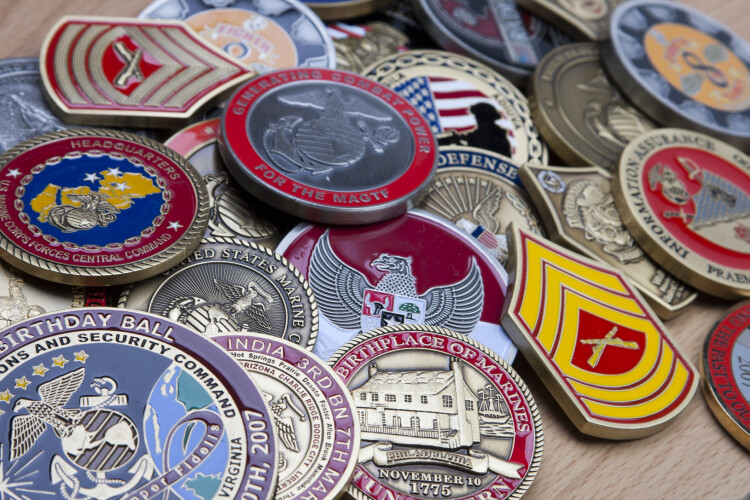
Challenge coins are often beautifully designed, with intricate artwork, lettering, insignias, and symbols. Some are colorful, some are engraved, and others feature elaborate designs that commemorate a particular unit or event.
When documenting your coins, be sure to capture:
- The front and back: Both sides may contain important details, including unit insignias, mottos, dates, names, and commemorative artwork.
- The edges: Some coins have unique engravings or markings along the edges.
- Any accompanying materials: If you have a presentation box, certificate, letter, or photograph associated with the coin, photograph those, too.
- The collection as a whole: Take a photograph of your entire collection. The arrangement itself might tell a story about the progression of your military career.
Pay attention to the small details. A date or insignia that seems obvious today may be difficult for someone else to interpret decades from now.
One more thing—if your coins relate to sensitive assignments or operations, be thoughtful about what you share publicly. You can preserve the story privately without disclosing information that shouldn't be shared.
Step 4: Decide What Stays (and What Goes)
Once you've documented your coins and captured their stories, deciding what to do with the physical collection becomes much easier.
Here are a few options to consider:
- Display Your Favorites
Challenge coins deserve better than a forgotten drawer! Consider displaying your most meaningful coins in a shadow box, coin rack, display case, or framed arrangement.
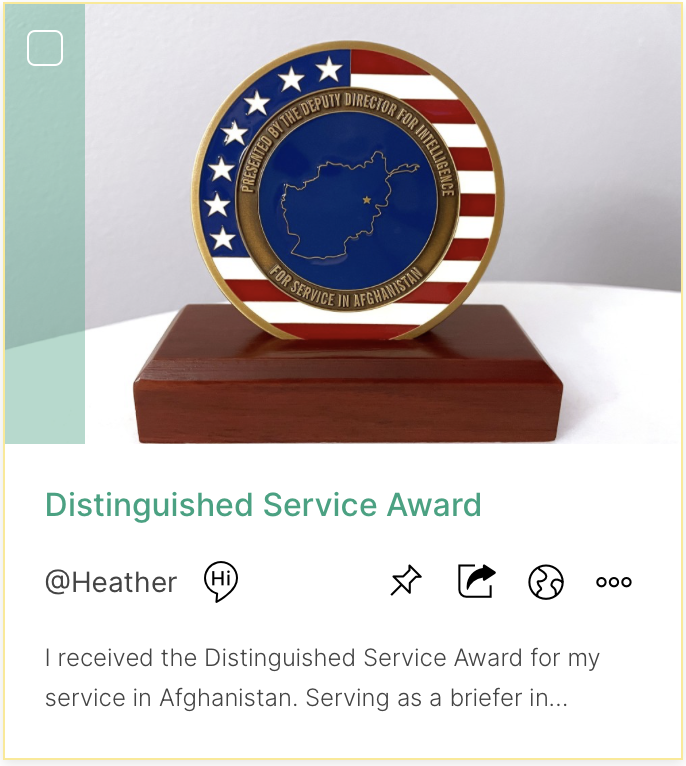
You might organize them chronologically, by military branch, by unit, or around significant milestones in your career.
A display can become a wonderful conversation starter and an opportunity to share your experiences with family and friends.
- Artifct Your Coins and Let Go of Some Physical Items
Not every coin needs to occupy physical space to remain part of your legacy.
Photograph the coins you're ready to part with and pair those images with the stories behind them. With Artifcts, you can create a digital record of each coin, add photos, videos, and audio recordings, and preserve the details that might otherwise be lost.
This is particularly helpful if you have dozens (or hundreds!) of coins but don't necessarily want to keep every single one.
You can preserve the memories without keeping every physical object.
3. Share Your Stories—They're Part of Our History
Here's something we don't talk about enough: military service is full of stories that never make it into history books.
There are the big moments, of course. The deployments, the promotions, the ceremonies, the accomplishments, and the milestones that families proudly celebrate.
But there are also the smaller moments.
The friendships forged during long days and nights. The person who stepped up when things got difficult. The commanding officer who took the time to recognize someone's hard work. The unexpected moments of humor and camaraderie that made even the toughest days a little easier.
These stories matter, too.
And challenge coins offer a wonderful way to bring them to life.
Consider sharing your collection with your children, grandchildren, or other loved ones. Rather than simply showing them a display of coins, walk them through your military journey. Explain what each coin represents and how the experiences behind them shaped the person you are today.
You might even be surprised by the questions they ask!
With Artifcts, you can easily and privately share your coin collections and the stories behind them with loved ones. That way, your family doesn't have to wonder what a particular coin represents or try to piece together your military history after you're gone.
The stories are already there, ready to be discovered.
A Final Thought: The Coin Is Just the Beginning
As we celebrate Veterans Day, we want to take a moment to recognize the men and women who have served our country, and those who continue to serve today. Their stories deserve to be heard today and every day.
The challenge coins they collect along the way are more than symbols of achievement or membership. They're reminders of: the people who served beside them; the leaders who recognized their contributions; the challenges they overcame; the milestones they reached; and the experiences that changed them (and maybe even our own history).
A challenge coin might be small enough to fit in your pocket, but the story behind it can be a lifetime in the making. So, whether you have five coins or five hundred, take a little time to document them. Capture the details. Record the stories. Share them with the people you love.
The goal isn't necessarily to keep every coin forever. It's to make sure the memories, experiences, and personal history behind them aren't lost. The coin is the keepsake. The story is the legacy.
This Veterans Day, give those stories the attention they deserve. Artifct your challenge coins and help ensure that the next generation knows not just what you received, but why it mattered.
Happy Veterans Day and thank you to all who have served.
###
Looking for more inspiration? Explore more ways to preserve the stories behind the things that matter most:
What Should You Do with Old Trophies?
What Should You Do with Old Cards and Letters?
What Should You Do with Old Photo Albums?
© 2026 Artifcts, Inc. All Rights Reserved.
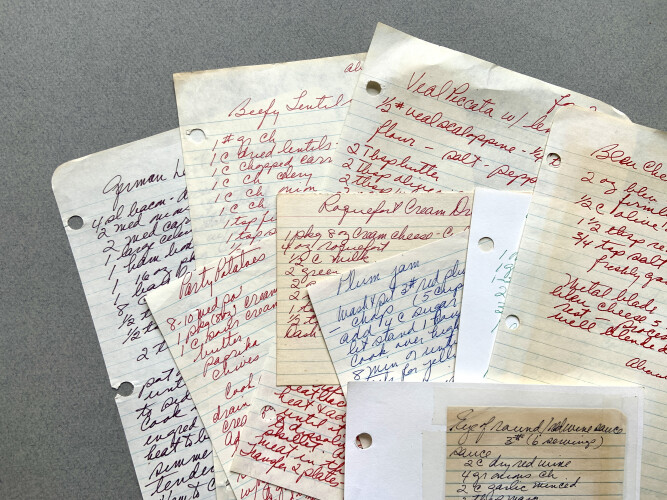
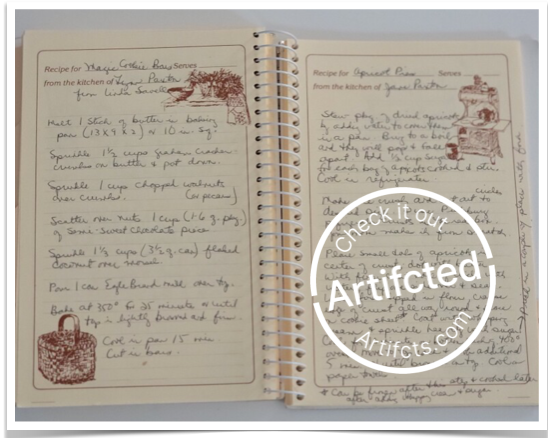
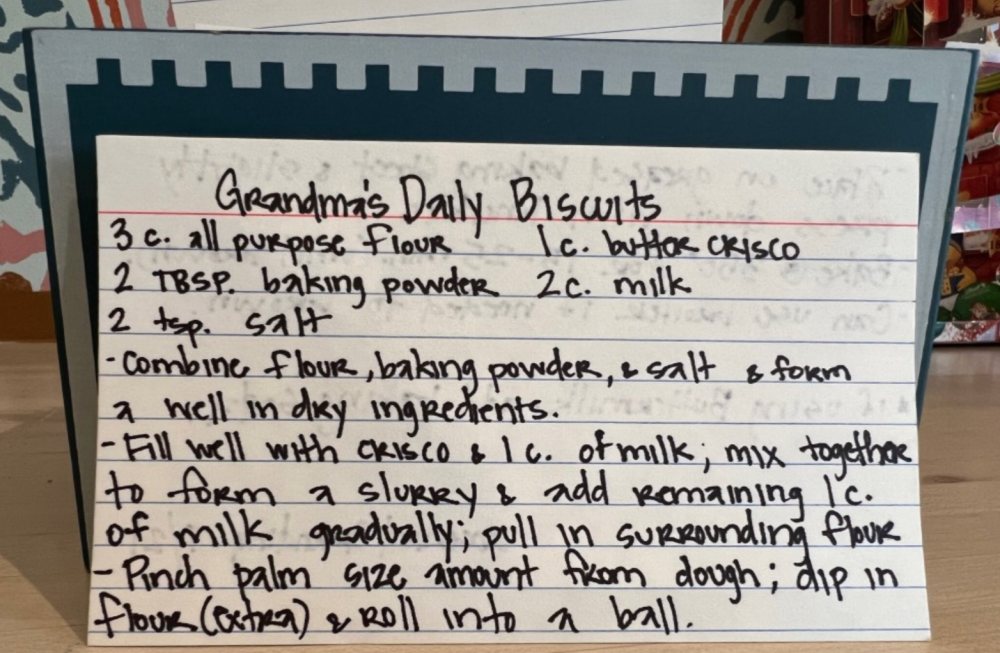 A very memorable Artifct, complete with an instructional video from Grandma herself!