
Give the gift small icon
Give the gift of Artifcts!
HELLO!
Give the gift big icon
Give the gift
of Artifcts

The perfect gift for the person
in your life who has everything.

Give a gift Close

ARTIAssist has arrived

Try our new AI-boosted ARTIAssist for FREE on your own Artifcts. Add historical and factual details to your Artifcts, and learn what similar items have sold for in recent months.

Data Privacy Day 2024: Privacy Is a Basic Right

January 28, 2024

Reading time: 4 minutes

Data Privacy Day is an international event that occurs every year on 28 January. Never heard of it? Chances are that you're not alone. The day was created back in 2007 to bring awareness to the “importance of respecting privacy, safeguarding data, and enabling trust.”  

As you may know, one of our founding cornerstones here at Artifcts is privacy. We believe your information is yours and yours alone. We will not sell or otherwise transact the personal information you entrust with us. Similarly, we want to ensure you are in control of your information and data, which is why we’ve made it easy for you to upload and download your files and your Artifcts.  

We also make it clear in our Content & Community Policy that you retain not only the right but also the ownership of any information you use in creating your Artifcts. This includes copyright. Sadly, not all online platforms share our beliefs. When signing up for new online or app based services, be on the lookout for: 

      • Memberships plans that end up turning your information public or shared within the platform if you do not pay certain continuing fees. 
      • Where the personal information you upload is being stored – a private server or another third-party platform like YouTube with another set of privacy practices to review? 
      • Who owns the information you upload? For example, does it become part of the commercial commons in the name of the greater good? Do you support that no matter what (because there may be no going back)?
      • Default settings that favor making everything public, including your name, posts, and permission to use your activity for targeted ads and other purposes.
      • If it’s a site or service you will depend upon, consider setting a Google Alert for changes in privacy policies, data breaches and other key terms so that if you should miss an email from the company or a headline, you’ll have yet another opportunity to hear about it and take action.

What Should You Take Away from Recent Media Headlines? 

Recent news reports underscore the importance of putting your privacy first and foremost. Forbes reported on 22 January 2024 that security researchers had recently uncovered the largest data breach to date, including 26 billion personal records across Dropbox, LinkedIn, Twitter, and others. The researchers note that malicious actors could "leverage the aggregated data for a large range of attacks, including identity theft, sophisticated phishing schemes, targeted cyber-attacks, and unauthorized access to personal and sensitive accounts."  

Seeing reports like this can lead us to falsely believe that there isn't much we, as individuals, can do to protect our privacy. That’s simply not true. There are several simple steps you can take to enhance your privacy and safeguard your data wherever you have online accounts and transactions. And, if you’re a member of the Arti Community, you will have received an email from us today encouraging you to do a privacy check up on Artifcts.com, following many of these same guidelines: 

  • PASSWORDS. Have you changed yours lately? We recommend you update your passwords at least once a year. And while you’re at it, ensure that your password is a strong password, that is, take that leap to 16 characters, and include alpha numeric and special characters.   
  • TWO FACTOR AUTHENTICATION. You may not like another step in your process, but you should use it, where available, especially when dealing with financial or personal, sensitive information, like medical records. Two factor authentication simply means that in addition to your login, you will be prompted for a second means of authenticating that it’s really you. This could be a text, a call, or an email. Do a quick scrub of all your online banking and medical accounts to double check that two factor authentication is set up, and that your second means of authentication is up to date.   
  • PRIVATE BROWSING. Don’t want Google to track your every move? Consider using a private window in your Chrome, Brave, Safari, or other web browser (go to File > New Private Window, or similar path). Or use a privacy-first browser from the get-go, such as Duck Duck Go or Brave. These browsers do not store your personal information or follow you around the Web with ads.    
  • WHEN IN DOUBT, DON'T CLICK! If you receive an email from an unknown sender with an attachment or link, don’t download, don’t click, and just to be extra safe, delete it. What if you receive the link from a trusted contact? If it is out of the ordinary, or something you were not expecting, text, call, or otherwise double check outside of email just to be safe. Cyber criminals are getting smarter and developing new tactics seemingly daily, including spoofing (i.e. impersonating) email addresses.  

Interested in learning more or looking for other resources? The Future of Privacy Forum has helpful infographics and educational materials, especially tips for protecting youth online. The Electronic Privacy Information Center also offers simple guidelines for consumer privacy and a break-down of some of the most common internet scams. 

###

© 2024 Artifcts, Inc. All Rights Reserved.

Share With Friends
1 like
What's New at Artifcts
Use Artifcts Timelines to Enrich Your Family History

We live in a world of information overload, and if you’re digging into family history, that overload threat is potentially multiplied by generations.

Some of us organize our research and learnings in folders, and folders within folders. Nothing other than the name of each folder provides us a clue as to how everything inside relates or where gaps in the content may exist.

Others of us rely on hardcopy photo albums and scrapbooks, often missing the contextual details and stories to bring those books to life when the creator of those books is not there to talk you through them. And how do you modify them once complete?

Whether you’re just getting started with fleshing out your family history or focused on closing gaps, we think timelines are a powerful tool to have in your corner. Dive in with us!

Enriching Family History with Artifcts Timelines

Digital timelines can be hit or miss. Many applications, from Google Photos to specialized genealogy software to Facebook, offer timelines, but they often are rigid in terms of editing and lose the context for each entry. That’s because those timelines simply place photos, for example, in sequential order or display SOME information while leaving other information (documents, photos, ...) in separate, disconnected albums or galleries.

We view the Artifcts timeline as the ultimate way to future proof your history by, first and foremost, revealing gaps in the life moments you've captured with your Artifcts. True story: When our co-founder Heather first looked at her personal timeline, she realized she’d never Artifcted anything about her wedding! Oops.

Once you know your gaps, you can then create new Artifcts to enrich your history with the stories and memories that have been left out. Another approach would be to start with Artifcts you’ve already created and add in videos and audio and/or supporting documentation for more color and context.  

Here's a great example of enriching a family history. It's one thing to know who created this painting:

Painting of a horse drawn carriage on a prairie

It’s another to hear first-hand what the artist was trying to capture and what the painting means, a generation later, to the artist’s son, Matt Paxton. Listen in -->  

Sharing family history in bite-sized mini-stories via Artifcts means you make feel-good progress a bit faster and family are more likely to tune in and listen to the whole story.

Steps to record audio or video inside the Artifcts app


Put Timelines to Work for You!

As you Artifct, we create your timeline automatically.

Assuming you have created a few Artifcts already, you will find your timeline by visiting your homepage and choosing "My Artifcts." You'll see the timeline option marked with a yellow "New!"

If your timeline is a bit sparse right now, check out the public Artifcts in our team's timelines for inspiration - @Heather and @Matt have shared many Artifcts over the past few years. 

Snippet of an Artifcts timeline, annual view_Heather

As you explore Artifcts timelines and think about your family history, test out the built-in timeline features, because you never know from where inspiration may spring:

      • Switch between annual and decade views.
      • Flip your Artifcts from newest-to-oldest and oldest-to-newest.
      • Drag and drop to move any Artifct to a different year.
      • Add time period notes, per year, about key events or family history research gaps.

We have great FAQs about timelines and a quick video ready for you as well.

Share with Us 

We’d love to hear what you learn about your own history when you look at it anew as a timeline. Had you skipped key life events? Are there whole decades missing? What inspires you to fill in any gaps? You can write to us at Editor@Artifcts.com  to share!

Happy Artifcting!

###

© 2026 Artifcts, Inc. All Rights Reserved.
Read more
My Family Wants Me to Tell My Stories. Help!

Feeling pressured to tell your life stories?

Has a loved one given you a questionnaire or a book to write in about your life that feels like another to-do?

Does it contain absurdly challenging and broad questions like, "What's one of the most important moments of your life?"

Are you receiving tips on how to “express yourself” or make your stories “entertaining," "thoughtful," or "compelling" and don’t really know where to begin?

(Are you the one creating the pressure?! Keep reading. Today's article is also for you!)

The Story Burden: What Is It?

Maybe you're not a great writer, maybe you don't want to commit the time, or maybe you don't think you have good stories to tell. But "they" are asking you to write or record your stories anyway and maybe even throwing money at it via well-intentioned gifts to encourage you. That is what we call the "story burden."

We know the pressure comes from a heartfelt place. Our friends and family may think we and our stories are worth preserving and sharing. And the storytelling industry wants to help us structure our stories to capture people’s attention in an increasingly distracted world.

At the same time, these story pressures can snowball and become a giant turnoff. The well-intentioned tips, classes, and frameworks may backfire and prevent us from making progress. And progress, not perfection, is what matters, just as much as what “they” want. Right?

Set Your Own Goal

You can't get there, if you don't know where you're going. What is your goal in recording your stories, no matter the format you select? Perhaps your goal looks like one of these:

      • Private, diary-like reflections that maybe you'll share one day with a chosen few.
      • Recording bits of your personal and family history to share your knowledge with your loved ones.
      • Capturing moments and memories that made you and others smile before the details slip away. These stories could make up the pieces to a great memoir one day!

No matter your goal, consider the strategies we've gathered below to see if any will help you make progress without that burden stories can create.

Time-Tested Strategies to Capture Your Stories

STORY PROMPT BOOKS AND CHECKLISTS

Lacking inspiration or searching for a jumping off point? Download a free checklist of interview questions. A great question source is the independent non-profit StoryCorps (check out the podcast, too) and it's FREE collection of life story questions aross 17 categories. Or you could download one of our many Artifcts Inspiration Lists to work through at your pace. These resources will avoid set schedules and fixed costs so you don't have to worry if you fall out of sync with their pace or wonder if you're getting good value for your money. It's free or a one-time fee!

If you're motivated by, let's say, a treat now and then, you could even eat your way to stories. One of our members shared with us how excited their family was to answer the questions wrapped around each of these caramels during the holidays. Talk about low pressure! 

SUBSCRIPTION STORY SERVICES

Need more motivation? Subscription services like Storyworth and many others can send you regular prompts by email or have someone call you and by answering them in a timely fashion, by yearend, you’ll have enough fodder to complete and purchase your responses in a book format. For additional fees, you can even add color photos, additional pages, and special covers.

SUPPORT FROM A PRO!

Worried you won't find the time to capture your story without the help of a real human? Hire a life story biographer to interview you and write your story. Whether a short 30-minute session to scratch the surface or a full life story multi-month endeavor, you can find an option to fit your goals and budget and remove the pressure from you to pull it all together. There are an abundance of companies that will do this and range greatly in price. If this is of interest to you, check out our partners, Whole Story Productions and LifeBook Memoirs

Bite-Sized Stories with Artifcts 

We heard a lot about the story burden as we began the research for what became Artifcts. We knew we had to do better and create something innovative that would avoid the story pressure while integrating the best of the tried and tested techniques of story telling AND sharing.

Let's begin at the very beginning. WHAT you choose to Artifct speaks volumes. The fact that you chose to take a moment and document THAT item lets your loved ones know that it mattered to you. The "story" becomes a bonus, a bonus that can be one simple word—e.g. Dad’s—or a 5,000+ word story.

Once you decide WHAT to Artifct, we try to make it as easy as possible to craft a story. If staring at a blank screen leaves you speachless (or wordless), we provide story-writing prompts to help you get started. Pick a prompt and go! Remember, it doesn't have to be perfect, you just have to start. 


Artifcts story-writing prompts. Pick one and start! 

We also designed Artifcts so you can proceed at your own pace. No pressure, no deadlines. You don't have to worry about missing a week or skipping a question. An Artifct a day, two hours on a Sunday afternoon, seasonal themes, or work your way through a collection, object by object ... whatever works for you! No stress, no quota to meet. 

WHAT you choose to Artifct already speaks volumes.

Artifcts are also easily shareable to loved ones or professionals who may be assisting you with family history research, writing a memoir, or creating a family videography, saving you countless hours searching for, sharing, and annotating the materials when you’re ready to take that next step. 

If your family is asking you to share your stories, take it as an invitation—not a burden. You don’t have to write a memoir or capture everything at once. The most meaningful stories often begin with a single object and the memory it holds. With Artifcts, each belonging becomes an easy starting point—a photo, a keepsake, a recipe card, a travel souvenir—each one unlocking a story worth preserving. Don’t let overwhelm stop you or worry about where to begin. Simply choose one object, tell its story in your own words, and start today.

###

© 2026 Artifcts, Inc. All Rights Reserved.
Read more
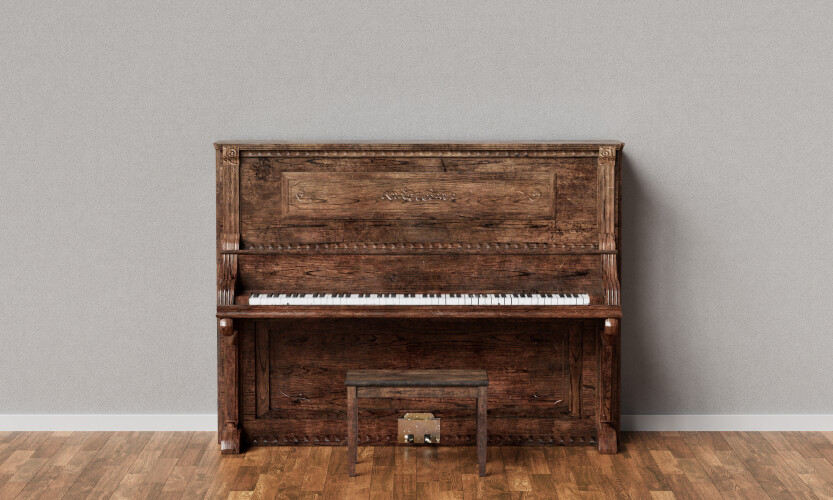
15 Years in Storage: Now What? It’s Time to Organize 'Stuff'

"I said I would go through it someday. I know I don’t need it all. But there it sat for over 15 years while I paid for the storage. I couldn't even remember what was in storage, much less enjoy it.” That’s what one Artifcts Community member of the boomer generation told us recently. We know she is not alone. 

According to an AARP magazine review of commercial storage trends, the older you are, the longer you keep items in storage. And, on average, boomers only visit their storage units once per month. How critical is that storage? How much cost and uncertainty does it create? Maybe, we need to take a minute to talk about the proverbial elephant in the room, or in this case, the storage unit.

“Our family moved a lot over the span of 20 years, and I was in constant survival mode. There was no time to ponder what we kept and what we let go of much less the good stories to pass on,” said another Artifcts Community member. He then proudly (or rather sheepishly) shared that that is how they ended up one time moving a trash can still full of trash. 

He was trying to justify to himself why he and his partner kept moving the same ‘stuff’ from house to house, even if only to put back in storage in the next garage, closet, and attic. (And that eventually became a downsizing adventure of epic proportions. Read about it here.)

We have also heard from people who held onto items and expressed some version of, “Surely it will still be worth something, and I can sell it,” only to find it degraded over time in the hot attic, the style or material was no longer in vogue when recovered from the basement, or some other reason meant that no, it was a lost cause. And still others have confessed to using storage for items and sometimes nearly whole estates they have inherited and did not have the time, interest, or heart to go through.

Surely it will still be worth something, and I can sell it...

Sound familiar? Or think you're immune? Given today's demographics and the impending great wealth transfer, we are all at some point going to have to encounter this very dilemma--too much 'stuff,' not enough space, and the desire to preserve and share the family memories and stories behind those keepsakes.

why do people put belongings into storage

How to Make the Most of the Money We Spend on Storage

Keep in mind, storage is not always at an offsite property where you pay a monthly fee. Want to talk about expensive storage, consider the climate controlled space you live in!

#1  KEEP TRACK OF WHAT YOU STORE

If nothing else, make a list and take pictures of the bulky and or valuable items in storage or heading into storage. Better yet, Artifct what you store. Otherwise, you know what they say...out of sight, out of mind. 

When you create an Artifct for the items heading into storage, you can also affix an Artifcts QR code sticker to the box to help you easily recall which box the item went into in its storage location. Bonus! Staring at a wall of boxes? Having an Artifcts QR code sticker on the outside of the box is a quick and easy way to figure out what's in the box without having to open or unpack. 

Tag Artifcted items with two tags: one that's simply #Storage and a second that's the specific location, such as #attic, #fronthallcloset, or #storageunit. That way with a single click on any #storage tag you can easily review what you're storing, and second click #attic, and "Oh, yes, that's what's up there. Maybe it's time to take it out of storage and use it."  

If you're working with a professional moving and storage company, they usually offer services to help you create an inventory for practical and insurance purposes. We encourage you to consider this the "if nothing else" bare minimum, because we believe you deserve more than an inventory of stuff.

#2  THINK AHEAD TO CAPTURE USEFUL DETAILS

Photos of the objects are important, including from multiple angles, especially if you live in an area prone to natural disasters. But we also recommend a video snippet that gives a 360-degree view if an item is particularly special or valuable. The video may capture details and imperfections you otherwise overlook.

Grab approximate dimensions and weight, too. This will help whether you need to move it again or file an insurance claim. 

You may also enjoy our ARTIcles with tips on Articting for Insurance as well as Artifcting for Estate Planning.

#3  ASK BEFORE YOU STORE, THEN STORE, AND STORE SAFELY

We know it might be hard to let go of that piece of furniture that's been in your family for decades or even generations. Likewise, those bins of old papers and photos that you know tell your family's story. It's all very tempting to store for someone someday to enjoy again.

      • If you Artifct it and share it, with one click you can ask someone if they want the item if you do not, using Artifcts as a decluttering app. If they do not want it, you can more easily now let it go to a new home.
      • If you choose to store it, and let's assume that space is climate controlled, please still think about what boxes and bins you are storing the item in. So many of the most popular bins you pick up at local shops will let off gasses ("off-gas" in archival terms) and ruin photos, film, and documents. And without proper care, textiles can also be a lost cause. You don't want to realize you lost the history and stored what's now trash. Use archival quality materials. Archival Methods offers great tips and supplies. (Visit Artifcts' Our Partners page for a discount on your next Archival Methods purchase!)

Ready to Make Some Decisions?

You’ve read about how long-forgotten belongings can quietly take up space and money, and you now have tools and strategies to track, document, and care for what you store. But real progress happens when you act.

Set aside an afternoon — or even just a couple of dedicated hours — to tackle what’s in storage. Pull things out, see what’s there, and be honest with yourself about what truly still matters. Use Artifcts to capture photos, videos, and stories of the items you decide to keep so their meaning isn’t lost, and let go of what no longer serves you by donating, gifting, selling, or recycling it.

Set aside an afternoon — or even just a couple of dedicated hours — to tackle what’s in storage...

It can feel overwhelming to face years (or even decades) of accumulation — but breaking it up into a manageable block of time turns a daunting task into a meaningful afternoon. Make a conscious decision about what happens next with those belongings, and you’ll not only reclaim physical space but also peace of mind. Your future self will thank you for finally confronting what’s in storage and making intentional choices about what stays and what goes.

###

© 2026 Artifcts, Inc. All Rights Reserved.
Read more
Your privacy

This website uses only essential cookies to provide reliable and secure services, streamline your experience, allow you to share content from this website on social media, and to analyze how our Site is used. Learn more about these cookies and cookie settings.

Accept & Continue
Oops! This Web Browser Version is Unsupported

You received this warning because you are using an unsupported browser. Some features of Artifcts will not be available or will be displayed improperly until you update to the latest version or change browsers.

Close
Image for unsupported banner Oops! This Web Browser is Unsupported

You received this warning because you are using an unsupported browser. Some features of Artifcts will not be available or will be displayed improperly until you update to the latest version or change browsers.

Unsupported banner close icon Close