
Give the gift small icon
Give the gift of Artifcts!
HELLO!
Give the gift big icon
Give the gift
of Artifcts

The perfect gift for the person
in your life who has everything.

Give a gift Close

ARTIAssist has arrived

Try our new AI-boosted ARTIAssist for FREE on your own Artifcts. Add historical and factual details to your Artifcts, and learn what similar items have sold for in recent months.

Bob Fowler's Legacy: Zoos to Pendants

October 20, 2021

An actress by profession, Diane (Di) Fowler appreciates the fine arts. Today she discusses with Artifcts the legacy of her late husband, celebrated artist and master sculptor Bob Fowler, whose career as a sculptor launched in 1963 and continued until his death in 2010. His works span form—metal sculptures, jewelry, and mixed media—and continents, from private commissions to installations and shows at the National Gallery in Washington D.C., Fabien Galleries in Paris, France, Museum of Art in Trieste, Italy, and the Woburn Abbey, England. Keep reading to learn more about the Artifcts of his work and Di's efforts to preserve his legacy and reissue some of his individual sterling silver jewelry pieces. 

_____________________ 

Since the passing of Bob Fowler over a decade ago, his widow Diane (Di) Fowler has sought to ensure his legacy lives on beyond his exhibited works, and as it turns out, she has the means to do so: the original molds he used to produce his sterling silver jewelry series. (And a few etchings and paintings tucked away biding time for a future reveal.)

Di and I met one afternoon at the EmilyAnn Theatre and Gardens in Wimberley, Texas, where she volunteers on the grounds and helps young actors with their art, having spent years on community stages herself. Di has a love for the Wimberley community that leads her out day after day to contribute her passions and experience. But today we met to talk about her late husband Bob Fowler.  

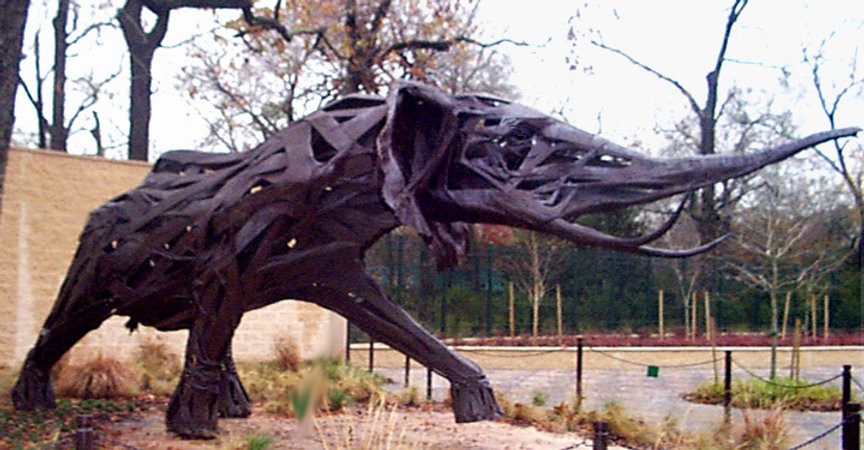
Di brought out a binder for me that contained only a select few of Bob's commissions. Paging through, she was jubilant in her descriptions of the works, talking animatedly about his design of two larger than life metal works for the Houston Zoo. You may have seen them if you’ve visited. The full-size African elephant welcomes visitors at the Zoo’s front entrance. The second piece is a gorilla, standing tall at the entrance to the Gorilla House.  

African elephant sculpture at Houston Zoo, by Bob Fowler

These grand scale sculptures were Bob’s passion, pushing boundaries to capture the energy of the subject while also bringing his academic background to play in his rigorous research to create the original concepts. This same research shines in the factual, impassioned, and sometimes humorous descriptions behind each of his jewelry pieces.  

Bob Fowler’s Smaller Scale Side – Sterling Silver Pendants 

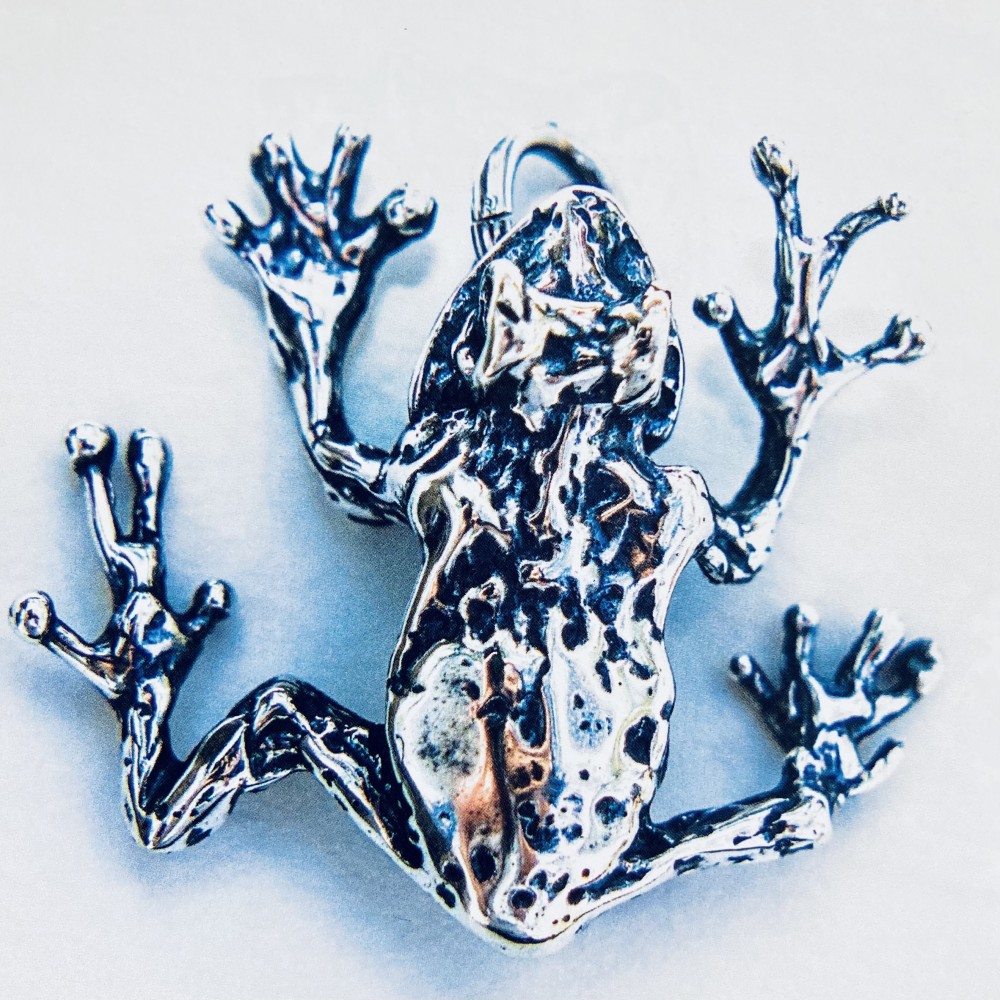
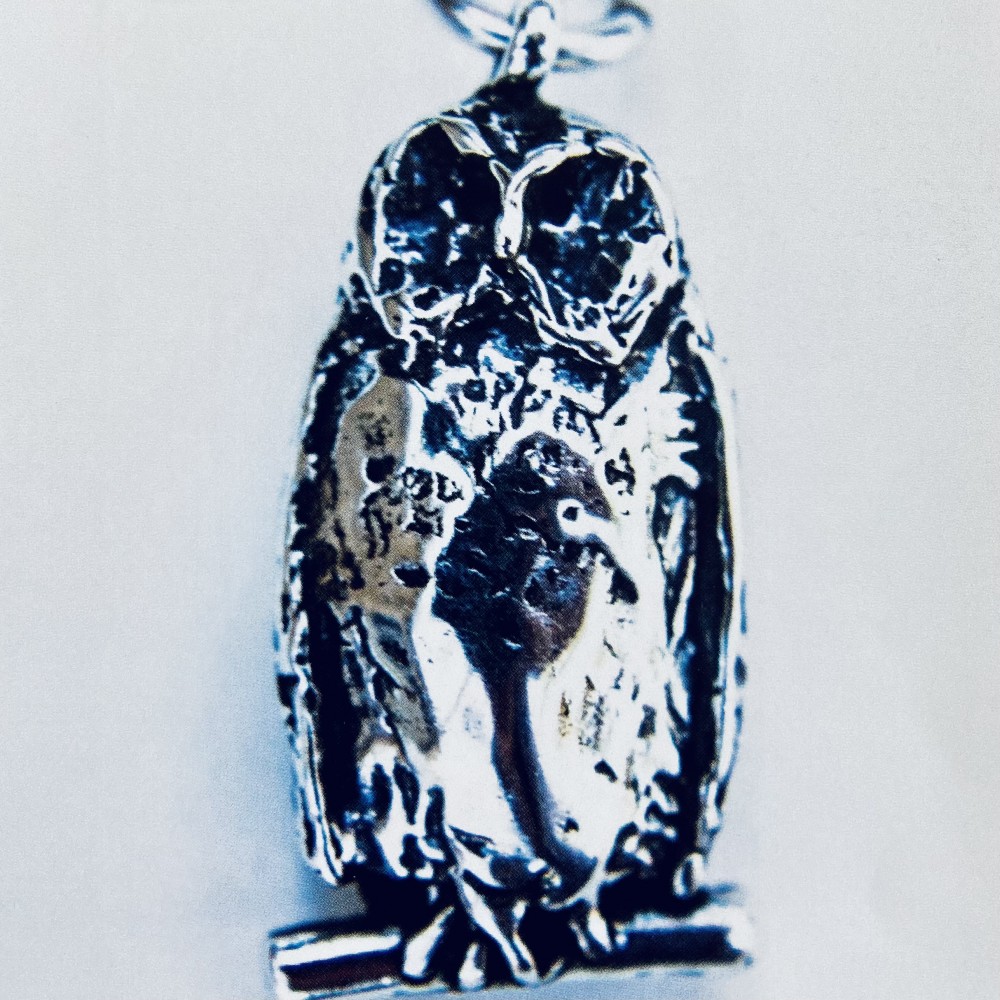
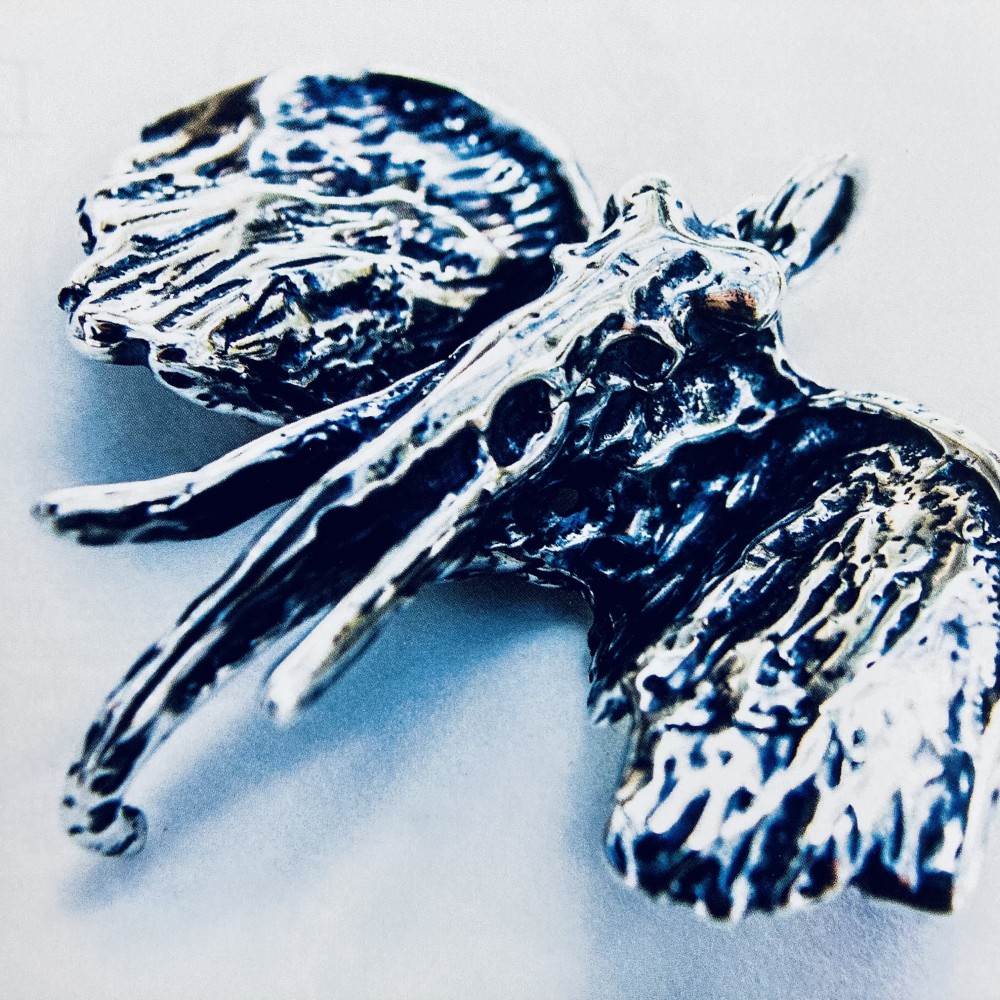
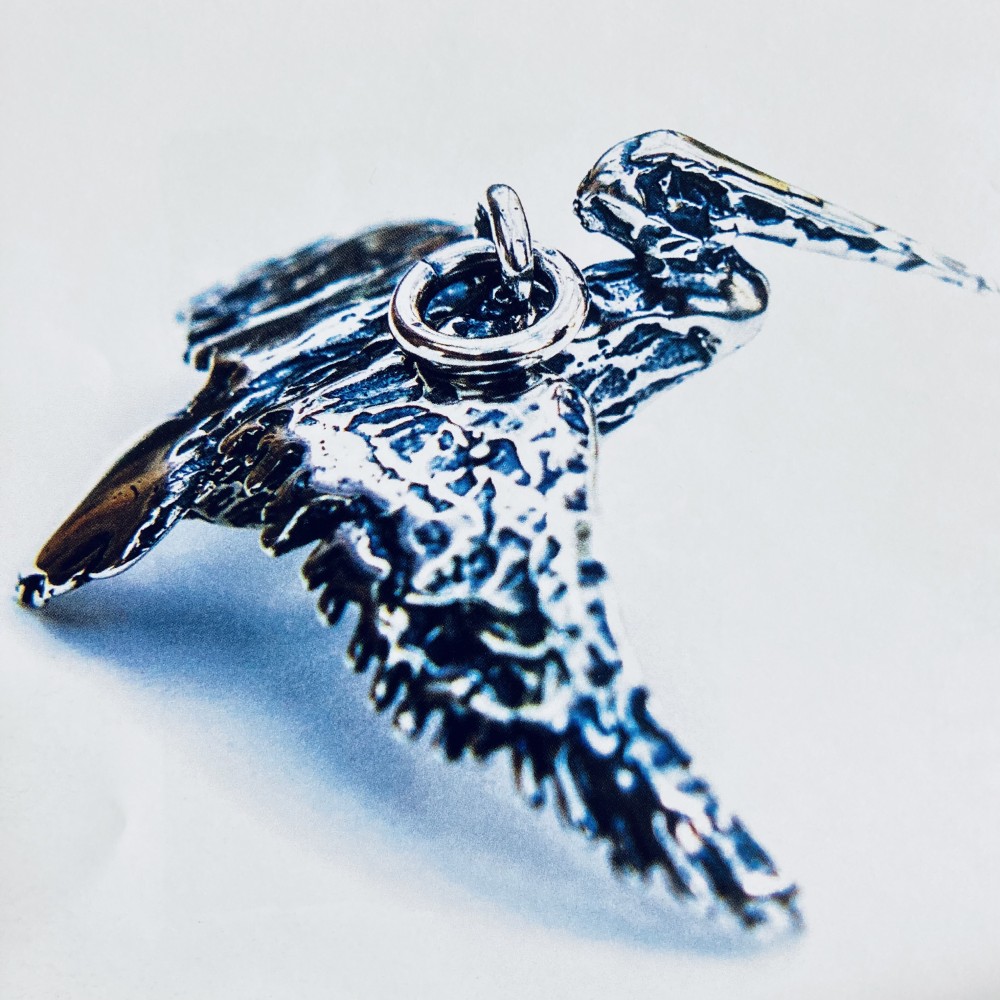
We set the binder aside as Di brought out a display case with 100s of sterling silver- and gold-plated jewelry pendants ranging from one inch to nearly three inches in size. Bob began designing these pieces in the early 1990s, each capturing the animated likeness of endangered and protected animal species from around the world. Magically, the miniatures somehow convey the same energy as seen in Bob’s large steel sculptures.  

Created first in wax before being cast in molds, the intricacy of each piece and the personality captured shows Bob’s mastery of the wax art. Pairing the wax design method with Bob’s methodical research, each species carries with it a short description, a few of which seem prophetic.  

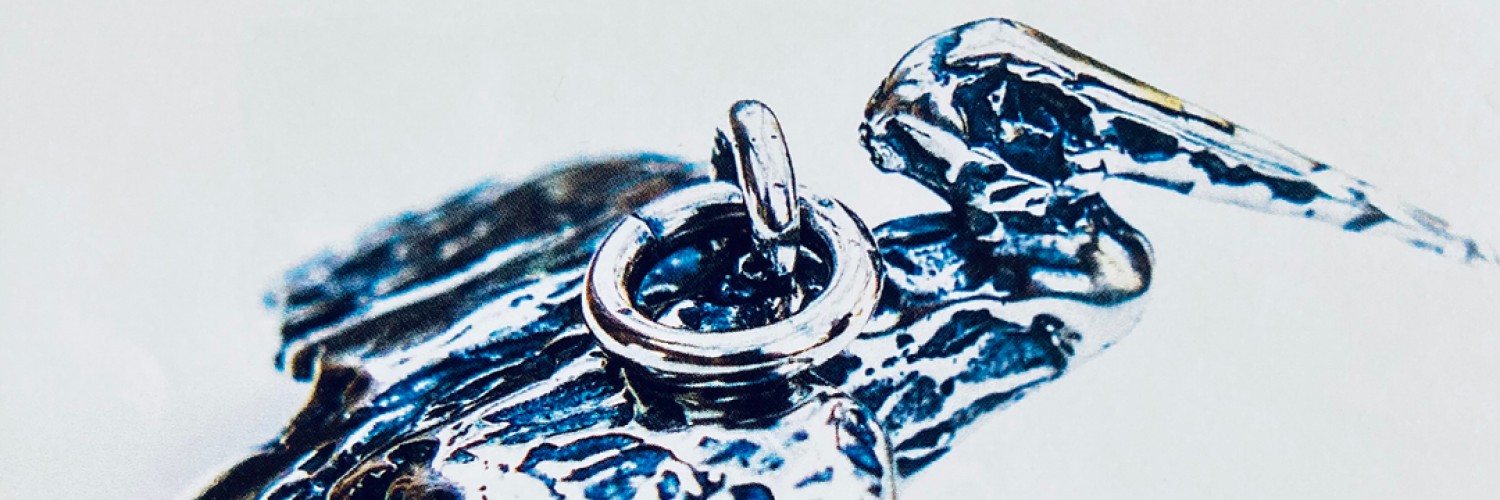
For example, of the Costa Rican Climber (pictured below), Bob’s research spoke about the symbiosis of its survival with the state of world environmental affairs, quoting an unnamed scientist, “When jungles of Central and South America disappear and virus carrying insects have to find new breeding grounds, civilization will be exposed to exotic animal viruses that will make AIDS look like the common cold.”

Costa Rican Climber pendant, by Bob Fowler

These charms may not be the best known of Bob Fowler’s works, but they remind us of the care we all need to take to protect our world’s ecosystems while also sending his legacy onward through us all. Di told me she has begun seeking out a metals artist to pick up Bob’s work and bring the pendants to a new global audience. Select and view any of these pieces for a quick-witted education into the world of endangered species from the voice of Bob Fowler. 

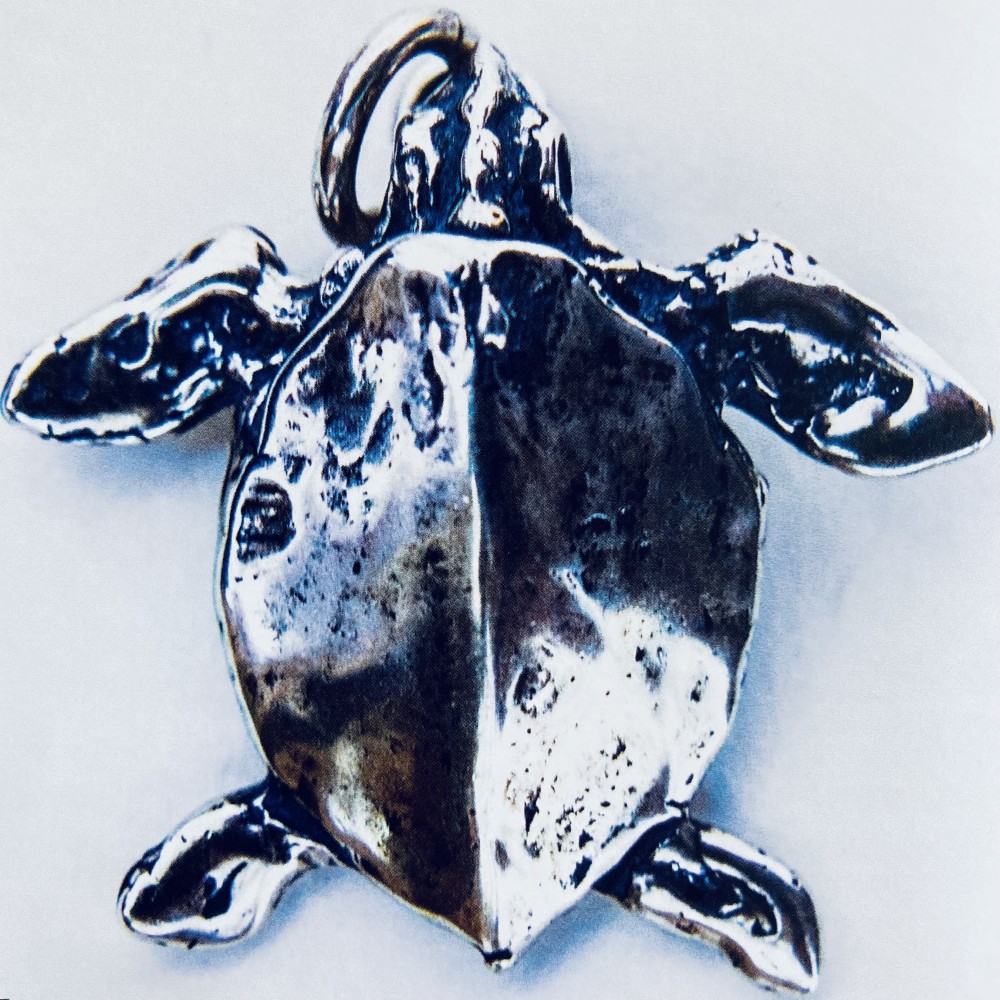
Spotted Owl pendant, by Bob Fowler     African Elephant pendant, by Bob Fowler     Brown Pelican pendant, by Bob Fowler     Ridley Turtle pendant, by Bob Fowler

 Bob is no longer with us to produce his art. My hope is that his jewelry will continue to be a tribute to his legacy.  — Di Fowler

###

If you’re interested in learning more about Bob Fowler’s work or in purchasing a piece, you may contact Diane Fowler directly at dihrufowler@gmail.com. Some of Bob’s other works are also currently available for purchase through 1stDibs. 

© 2021 Artifcts, Inc. All Rights Reserved.

Share With Friends
5 likes
What's New at Artifcts
15 Years in Storage: Now What? It’s Time to Organize 'Stuff'

"I said I would go through it someday. I know I don’t need it all. But there it sat for over 15 years while I paid for the storage. I couldn't even remember what was in storage, much less enjoy it.” That’s what one Artifcts Community member of the boomer generation told us recently. We know she is not alone. 

According to an AARP magazine review of commercial storage trends, the older you are, the longer you keep items in storage. And, on average, boomers only visit their storage units once per month. How critical is that storage? How much cost and uncertainty does it create? Maybe, we need to take a minute to talk about the proverbial elephant in the room, or in this case, the storage unit.

“Our family moved a lot over the span of 20 years, and I was in constant survival mode. There was no time to ponder what we kept and what we let go of much less the good stories to pass on,” said another Artifcts Community member. He then proudly (or rather sheepishly) shared that that is how they ended up one time moving a trash can still full of trash. 

He was trying to justify to himself why he and his partner kept moving the same ‘stuff’ from house to house, even if only to put back in storage in the next garage, closet, and attic. (And that eventually became a downsizing adventure of epic proportions. Read about it here.)

We have also heard from people who held onto items and expressed some version of, “Surely it will still be worth something, and I can sell it,” only to find it degraded over time in the hot attic, the style or material was no longer in vogue when recovered from the basement, or some other reason meant that no, it was a lost cause. And still others have confessed to using storage for items and sometimes nearly whole estates they have inherited and did not have the time, interest, or heart to go through.

Surely it will still be worth something, and I can sell it...

Sound familiar? Or think you're immune? Given today's demographics and the impending great wealth transfer, we are all at some point going to have to encounter this very dilemma--too much 'stuff,' not enough space, and the desire to preserve and share the family memories and stories behind those keepsakes.

why do people put belongings into storage

How to Make the Most of the Money We Spend on Storage

Keep in mind, storage is not always at an offsite property where you pay a monthly fee. Want to talk about expensive storage, consider the climate controlled space you live in!

#1  KEEP TRACK OF WHAT YOU STORE

If nothing else, make a list and take pictures of the bulky and or valuable items in storage or heading into storage. Better yet, Artifct what you store. Otherwise, you know what they say...out of sight, out of mind. 

When you create an Artifct for the items heading into storage, you can also affix an Artifcts QR code sticker to the box to help you easily recall which box the item went into in its storage location. Bonus! Staring at a wall of boxes? Having an Artifcts QR code sticker on the outside of the box is a quick and easy way to figure out what's in the box without having to open or unpack. 

Tag Artifcted items with two tags: one that's simply #Storage and a second that's the specific location, such as #attic, #fronthallcloset, or #storageunit. That way with a single click on any #storage tag you can easily review what you're storing, and second click #attic, and "Oh, yes, that's what's up there. Maybe it's time to take it out of storage and use it."  

If you're working with a professional moving and storage company, they usually offer services to help you create an inventory for practical and insurance purposes. We encourage you to consider this the "if nothing else" bare minimum, because we believe you deserve more than an inventory of stuff.

#2  THINK AHEAD TO CAPTURE USEFUL DETAILS

Photos of the objects are important, including from multiple angles, especially if you live in an area prone to natural disasters. But we also recommend a video snippet that gives a 360-degree view if an item is particularly special or valuable. The video may capture details and imperfections you otherwise overlook.

Grab approximate dimensions and weight, too. This will help whether you need to move it again or file an insurance claim. 

You may also enjoy our ARTIcles with tips on Articting for Insurance as well as Artifcting for Estate Planning.

#3  ASK BEFORE YOU STORE, THEN STORE, AND STORE SAFELY

We know it might be hard to let go of that piece of furniture that's been in your family for decades or even generations. Likewise, those bins of old papers and photos that you know tell your family's story. It's all very tempting to store for someone someday to enjoy again.

      • If you Artifct it and share it, with one click you can ask someone if they want the item if you do not, using Artifcts as a decluttering app. If they do not want it, you can more easily now let it go to a new home.
      • If you choose to store it, and let's assume that space is climate controlled, please still think about what boxes and bins you are storing the item in. So many of the most popular bins you pick up at local shops will let off gasses ("off-gas" in archival terms) and ruin photos, film, and documents. And without proper care, textiles can also be a lost cause. You don't want to realize you lost the history and stored what's now trash. Use archival quality materials. Archival Methods offers great tips and supplies. (Visit Artifcts' Our Partners page for a discount on your next Archival Methods purchase!)

Ready to Make Some Decisions?

You’ve read about how long-forgotten belongings can quietly take up space and money, and you now have tools and strategies to track, document, and care for what you store. But real progress happens when you act.

Set aside an afternoon — or even just a couple of dedicated hours — to tackle what’s in storage. Pull things out, see what’s there, and be honest with yourself about what truly still matters. Use Artifcts to capture photos, videos, and stories of the items you decide to keep so their meaning isn’t lost, and let go of what no longer serves you by donating, gifting, selling, or recycling it.

Set aside an afternoon — or even just a couple of dedicated hours — to tackle what’s in storage...

It can feel overwhelming to face years (or even decades) of accumulation — but breaking it up into a manageable block of time turns a daunting task into a meaningful afternoon. Make a conscious decision about what happens next with those belongings, and you’ll not only reclaim physical space but also peace of mind. Your future self will thank you for finally confronting what’s in storage and making intentional choices about what stays and what goes.

###

© 2026 Artifcts, Inc. All Rights Reserved.
Read more
Should You Sell Old Jewelry? A Guide to Cashing In Without Losing Its Meaning

Earlier this month, one of our members wrote in to ask us what to do with the old jewelry she’s accumulated that she no longer wears or may have seen better days. Her predicament... 

I’ve just started downsizing and going through our bedroom closets. I’ve come across a rather large collection of jewelry pieces that I either no longer wear, didn’t remember I had, or are broken and in need of some TLC. I plan to Artifct the ones that I will keep and one day pass down to my daughter and granddaughters, but I’m not too sure what to do with the rest. I’ve heard gold is at record prices, and I’m wondering if I should sell some of it rather than simply donate to our local thrift shop. Any advice? 

Our first response after reading her note was, “You’re not alone.” We routinely get this question a couple of times a year, although we’ve yet to write about it. So, in honor of and in tribute to those of you who’ve asked and those of you who’ve wondered, this ARTIcle is all about what to do with the jewelry you no longer use.  

Many of us have jewelry tucked away in drawers — broken earrings, outdated rings, chains tangled in a giant knot, or pieces we just don’t wear anymore. With gold and silver hitting record-breaking prices in recent years, now might be a great time to think about selling those pieces for cash.  

Turning Old Jewelry into Cash — Without Losing the Story 

Precious metals markets have seen historic highs. Gold has surpassed multi-year records — recently trading above $5,300 per ounce according to multiple market reports — and silver has also surged, making old metal jewelry potentially more valuable than it has been in decades.  

That means your old gold bands, silver bracelets, and even scrap metal jewelry could be worth far more today than when you first set them aside. You might be wondering what do I do with it now, or you might be willing to let go of the pieces but concerned about preserving the memory.  

If you find yourself in this camp, Artifct the pieces you plan to sell. Photograph each piece and enter the details about where it came from, who owned it, and any events or moments connected to it. Consider adding a photo of you back in the day wearing the piece. Was the piece a gift from a loved one? Include a photo of them too, as part of your story. This way, the story lives on with Artifcts, even if the items themselves don’t stay in your hands. 

Looking for Ways to Sell Old Jewelry? 

Here are common places people sell their jewelry — each with pros and cons: 

  • Local Jewelers or Dealers: Professional buyers may offer competitive prices for gold and quality gemstones based on current metal prices. 
  • Pawn Shops: Quick and easy, but often lower payouts. 
  • Online Marketplaces: Platforms like eBay, Etsy, or dedicated resale sites such as Worthy can expand your buyer pool and potentially get higher prices — especially for vintage or branded pieces. 
  • Consignment: Let a jeweler or boutique sell for you — you may earn more, though it can take time. One of our business partners, National Rarities, may be able to help, especially with gold or silver pieces.  

Pro tip: Before selling, get multiple quotes, check reviews, and always know that a lot of jewelry gets melted down — its resale value is usually tied to metal content, not necessarily emotional or design value.  

Keeping and Passing Jewelry Down  

For many families, jewelry is much more than metal and stones — it’s a legacy. Perhaps it was your grandmother’s engagement ring, your aunt’s vintage brooch, or a locket your parents gave you on graduation. These pieces carry stories that transcend material value. 

Even if you don’t wear or display every piece, you can honor its meaning: 

  • Document Stories: Use Artifcts to upload photos and narratives — who gave it to whom, the occasion, what it symbolizes, and even how it was worn.
  • Add Context: Include letters or cards, old photos of the piece being worn, or transcripts of conversations about it.
  • Connect Generations: Invite family members to collaborate on the same Artifct so everyone contributes their memories or interpretations. 

Documenting, preserving, and sharing the stories behind the pieces through Artifcts keeps not only the jewelry itself, but the stories behind it in your family history, not just stored in a drawer. 


If you do plan for pieces to stay in the family: 

  • Make It Meaningful: Writing down why you’re choosing a particular heirloom for a specific family member adds intentionality and sentimental depth. We wrote extensively about this in Gift Your Loved Ones a Why.
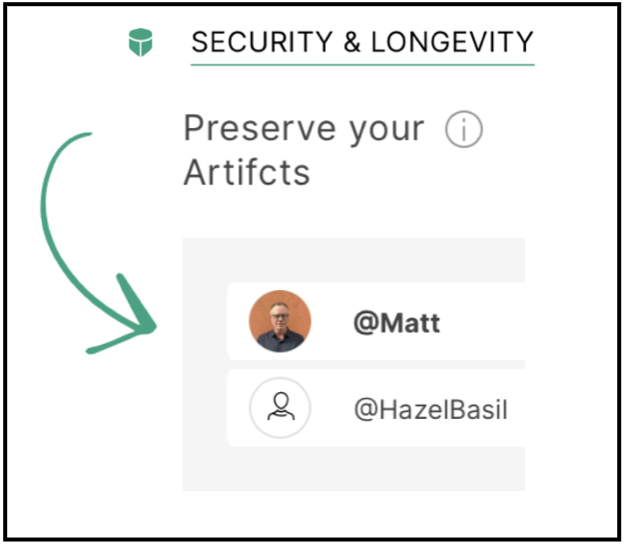
  • Use Artifcts as a Legacy Tool: Artifcts can serve as a digital keepsake your next generation can revisit long after the physical piece changes hands — or even if it gets lost. Bonus! You can’t split a diamond ring in thirds, but with Artifcts, one member can inherit the ring, and all can inherit the Artifct of the ring. 
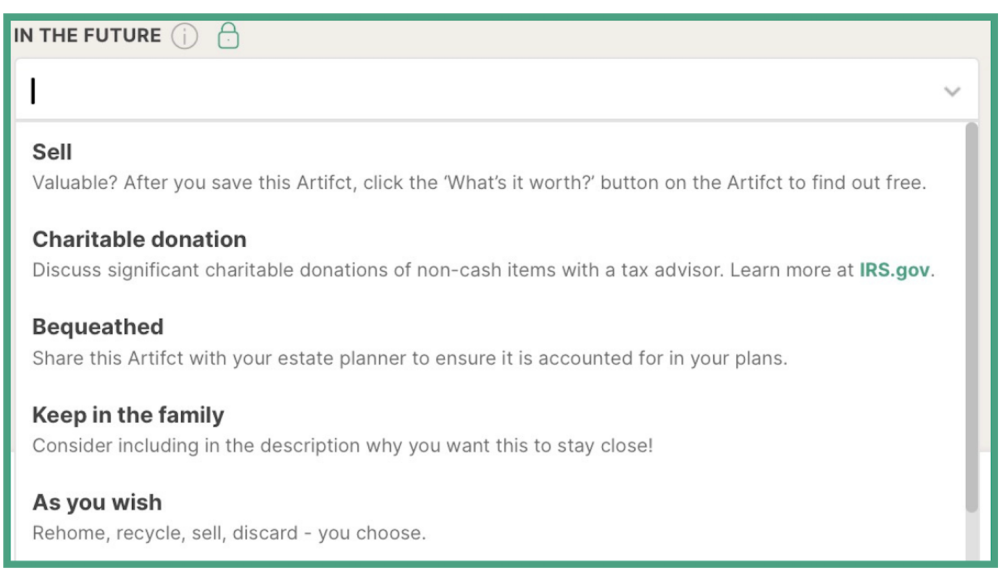
  • Fill Out the 'In the Future' Field: Don’t leave it to guesswork. If you know who you want to inherit the piece, use our In the Future Field to document your wishes, and then share with your attorney or estate planner. 


Our 'In the Future' field makes it easy to pass down jewelry and other keepsakes. 

Whatever You Decide — Keep the Story 

Whether selling pieces for their intrinsic value or keeping jewels close for future generations, Artifcting their stories ensures memories aren’t lost. Jewelry often carries layered personal meaning and Artifcts helps you capture that meaning forever, no matter what happens to the physical objects. 

###

You might also enjoy reading these related ARTIcles:

Your Future Family Heirlooms

Everything You Wanted to Know About Appraisals But Were Afraid to Ask

How to Artifct That Heirloom

© 2026 Artifcts, Inc. All Rights Reserved.
Read more
Artifcts: The New Love Language

In a world where messages often zip by in seconds and memories can slip through the cracks of daily life, Artifcts offers something beautiful: a way to say “you matter” that’s tangible, personal, and lasting.  

An Artifct isn’t just a photo, a story, or a digital file — it’s a love note stitched together with meaning. It’s a moment preserved in time, carefully captured and shared with intention. It becomes a topic of conversation, a happy memory shared, a new story discovered. Whether you’re celebrating a milestone, reconnecting across time and distance, or simply saying “I love you,” Artifcts transforms everyday objects and memories into meaningful expressions of affection. 

How Artifcts Becomes a Love Language 

At its heart, Artifcts is about connection: between family, across generations, and even between friends. When we slow down to document why something matters — not just what it is — we invite others into our world, our stories, and our hearts.  

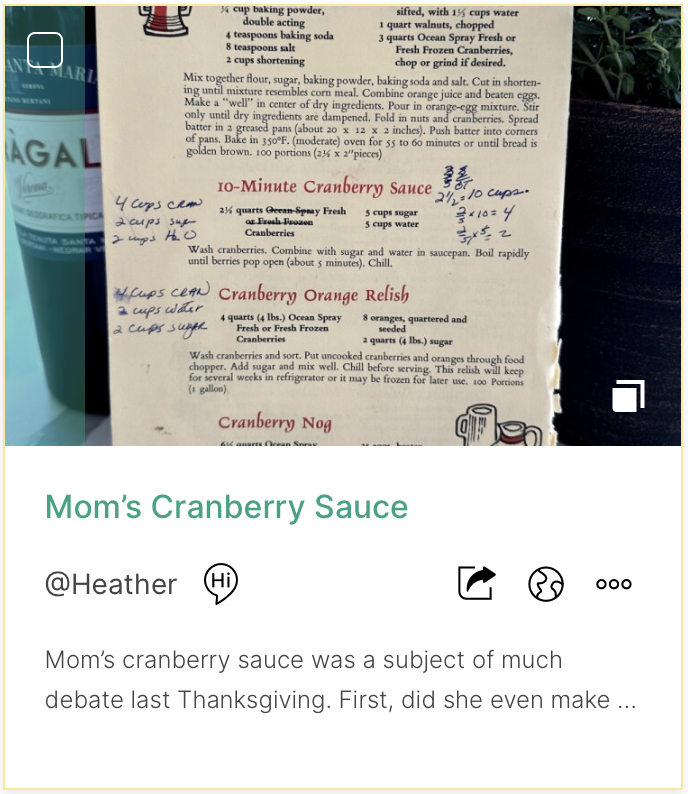
Objects gain power when their stories are told. A simple recipe card becomes a warm memory of Sunday dinners. A well-worn baseball glove becomes proof of childhood dedication. These are the stories that make the Artifcts priceless. 

When you share an Artifct, you’re doing more than sending a file — you’re offering understanding, appreciation, and connection. 


A special Valentine's Day gift from mother to daughter. Sorry, this Artifct is private! 

Artifcts: Love Across Time and Distance 

One of the most magical aspects of Artifcts is that it lets you share love no matter where you are. Whether family members are across town or across the globe, an Artifct carries emotions and memories in a way that text messages and social feeds simply can’t.  

You can preserve: 

  • Family traditions and heirlooms
  • Stories and mementos from loved ones who’ve passed on
  • Milestones and awards big and small
  • Meaningful moments and photos you never want to forget 

This shared remnant of life becomes a bridge between your world and someone else’s, a shared narrative that deepens relationships and invites ongoing conversation. 

Tips for Creating Truly Heartfelt Artifcts 

Ready to make Artifcts that resonate deeply with those you love? Here are thoughtful tips and tricks to ensure your Artifcts are full of heart value: 

🧡 1. Start With Why 

Every meaningful Artifct begins with a why — a reason that goes beyond the object itself. Ask yourself: 

  • Why does this keepsake matter to me?
  • What memory does this memento spark?
  • Why have I kept this item all these years? 

Share those answers as part of the Artifct’s description. 

📸 2. Combine Media for Richer Stories 

Blend photos, videos, and voice recordings to tell a fuller story. Hearing someone’s voice or seeing a moment in motion adds emotional depth that text alone can’t match. Whether it’s the history behind a treasured heirloom or the tale of a favorite trip, capturing details while they’re still fresh and in your loved ones own words adds richness that’s irreplaceable.

🗣️ 3. Include Personal Reflections 

A heartfelt Artifct isn’t just about facts, it’s about feelings too. Take a moment to reflect on: 

  • What this object means to you
  • How it connects to someone else
  • Why you’re sharing it now 

These reflections will help make your Artifcts feel personal and intimate. 

🎁 4. Share with Intent 

When you share an Artifct, think of it as a digital gift: add a message that tells the recipient why you chose to Artifct and share this item with them. Just like thoughtful gifts in real life, these intentional Artifcts become keepsakes of the heart. 

The Art of Saying “I Love You” with Artifcts

In a culture filled with fleeting interactions, Artifcts invites us to pause, reflect, and communicate what matters most. It’s more than documentation, it’s devotion. It’s a love language for our digital age. So whether you’re commemorating a birthday, sharing a treasured family memory, or simply telling someone you’re thinking of them, let Artifcts help you speak from the heart.  

This Valentine's Day as you pause for a moment to absorb all the positive in life, surprise someone—friend, sister, neighbor, professor, parent, son—with an Artifct!

Happy Artifcting! 

###

© 2026 Artifcts, Inc. All Rights Reserved.
Read more
Your privacy

This website uses only essential cookies to provide reliable and secure services, streamline your experience, allow you to share content from this website on social media, and to analyze how our Site is used. Learn more about these cookies and cookie settings.

Accept & Continue
Oops! This Web Browser Version is Unsupported

You received this warning because you are using an unsupported browser. Some features of Artifcts will not be available or will be displayed improperly until you update to the latest version or change browsers.

Close
Image for unsupported banner Oops! This Web Browser is Unsupported

You received this warning because you are using an unsupported browser. Some features of Artifcts will not be available or will be displayed improperly until you update to the latest version or change browsers.

Unsupported banner close icon Close