Give the gift small icon
Give the gift of Artifcts!
HELLO!
Give the gift big icon
Give the gift
of Artifcts

The perfect gift for the person
in your life who has everything.

Give a gift Close
Artifcts is turning 5!
To celebrate we’re gifting you a free virtual concierge session for every membership you purchase or gift. It’s our way of saying thank you on our big day.
Shop the Birthday Sale
Sale runs through 8/31/2026 at 11:59pm PDT.

A Platinum Band, 21 Diamonds, and a Story Worth Saving

June 10, 2026

Two weeks before her wedding, our Co-Founder, Heather, found herself unexpectedly in a bind. 

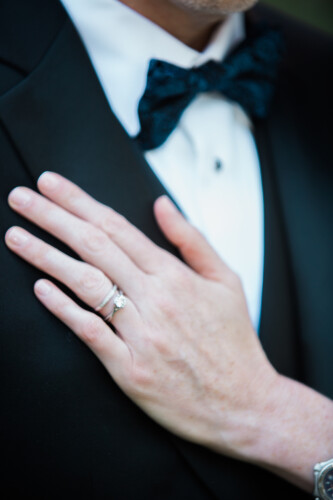
She and her fiancé had carefully designed their wedding bands together. She wanted something simple, a plain platinum band with no embellishments. The design reflected her style perfectly, and she appreciated keeping costs modest. The ring was exactly what she wanted. 

Or so she thought. 

When she returned to pick up the finished rings, she slipped hers onto her finger and immediately felt something wasn't quite right. Sitting beside her engagement ring, the wedding band suddenly seemed too simple. 

The problem wasn't the ring itself. The problem was that she couldn't imagine replacing it. She and her fiancé had designed it together. The ring already carried meaning. 

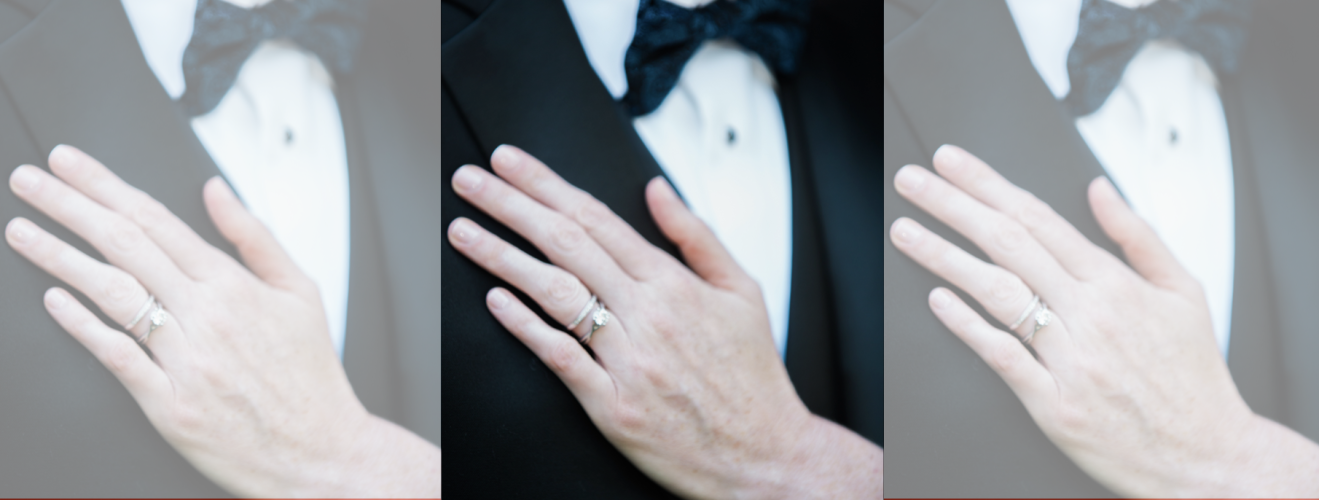
Fortunately, the jeweler had an idea. What if they added 21 micro diamonds along two-thirds of the band? It would preserve the original design while adding just enough sparkle. The solution felt perfect, especially since her wedding date was on the 21st. 

Today, when she looks at her ring, she doesn't just see platinum and diamonds. She remembers the collaborative design process with her husband, the last-minute panic, and the jeweler's creative solution, and truly can’t imagine a more perfect wedding band. 

That's the thing about wedding rings: the object matters, but the story matters too. 

Wedding and engagement rings are among the most cherished possessions we own. They are symbols of love, commitment, family, and shared history. Yet while we often admire the setting, the craftsmanship, or the precious stones, the most valuable part of a ring may be something you cannot see at all, its story. 

How did the ring come into your life? Who chose it? What sacrifices were made to buy it? Was it passed down through generations? Did it survive a move across continents, a military deployment, or decades of family milestones? 

Years from now, the ring itself may still be sparkling. But unless someone preserves the story behind it, much of what gives it meaning can disappear.  

Every Ring Has a Story Worth Saving 

When people inherit jewelry, they often receive the object but not the context. A granddaughter may know that a ring belonged to her grandmother but never know how it was selected, what it cost relative to the family's circumstances, or why it became such a treasured symbol. 

The story might be: 

These stories transform a piece of jewelry into a family artifact. They connect generations through shared memories and experiences. At Artifcts, we believe preserving those stories is one of the greatest gifts you can leave for future generations. 

The Ring Is Beautiful. The Story Is Priceless. 

Every ring tells a different story. We asked several members of our team about their rings and their stories, and guess what? We learned something new about each of them! It goes to show that even here at Artifcts, a simple question (“What’s the story behind your wedding ring?”) can unlock a new connection, perspective, or even a good laugh.  

Here are a few examples from members of the Artifcts team. 

Heather Nickerson, Co-Founder & CEO 

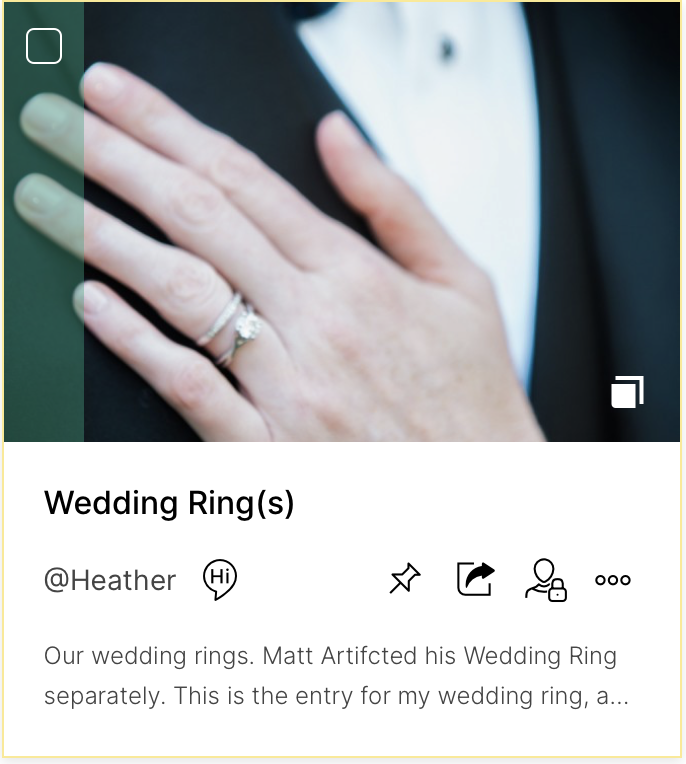
The story continues! I will fully admit that when I returned to the jeweler to pick up my ring I had another scare. I pulled out my credit card to pay for the ring and paused for a minute (or two), not because of the price, but because that is what I had done in my first marriage which didn’t go so well. I was afraid it would bring bad luck to do the same thing the second time around.  
 
I’m very happy to share that those fears were completely unfounded. Our wedding day was perfect beyond words, and we are still very happily married. And to date, the only time I take my wedding ring off is when I am making meatloaf (his favorite!) or meatballs (my favorite!).  


Heather's wedding ring story. Sorry, this Artifcts is private!
Matt Ramsey, CTO 

Life can change quickly when you meet the right person, especially when you’re not planning on it and the relationship develops in a way you just know your life needs to head down this path. I realized this under a starry night sky while camping and that if we could put up a tent without arguing, we’d be good for any situation. So, I started searching for the right engagement ring that represented how our relationship was developing and how our lives were to be intertwined. While hiking and resting on a large boulder which I felt represented the solid foundation we’d built our relationship on, I asked and she accepted (maybe out of shock, but the “yes” was set in stone). 

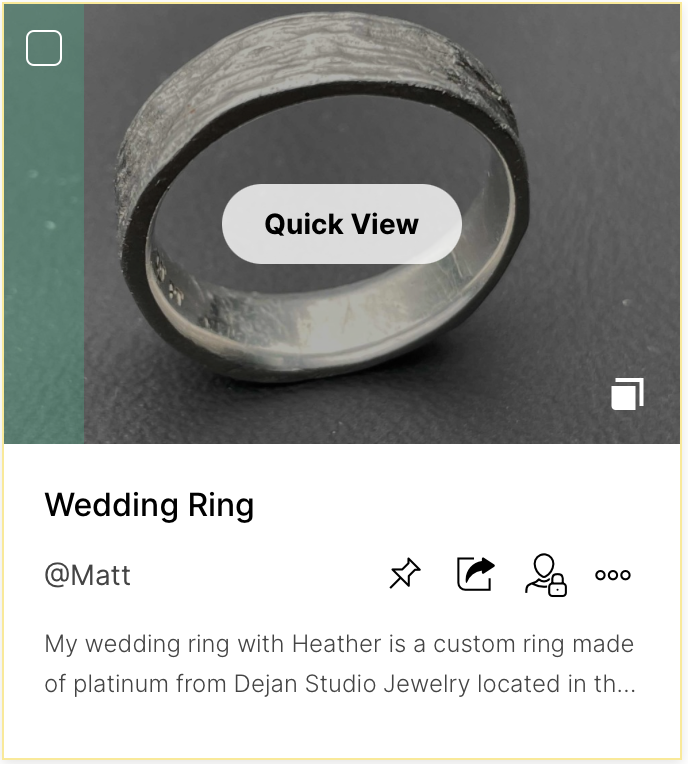
When it came to a wedding band for me, I wanted something with a story, something representative of us. We found a jeweler that did custom rings, and we described who we were (outdoorsy, hikers, etc.) and the proposal story. We started looking at examples of rings with river wash designs that almost looked like water flowing around the ring. The ones he had already designed weren’t perfect for me. So, we took ideas from a couple of designs and he said he would fashion a new one incorporating all the elements of who we were and what grounded us in our relationship. It turned out perfectly and it is simple, unique, and symbolic to who we are as a couple and lifelong partners. 

Now, as I sit on an airplane or have a free moment where I’m fidgeting, I twist the ring around my finger and think of a running stream, mountains, and the fact I found my soulmate. 


Matt's wedding ring and story. Sorry, this Artifct is private! 
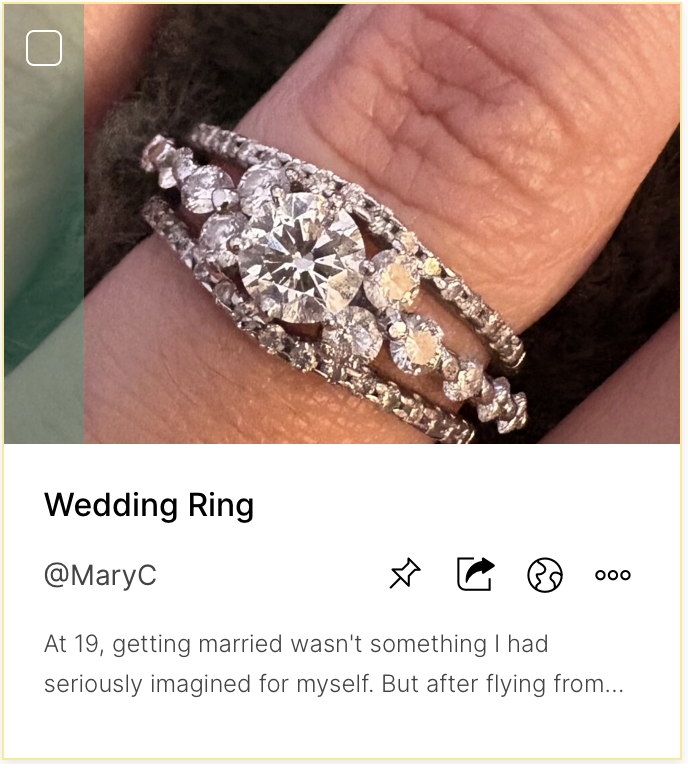
Mary Christian, Director of Marketing & Strategic Partnerships 

At 19, getting married wasn't something I had seriously imagined for myself. But after flying from my hometown of Atlanta to visit my longtime boyfriend in Minot, North Dakota, where he had recently been stationed, I realized my future might be closer than I thought. What began as a visit quickly became a turning point. Standing in a place so different from everything I had known, I could suddenly picture a life that extended beyond the plans I had made for myself and included him in ways I hadn't fully considered before. 

It was December 2007, and Corey (my now husband) proposed to me in Roosevelt Park in front of the statue of Roosevelt himself in the snow. I didn't choose the ring, but when I saw it, I immediately fell in love with it. I think it was more special in my eyes because he picked it himself with the little money he had. I was never afraid to go for what I wanted, and I knew being with Corey was something that I wanted to do, so I said "Yes."  

Showing the ring to my college roommates and friends at Georgia College and State was...to say the least, quite the show! They all couldn't believe that I was choosing marriage at a time most people were choosing parties and beer. I loved my ring and still do. I've never had it updated after almost 18 years of marriage, except it's been through its fair share of sizing changes through pregnancy, weight loss, and hormones. Today, it's still beautiful, and still something that I love and probably won't ever change. It does need another update in size sometime soon. As the last time I travelled, I almost lost it on the plane home! I hope my kids more than anything know that my ring to me represents my freedom to choose what I wanted in life no matter what anyone told me was expected or "right" and that they always have the right to choose their path in life no matter what society says. 


How to Artifct Your Wedding or Engagement Ring 

The beauty of Artifcting a ring is that you are preserving far more than a photograph. You are capturing the memories, context, significance, and value that future generations might never otherwise know. And, if you want to, you can also give your family instructions for what happens next to the ring using our "In the Future" field.  

As you create an Artifct for your ring, consider including photos through the years from your engagement, your wedding day, milestone anniversaries, and even everyday moments where the ring appears naturally. 

These images help tell a richer story and show how the ring (and maybe even the wearer!) has changed over time. Our co-founder Heather knows that her ring has developed a lot of “character” over the years, as have her hands. The perfectly manicured hands from her wedding day are not the caked in flour, I-just-made-pizza-dough-hands of today.  

As you Artifct your ring, consider recording details such as: 

  • When and where the ring was purchased
  • Who selected it
  • Why this particular design was chosen
  • The proposal story
  • The wedding date and location 

Often the most meaningful details are the most personal: 

  • What did the ring symbolize at that moment in your lives?
  • What challenges or milestones has it witnessed?
  • What do you hope future generations understand about your relationship? 

Consider attaching attached documents and supporting materials such as: 

  • Jewelry appraisals and receipts (great for insurance purposes!)
  • Design sketches
  • Notes, letters, or cards exchanged during the engagement 

These pieces help create a fuller historical record, while also clearly documenting the ring for insurance or estate planning purposes. 

You may also want to consider recording your voice and attaching it to the Artifct as an audio file. One of the most powerful ways to preserve a story is to tell it yourself. Add an audio recording to allow future family members to hear the story in your own words. 

The Ring Is Only Part of the Legacy 

A wedding ring may last for generations. But the stories attached to it are often far more fragile. Without intentional preservation, details fade. Memories become fuzzy. Family members pass away. Eventually, descendants may know they inherited "Grandma's ring" without understanding why it mattered so much. 

When you preserve the story, you preserve the meaning. You ensure that future generations understand not only what the ring is, but what it represented: love, commitment, resilience, family, and the life built around it. 

Artifct Your Ring Today 

If you have a wedding ring, engagement ring, anniversary band, or inherited family ring, don't wait for the story to fade. Take a few minutes to Artifct it today. 

Capture the photographs. Record the memories. Add the documents. Tell the story in your own words. Because one day, someone you love may inherit the ring. And the story you save today could become one of their most treasured family heirlooms. 

### 

Need inspiration for documenting family treasures? Explore our guide on how to Artifct an heirloom and discover simple ways to preserve both the object and the memories that make it meaningful. 

 © 2026 Artifcts, Inc. All Rights Reserved.

Share With Friends
8 likes
What's New at Artifcts
Grandma Had Secrets: When the Love Letters Aren’t From Grandpa

Picture this: It’s 2055. Your grandchildren are gathered around a dining room table, sorting through the things you left behind. 

There are old calendars. Birthday cards. A stack of Christmas letters. Theater tickets. Concert stubs. A faded postcard from a beach you barely remember visiting. A receipt for something that definitely seemed important at the time. 

And then...They find the letters. Not one. Not two. A whole cache of handwritten love letters addressed to Grandma. Naturally, they assume they’re from Grandpa. How sweet! 

Except...the handwriting doesn't look like Grandpa’s. The dates are...interesting. And one letter begins, “I still think about that night...” 

Suddenly, Grandma's perfectly respectable family history has become a limited-series streaming drama. Who was this person? Who was Grandma before she was Grandma? And why did she keep all these letters? 

Cue the dramatic Mama Mia music. 

The Secret Lives Hidden in Our Paper Piles 

Okay, maybe your grandchildren won't discover a scandalous romance. Maybe they will. But that's part of the magic of the seemingly ordinary paper things we save. 

Cards, letters, calendars, ticket stubs, postcards, programs, invitations, notes, receipts, newspaper clippings, children's artwork—we save them because they connect us to a version of ourselves, a person we loved, a place we went, or a moment we don't want to forget. 

And sometimes they reveal parts of our lives that aren't obvious from the outside. Because here's the thing: we all have secret parts of ourselves. 

...We all have secret parts of ourselves
  • The version of you who went dancing until 2 a.m.
  • The you who saw your favorite band before they were famous.
  • The you who kept every birthday card your mother ever sent.
  • The you who fell madly in love in college.
  • The you who had an adventure you never quite told the whole story about. 

Those versions of us matter, too, and often, we keep little physical breadcrumbs that lead back to them. 

The Problem with Keeping Everything 

The trouble is that paper is sneaky. One card doesn't take up much room. Neither does one letter. Or one ticket stub. Or one calendar. But 40 years of them? Suddenly you're storing the Library of Congress in a plastic bin labeled MISC. — DO NOT THROW AWAY. (Sound like you? You may enjoy reading, We All Deserve A Purple Bin.)

We keep the paper because the paper feels like the memory. But often, what we're really trying to preserve is something else—the handwriting, the words, the feeling, the story, the evidence that this happened. 

Artifcts offers a way to preserve those memories without automatically committing yourself—and your future descendants—to a lifetime of storage bins. 

Before You Toss It, Tell the Story 

Imagine your grandchildren discovering those mysterious love letters someday. Wouldn't it be wonderful if, instead of having to launch a family investigation, they could also discover your story? 

Maybe the letters were from an old boyfriend. Maybe they were from someone who became a lifelong friend. Maybe they were from Grandpa after all—and Grandpa's handwriting had simply changed. Or maybe Grandma was living a whole, complicated, wonderful life before she became the Grandma everyone knew. That's the story worth preserving. 

So when you pull out that box of cards and letters, don't start with: 

"Do I really need to keep this?" 

Start with: 

"What am I trying to remember?" 

Then Artifct it. 

Photograph or scan the item. Add the names, dates, places, people, memories, and context you still remember. Group related cards or letters together when that tells a better story. And if the story is easier to tell out loud, use your voice to record an audio snippet in the Artifcts App. 

Then—and only then—decide whether you need the actual stack of paper. Maybe you do. Maybe one particularly important letter deserves a permanent place in the family archive. Or maybe you can finally let the 1997 appointment calendar go. No one needs to know what was happening on Tuesday, March 11. Unless, of course, Tuesday, March 11 is where the story gets interesting. 

Leave Them the Story, Not Just the Mystery 

The goal isn't to create a perfectly curated museum of your life. It's to make sure the little pieces of your life don't disappear without a trace, because someday, someone may hold your old ticket stub and wonder where you went. They may open a calendar and discover what filled your days. They may find a stack of love letters and wonder who Grandma really was. Give them something better than a mystery. Give them the story. 

Artifct those cards, letters, calendars, ticket stubs, postcards, and other paper treasures today. Preserve the memory, the context, and the story while you still can. Then decide what deserves to remain in physical form—and what can finally leave the storage bin. 

Because the real keepsake was never the paper. It was you, then.  

###

Pro Tip! Create a custom tag to quicly sort and share the Artifcts you create for your life "way back when." Our co-founder Heather uses #themanylivesofme for the Artifcts she makes that highlight her life before she became a mother, wife, senior executive, and mostly responsible adult. Hey, we all have our stories! 

Looking for more tips? Check out our How to Artifct Cards & Letters series for additional inspiration.

© 2026 Artifcts, Inc. All Rights Reserved.

Read more
The Gift of Being Prepared

August is National Make a Will Month—a timely reminder to pause and make sure the people and things we care about will be taken care of when we can no longer do it ourselves. 

Here at Artifcts, we’re all about preparing for life’s what-ifs. Some are joyful: What if we move into our dream home? What if the kids grow up and start families of their own? What if we downsize and discover a simpler way of living? Others are harder to contemplate: What if something happens to me? 

Planning for that possibility isn’t morbid. It’s an act of love.  

The ultimate gift you can give your family isn’t necessarily something they can unwrap. It’s the gift of being prepared so that when they are grieving, they aren’t also left to navigate a lifetime of paperwork, possessions, keepsakes, questions, and decisions without knowing what you would have wanted. 

A Will Is a Beginning, Not the Full Story 

When we think about estate planning, we tend to think about the big things: the house, investments, retirement accounts, life insurance, and other financial assets. 

And yes, those things matter. A will or broader estate plan provides an essential framework for what happens to your assets and who is responsible for carrying out your wishes. 

But what about everything else? 

The jewelry in the dresser, the artwork on the walls, the tools in the garage, and the family photographs. Or maybe it’s the collection you spent decades building, your wedding china, or your handwritten recipe cards. What about the odd little object sitting on your mantle that looks completely ordinary to everyone else but holds a story only you know? 

Traditional estate planning can be very good at answering what goes where. It doesn't always capture why something matters. As former Artifcts Advisory Board Member and CFP Dutch Miller has written, estate planning has historically focused on assets that have monetary value while overlooking the family history, legacy, and values attached to the things that may have little or no financial value

That’s where the real work of being prepared begins. 

Don't Leave Your Family Guessing 

Imagine your family opening the door to your home after you're gone. They are already grieving. Now they have to figure out what to do with everything you left behind. 

Which pieces of furniture mattered to you? Who should get the jewelry? Is that painting valuable—or simply sentimental? Why did you keep those letters? Who in the family would appreciate the old camera? Should they sell, donate, keep, or give away the things filling the house? 

And perhaps most importantly: What would you have wanted? Without some guidance, your family has to guess. 

We’ve seen firsthand how overwhelming that can be. The transfer of a lifetime of “stuff” can become an emotional and logistical burden for the people left behind. Not everything will have monetary value. Not everything will be wanted. And not every object needs to make its way into the next generation. But the things that do matter deserve to be identified, understood, and intentionally passed along.  

That’s why being prepared is about more than having a will. It’s about giving your loved ones a roadmap. 

Be Prepared with Artifcts 

At Artifcts, we’ve long talked about the importance of gifting your loved ones a why. 

Knowing that Grandma left you a particular piece of jewelry is one thing. Knowing that she wore it on her wedding day, that her mother gave it to her, and that she hoped you would wear it someday is something entirely different. 

The story changes the object. It creates connections, preserves memories, and can even reduce conflict. And it helps your loved ones understand why a seemingly ordinary thing was important to you.  

You don't have to leave your family a perfectly curated museum of your life. You simply need to make some choices while you can. 

You don't have to leave your family a perfectly curated museum of your life. You simply need to make some choices while you can...

This August, as you review your will or estate plan, take a second look around your home. 

What do you want to: 

  • Bequeath to a specific person?
  • Keep in the family for future generations?
  • Donate to a person or organization?
  • Sell because it has financial value?
  • Pass along to someone who will truly appreciate it?
  • Let go of because it no longer serves a purpose? 

The choice is yours, but please, we beg you, make the choice. 

And for the things you choose to pass along, consider documenting the story behind them on our Artifcts App. A photograph, a few sentences, a video, an audio recording, a certificate of authenticity, an appraisal, or simply your own voice explaining why something matters can make an enormous difference later. 

With Artifcts, you can create a digital record of the things that matter to you, capture their stories and supporting documentation, and use the “In the Future” field to provide guidance about what should happen to an item when the time comes—keep, donate, sell, bequeath, or “as you wish.”  Think of it as creating a roadmap for the tangible pieces of your life. 

The Ultimate Gift Isn't More Stuff 

We often think of an inheritance as a gift. But what happens when an inheritance becomes a house full of decisions? 

As families navigate the Great Stuff Transfer, more and more people are discovering that inheriting a lifetime of possessions can be stressful, expensive, and emotionally complicated. The most meaningful inheritance isn't necessarily the largest one. It's the one that comes with context, intention, and understanding. 

Your children may not want everything you own. That's okay. Your grandchildren may not know the monetary value of an object. That's okay, too. 

What they may want—and what they may desperately need when you're gone—is to know what mattered to you, what you hoped would happen to the things you loved, and the stories that made your life yours. 

So, this month, give your family a gift they won't have to open for years. Give them the gift of being prepared. Take time to review your will or estate plan. Make sure it reflects your life and wishes today—not five, ten, or twenty years ago. 

Don't have a will or estate plan? Contact a local attorney or estate planner to help you get started. You can also explore our partner, and fellow AARP AgeTech Collaborative company Trust & Will, which offers online estate planning solutions.  

And don't forget your tangible assets. Walk through your home. Open the drawers. Look in the attic, basement, garage, and storage unit. Think about the objects that tell your story. Then start documenting them in Artifcts. 

Bequeath. Donate. Sell. Keep it in the family. Let it go. The choice is yours. Just don't leave your family guessing, because the greatest gift you can give the people you love isn't a house full of things to sort through or a binder full of paperwork to decipher. It's clarity. It's intention. It's the comfort of knowing what you wanted—and why. 

That's the gift of being prepared. 

###

© 2026 Artifcts, Inc. All Rights Reserved.


Read more
What Should You Do with Old Cards and Letters?

At Artifcts, we've seen this question come up again and again—and we understand why. 

Today, there are more than 150 publicly Artifcted cards and letters on Artifcts.com, each preserving a story, a relationship, or a moment in time. Our Co-Founder, Heather, has also privately Artifcted more than three dozen cards and letters from her own life (and still has a couple dozen more to go!). 

We hear you, and you are not alone. Cards and letters are sneaky. They don't take up much space individually, but together they can fill boxes, bins, closets, and entire storage shelves. Unlike many other possessions, they're full of sentiment, emotion, and something increasingly rare, handwriting. We want to keep them because they connect us to people and moments that mattered. 


But then life happens. The bins overflow. The storage area fills up. Years pass, sometimes decades. And despite keeping every birthday card, holiday greeting, love note, sympathy card, or handwritten letter, we rarely pull them out to read them again.  

So...what should you do with them? 

Start with a Different Question 

Instead of asking, "Should I keep this card?" ask yourself: 

"What am I really trying to preserve?" 

Most of the time, it's not the paper itself. It's your grandmother's unmistakable cursive. It's the note your child scribbled before they learned to spell. It's the anniversary card that reminds you exactly how you felt in that moment in time. It's the laugh-out-loud birthday card from a friend who always knew how to make you smile. 


Laugh-out-loud and always makes me smile. Mother's Day 2024. Sorry, this Artifct is private!

Often, the physical card is simply the vessel that carries the memory forward, lest we forget. 

You Don't Have to Keep Every Piece of Paper 

Many people feel guilty even considering letting go of cards and letters. It can feel like discarding the relationship itself. But preserving memories doesn't have to mean storing every card, letter, note, or envelope forever. 

As you sort through your collection, consider categories like: 

  • Cards that mark major life milestones.
  • Letters from people who have shaped your life.
  • Notes that tell a meaningful story.
  • Cards with especially memorable handwriting or artwork.
  • Messages that still make you smile, laugh, or cry. 

These are often the pieces worth preserving—not because they're old, but because they continue to have meaning and someday someone else in your family may be curious enough to want to see them or even keep them as part of their family history too. 

Preserve the Memory, Reduce the Clutter 

Whether you're downsizing, helping parents organize decades of keepsakes, or simply reclaiming space at home, preserving the stories first makes it much easier to decide what to do with the physical items afterward. By photographing or scanning meaningful cards and letters and pairing them with your own memories, you create an archive that's easier to revisit than a stack of bins tucked away in the attic. 

Here's an easy way to get started: 

  1. Choose the cards and letters that matter most. Start with a small group—perhaps birthday cards from your parents, letters from a grandparent, love notes, or cards that commemorate major milestones.
  2. Photograph or scan each piece. Capture the front, inside message, back, and envelope if it adds context. Don't worry about perfection; your goal is to preserve the memory.
  3. Add the images to an Artifct and tell the story behind them. Who wrote it? What was happening in your life? Why has this particular note stayed with you all these years? Those details transform a simple card into part of your personal history. 

Once you've preserved both the images and the story, you'll find it much easier to decide whether the physical card belongs in a keepsake box, should be passed on to family, or can finally be recycled.  

Less Clutter. More Memories. 

Cards and letters were never meant to spend decades hidden in storage bins. They were written to be read, remembered, and cherished. That's exactly what Artifcts helps you do. 

Artifct your cards and letters to create a fully accessible, shareable archive of the notes, sweet sentiments, heartfelt messages, and laugh-out-loud moments that matter most. Add the stories behind them, preserve the handwriting, and revisit them anytime, from anywhere. 

Because the goal isn't to keep every piece of paper. It's to keep the memories. Happy Artifcting!

###

Looking for additional tips on how to Artifct cards, letters, and other ephemera? Check out our How to Artifcts Cards & Letters article to help you get started. 

© 2026 Artifcts, Inc. All Rights Reserved.
Read more
Your privacy

This website uses only essential cookies to provide reliable and secure services, streamline your experience, allow you to share content from this website on social media, and to analyze how our Site is used. Learn more about these cookies and cookie settings.

Accept & Continue
Oops! This Web Browser Version is Unsupported

You received this warning because you are using an unsupported browser. Some features of Artifcts will not be available or will be displayed improperly until you update to the latest version or change browsers.

Close
Image for unsupported banner Oops! This Web Browser is Unsupported

You received this warning because you are using an unsupported browser. Some features of Artifcts will not be available or will be displayed improperly until you update to the latest version or change browsers.

Unsupported banner close icon Close