Give the gift small icon
Give the gift of Artifcts!
HELLO!
Give the gift big icon
Give the gift
of Artifcts

The perfect gift for the person
in your life who has everything.

Give a gift Close

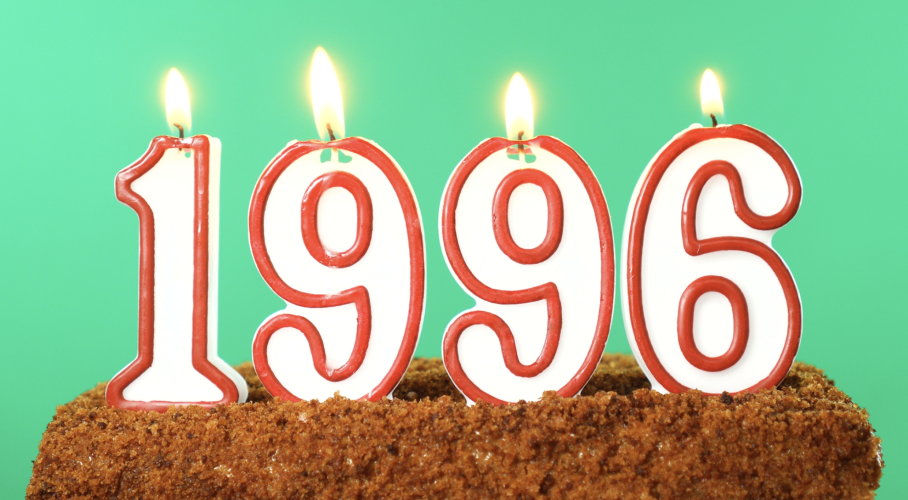
The 1996 Nostalgia Trend: How to Save Your Memories for Future Generations

March 25, 2026

Where were you in 1996? Take a moment and really think about it. 

Where were you living? What filled your days? What music was on repeat, and what did your favorite outfit look like? Maybe you were heading off to school in flannel and Doc Martens, building a career in your first real job, or chasing toddlers around the house. Maybe 1996 was loud and exciting—or quiet and uncertain. Either way, it was yours. 

Lately, there’s been a surge of nostalgia inviting us to revisit that specific year. But the truth is, it’s not really about 1996. It’s about something much bigger. 

It’s Not Just 1996—It’s Any Year 

Pick a year. Any year. 1996. 2006. 2016. Last summer. 

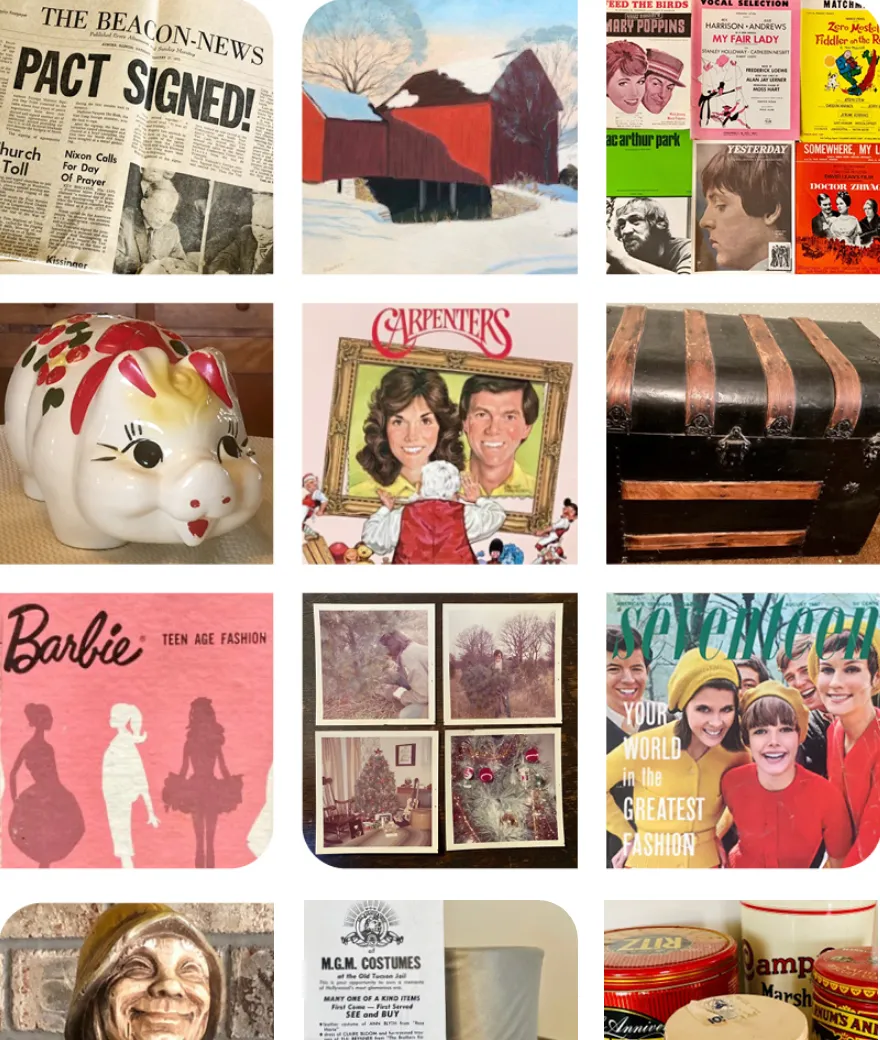
Every single one holds a version of you that no longer exists—someone shaped by the people, places, and moments of that time. And tucked inside those years are vivid snapshots: the song that instantly transports you back in time, the hat you wore until it fell apart, the photo you’ve kept in a drawer for decades. 

We all have these anchors, the objects and memories that pull us back to “way back when.” A concert t-shirt isn’t just a shirt. It’s the night you sang every word with your friends, the feeling of freedom, the version of yourself that felt invincible. 

A certificate, a ticket stub, a handwritten note—these aren’t just things. They’re evidence of a life fully lived, in moments both big and small. 

The Small Moments Matter More Than You Think 

It’s easy to assume that only major milestones deserve to be remembered—graduations, weddings, promotions. But what about everything in between? 

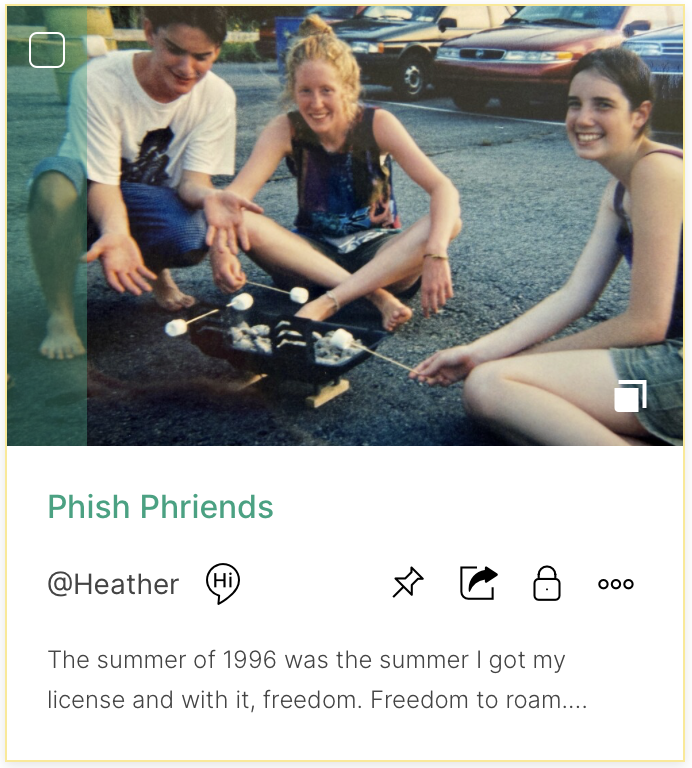
Our co-founder Heather recently came across a stash of photos from her high school days and her daughter was in awe. The clothes! The hair! The concerts! Heather had forgotten how she had spent the summer of '96 working two jobs and attending every Phish concert within driving distance of her childhood home. Funny, because that's just what her daughter wants to do this summer. 


The everyday moments are often the ones that define us most: 

  • The summer you spent making friendship bracelets at camp
  • The first apartment that barely had furniture but felt like independence
  • The hobby you picked up on a whim that turned into a lifelong passion
  • The concert t-shirt you wore so often it became part of your identity 

These moments may feel small at the time, but they’re rich with meaning. And over time, they become the stories we wish we had captured more fully. Because memory fades. Details blur. And eventually, even the most vivid experiences can become harder to recall. 

Why Capturing Your Story Matters 

The people who come after us—our kids, grandkids, and beyond—don’t automatically know who we were. They might know the broad strokes. Where we lived. What we did for work. Maybe a few stories that get told again and again. But they don’t know what it felt like to be you in 1996. Or 1976. Or 2016. 

They don’t know what made you laugh, what you worried about, or what you dreamed of, unless you tell them. 

How to Turn Memories Into Artifcts 

That’s where Artifcting comes in. Artifcting is the act of preserving not just your objects, but the stories behind them—so they can live on far beyond your memory. Looking for an easy way to get started?  

  1. Start with What You Already Have

Look around your home. Open a drawer, a closet, or an old box in the attic.  Find something that instantly takes you back: 

  • A photo from the ‘90s
  • A concert t-shirt (Fun fact! Our Advisory Board Member Matt Paxton recently spent an afternoon with his teenage son Artifcting his vintage concert t-shirts from the 90s.)
  • A piece of jewelry
  • A letter or postcard 

If it sparks a memory, it’s worth preserving. 

  1. Capture the Story, Not Just the Object

Ask yourself: 

  • Where did this come from?
  • Why did it matter to me?
  • What was happening in my life at the time?
  • Who was I then? 

The object is just the entry point—the story is what gives it meaning. 

The object is just the entry point—the story is what gives it meaning
  1. Add Context That Only You Can Provide

This is the part no one else can recreate, especially the most well-intentioned AI-apps that promise to tell you your story. (Naturally, we have our doubts about that.)

Describe the details: 

  • What you were wearing?
  • Who you were with?
  • What the world felt like at that moment?

These personal insights transform a simple item into a living memory. 

  1. Preserve It Digitally

Open the Artifcts App and upload your photo or a photo of your item and pair it with your story. Now it’s not just stored—it’s documented, searchable, and shareable with the people who matter most. Bonus! Add audio or video too for greater context and details that only you can provide. 

  1. Share It Across Generations

Invite your family into the experience by privately sharing the Artifct with them. Your stories become a bridge—connecting generations through shared history, personal insight, and emotional truth. 

Your Story Is Still Unfolding 

Thinking back to 1996 might feel like a fun exercise in nostalgia. But it’s also a reminder: the life you’re living right now will one day be “way back then,” too. 

What from today will you wish you had captured? 

  • The coffee mug you use every morning
  • The playlist that defines this season of your life
  • The photo sitting unnoticed on your phone 

These are tomorrow’s Artifcts just waiting to be captured today. You don’t need a milestone. You don’t need a perfect story. You just need a moment—and the willingness to preserve it. 

So ask yourself again: Where were you in 1996? Then take the next step. Capture it. Tell it. Artifct it. Because your story deserves to be remembered—not just by you, but by everyone who comes after. 

###

You might also enjoy reading these related ARTIcles:

Photos + Timelines Go Better Together

How to Artifct That Photo

How to Artifct That Heirloom

© 2026 Artifcts, Inc. All Rights Reserved.
 

Share With Friends
6 likes
What's New at Artifcts
If Only Our Passports Could Talk

Once upon a time, crossing an international border came with a satisfying thunk. 

An immigration officer would flip through your passport, stamp a page with ink, and send you on your way. That little mark became proof that, on a particular day, you stood in Paris, Tokyo, Buenos Aires, Cape Town, or Reykjavik. Your passport slowly transformed into a scrapbook of adventures, filled with colorful stamps, visas, and memories. 


Today, that ritual is quietly disappearing. 

As more countries adopt biometric entry systems, e-gates, and digital border processing, many travelers no longer receive passport stamps at all. Instead, passports are scanned, facial recognition verifies identity, and your arrival and departure are recorded electronically. Countries including Australia, Singapore, the United Arab Emirates, and much of Europe have increasingly embraced automated border controls. The United States also records many entries and exits digitally, and while stamps are still available in some circumstances, they're no longer the default for many travelers. 

For frequent international travelers, it can feel like the end of an era. 

The Next Generation May Never Know 

Think about handing your passport to your children or grandchildren one day. They'll flip through the pages and ask, "What are all these stamps for?" For many of them, the answer may be surprising because their own passports could remain nearly blank, despite traveling just as much—or even more—than previous generations. 

The physical evidence of travel is fading, and that's a shame, because passport stamps were never just administrative marks. They were breadcrumbs through our lives. Each one represented a moment, and every stamp held a story. Maybe it was the excitement of your first international trip; the honeymoon that started with a missed connection but ended with the best vacation of your life; or the semester abroad where strangers became lifelong friends. Whatever the story was, it was yours and yours alone; no one else would or could know the story simply by looking at the stamp. 


More Than Ink on a Page 

Open an old passport and memories come flooding back. 

That faded entry stamp from Italy reminds you of the tiny family-run restaurant where no one spoke English but somehow everyone understood one another and your daughter ended up ordering the best meal of her life. (At least according to her 15-year-old self.) The visa from India brings back the sounds, colors, and aromas that no photograph could ever fully capture. The nearly illegible stamp from Costa Rica reminds you of the rainstorm that soaked every piece of luggage before you ever reached your hotel. 

Even the imperfect moments become treasured stories over time, because if we're honest, nobody has perfect travel stories. Flights get canceled  (hello two week delay!). Luggage gets lost (and your skis rack up more air miles than you do). Or you get spectacularly lost in a city with no cell service. Those are often the stories everyone wants to hear first. 


Our Passports Have Been Quiet Historians 

Long before social media timelines and smartphone photo libraries, passports quietly documented where we had been. For genealogists and family historians alike, passport stamps provided critical "proof" of when a relative immigrated to a new home. Unlike digital photos that disappear into thousands of images on our phones, passport stamps asked almost nothing of us. They simply waited until we were ready to remember. 

The irony is that while we're documenting our lives more than ever before, some of our most meaningful physical records are disappearing. 

Ready to Get Started?  

Every passport tells a story. Instead of letting your travel memories live across photo libraries, email confirmations, Google Docs, ticket stubs, and shoeboxes of souvenirs, you can bring everything together in one place. Years from now, your passport may have only a handful of stamps—or none at all—but your travel stories can still be rich, vivid, and ready to share with family and friends. Artifcting it ensures those stories stay alive long after the ink fades.

  1. Start with the stamp
  • Create a new Artifct using a photo of a passport stamp or visa. It's the perfect starting point because it captures both the location and the date in one simple image. 
  1. Add the sights, sounds, and souvenirs
  • Bring the trip back to life by adding: A photo of yourself in the destination; videos you captured while exploring; photos of mementos you collected—artwork, ceramics, t-shirts, pins, spoons, shells, rocks, postcards, or whatever made you smile. Together, these pieces create a richer picture than any passport stamp ever could. 
  1. Include your documentation
  • Artifcts isn't just about preserving memories—it's practical, too. Add documentation such as flight confirmations and travel itineraries, hotel reservations, museum tickets and excursion bookings, or receipts, certificates of authenticity, or appraisals for valuable travel purchases that you may someday insure, include in your estate plans, or resell. Future you will be grateful. 
  1. Tell the story
  • Write five words or five thousand. Type your memories, use voice-to-text, or simply record yourself telling the story directly in the Artifcts app. There is no story burden. Capture as much—or as little—as feels right today. You can always come back and add more later. 

Travel Memories Worth Keeping 

Why Artifct your passport? Because every stamp—even the faded ones—marks a chapter of your life. Because the best stories aren't always the smooth ones. Because one day someone you love may flip through your passport and wonder what those little ink marks meant. And because memories deserve more than a fading passport page or a forgotten folder on your computer. 

Artifcting your passport makes it easy to relive your adventures, revisit trip details when planning a return visit, and share recommendations with friends heading to the same destinations. No more hunting through old emails, scattered Google Docs, or paper files to remember the name of that unforgettable hotel, hidden café, or favorite museum. 

If only our passports could talk. Thankfully, with Artifcts, they finally can. 

### 

Your passport may not capture every journey, but your stories still can. 
Start with one stamp, one souvenir, or one unforgettable trip and preserve the memories behind it in Artifcts.

Create Your First Travel Artifct Today

© 2026 Artifcts, Inc. All Rights Reserved.

Read more
How to Prepare for a Move Without Losing Your Mind (Or Your Child’s Lovey)

Our co-founder Heather is getting ready for her fourth move in five years. At this point, you'd think she'd have moving down to a science. 

Spoiler alert, she doesn't. 

The thing is, even if you've moved multiple times, no one prepares you for the inevitable chaos. The boxes all start out neatly taped and labeled. Then somehow, hours later you find yourself surrounded by a sea of cardboard, balled up packing tape, and a child on the verge of a meltdown screaming "Mom, where's Shimmering Star?" For the record, Shimmering Star is the stuffed bunny you repeatedly reminded said child NOT to pack in a box and instead carry in their day pack.  

Bonus points if your spouse simultaneously chimes in with, "Honey, where'd you put the coffee maker?" while the dog is desperately looking your way with his patented, please-tell-me-you-remembered-my-kibble-mom look.  

Moving has a remarkable way of making even the most organized person question every life choice that led to accumulating so much...stuff. 

The good news? While you can't eliminate every "Where's the XYZ?" moment, you can make the entire process dramatically easier by getting organized before you pack your first box. 

It's tempting to start packing as soon as you know you're moving, but taking the time to declutter and organize first will save you time, money, and stress. Even better, it's the perfect opportunity to preserve the stories and details behind the belongings that matter most with Artifcts. 

Step 1: Declutter Before You Pack 

Why pay to move things you no longer need, use, or love? 

Every box you eliminate means less to pack, less to transport, less to unpack, and less to find a home for in your new space. Decluttering before a move also gives you a fresh start, allowing your new home to reflect your current lifestyle—not years of accumulated "just in case" items. 

If you're wondering where to begin, consider tackling items like: 

  • Duplicate kitchen gadgets and cookware
  • Clothing that no longer fits or hasn't been worn in years
  • Expired pantry items and medications
  • Old paperwork and manuals that can be securely shredded or recycled
  • Broken electronics and tangled cords
  • Outgrown toys and games
  • Decorative items that no longer match your style
  • Boxes of forgotten keepsakes you've been storing "for someday" 

Our article, 108 Objects to Declutter from Your Home, offers even more ideas to help you make meaningful progress room by room.  

As you sort, remember that decluttering doesn't have to mean losing the memories attached to your belongings. If you want to keep the memory of those keepsakes while maybe not the actual items, take a moment to snap a photo and create a quick Artifct in our App. You can always go back and add the details later.   


Step 2: Organize What You're Keeping and Artifct Before You Move 

Once you've decided what deserves a place in your next home, resist the urge to immediately start boxing everything up. This is the ideal time to organize and Artifct your most meaningful possessions. 

Think about family heirlooms, artwork, collections, antiques, military memorabilia, jewelry, childhood keepsakes, vintage toys, furniture, and other objects that tell the story of your life and your family. Heather also likes to Artifct anything that is or has the potential to be breakable, which with a 75-pound golden retriever underfoot is quite a long list! 

Before those items disappear into moving boxes, take a few minutes to: 

  • Photograph each item.
  • Record its story, history, and significance.
  • Note its current condition.
  • Attach any appraisals, receipts, or insurance information. 

Not only are you preserving memories, you're also creating a digital record that can be invaluable later. 

No matter how careful your movers are, accidents happen. Boxes get crushed. Furniture gets scratched. Artwork can be damaged. Sometimes items are even lost. 

When you've already created an Artifct, you have: 

  • Photos showing the item's pre-move condition.
  • Documentation of identifying features and provenance.
  • Purchase information or appraisals when available.
  • A centralized place to store supporting documents. 

This information can make insurance claims much easier should something unfortunate occur during the move. 


Our co-founder Heather Artifcts anything breakable before a move as life always has a way of happening...

And for the items that simply can't be replaced—a grandmother's quilt, a handwritten recipe book, a child's first artwork, or your grandfather's military medals—you'll always have their stories preserved, regardless of what happens to the physical object. 

After you've decluttered, organized, and Artifcted what matters most, packing becomes far more intentional. You'll know exactly what you're moving and which items require extra care. Instead of simply moving boxes, you're moving the pieces of your life with confidence—and protecting both the objects and the stories they carry. 

Let Go Without Losing the Story 

One of the hardest parts of moving or downsizing is deciding what to part with. Matt Paxton, author, television personality, and longtime advocate for helping families through life's transitions, beautifully captures why Artifcts changes that experience: 

"Take a picture, tell the story in Artifcts, and you can donate it away. The story lives on, and the memory lives on, and the person lives on. You don't need the item to do that." 

When the memories are preserved, letting go of the physical object often becomes much easier. Families can confidently donate treasured belongings, knowing the stories behind them remain accessible for future generations. 

Make Your Next Move Your Most Organized One Yet 

Moving is more than changing addresses. It's an opportunity to decide what deserves space in your next chapter. 

With Artifcts, you're not just preparing for moving day. You're protecting your memories, simplifying insurance documentation, making downsizing easier, and ensuring that the stories behind your most treasured belongings live on for generations to come. 

###

Looking for more ideas on how to Artifct during or after a move? One of our Artifcts community members, who grew up in a military family, shared that they Artifct the house they are moving from prior to the move so that they will always be able to remember what the house (and rooms!) looked like. We love this idea! Sometimes Artifcting those big items (like a house, car, etc.) may not seem obvious at first, but they are just as important as the small items we tend to Artifct most.

© 2026 Artifcts, Inc. All Rights Reserved.

Read more
Travel Without All the 'Stuff'

The Dalai Lama may have put it best, “Once a year, go somewhere you have never been before.” To some, that may be trekking halfway across the world; to others, it may be a day trip one town over to try out a new restaurant or hike a new trail. Travel need not be far flung to be enriching and rewarding. 

Here at Artifcts, our team members are avid world travelers and adventurers. We are also big fans of carry-on only travel and being able to pick up and go as plans change. This often means that space is at a premium, and not all desired souvenirs make the cut for the return trip home. Our children know this too well, as often the first question asked before making a purchase abroad is, “Do you have room for it in your backpack?” Notice we said backpack, not suitcase.  

In the outdoors world, there is a concept (and organization) called "Leave No Trace" which calls on travelers to be conscious of the effects their actions may have on plants, animals, other people, and entire ecosystems. There are seven principles that guide and inform leave no trace, and include: 

      • Plan ahead and prepare
      • Travel and camp on durable surfaces
      • Dispose of waste properly
      • Leave what you find
      • Minimize campfire impacts
      • Respect wildlife
      • Be considerate of other visitors 

We’d like to be so bold as to add an eighth to the list: Artifct where you’re at.  

We know firsthand that the memories and sun tans will fade, and that the little details that seemed so crystal-clear months ago will one day be a jumbled mess. Our co-founder Heather discovered that neither she nor her husband could recall all the hikes they did on their honeymoon in Italy; thankfully for them, they had saved their hikes in AllTrails and were able to recently piece together Artifcts from their honeymoon seven years ago, combining photos and videos from the hikes, the AllTrails maps, and their favorite memories and stories from the trip. 

We have also seen how souvenirs, once home and put on a shelf or tucked away in a drawer, are often forgotten or fall victim to time, breaking, crumbling, or fading. How many of us are living with those “please-mom-this-is-all-I-want" travel mementos that are no longer remotely interesting to said child?   

We have also found ourselves traveling in places that don’t always lend themselves to souvenir shopping. Several summers ago, Heather ventured off to Greenland for a week-long hiking adventure. Much to her delight, she did not encounter a single souvenir shop during her time in the Greenlandic wilderness.  

Ready to Give Leave No Trace Artifcting A Try?

Leave No Trace Artifcting is a simple and fun way to relive those much-loved travel adventures, while also saving space, money, and lessening your environmental footprint. Want to give it a try? We’ve put together these four easy tips to get started:  

      1. Pick an object. It could be Arctic flora you’ve never seen before, a favorite sunset, or even an interesting sign or mural discovered exploring a new city. 
      2. Take a photo and add video or audio, too. Trail maps, video snippets, even museum signs, all make for great add-ons.   
      3. Add a short story. You can always add more when you get home (or when you're inevitably stuck at the airport waiting for your flight that was supposed to depart hours ago).
      4. Save and you’re done! Want to share the love and memories? Privately share with family and friends or create a Circle to share near and far. Add a custom tag or two to quickly find the Artifcts from your favorite trips.  

 
Intrigued and want to try #leavenotrace Artifcting but worried about depriving the local economy of much-needed tourism dollars? One of our Artifcts Community members shared with us what they do—they Artifct on the go, and then when they get home (sans a suitcase full of souvenirs) they donate to a local charity they discovered while traveling. It sounds like a win-win to us! 

As you head out on your next adventure, or relive recent summer journeys, pause, and ‘Artifct that’ souvenir, memento, or memory from your trip. Your future self will never regret taking a moment to tell the story behind THAT photo, THAT t-shirt, or THAT travel treasure. 

___________________

Check out other Travel related ARTIcles by Artifcts:

Artifcts + Travel Go Better Together

Preserving Your Best Travel Memories

Have Passport. Willing to Travel

###

© 2026 Artifcts, Inc. All Rights Reserved.

Read more
Your privacy

This website uses only essential cookies to provide reliable and secure services, streamline your experience, allow you to share content from this website on social media, and to analyze how our Site is used. Learn more about these cookies and cookie settings.

Accept & Continue
Oops! This Web Browser Version is Unsupported

You received this warning because you are using an unsupported browser. Some features of Artifcts will not be available or will be displayed improperly until you update to the latest version or change browsers.

Close
Image for unsupported banner Oops! This Web Browser is Unsupported

You received this warning because you are using an unsupported browser. Some features of Artifcts will not be available or will be displayed improperly until you update to the latest version or change browsers.

Unsupported banner close icon Close