

Give the gift small icon
Give the gift of Artifcts!
HELLO!
Give the gift big icon
Give the gift
of Artifcts

The perfect gift for the person
in your life who has everything.

Give a gift Close

Indigenous Artifcts: Echoes of Our Past and Future

Ellen Goodwin, Artifcts
October 11, 2021

Columbus Day is upon us, once more evoking questions about US heritage and how we choose to honor those who contributed to our national heritage. Today more awareness exists about Columbus’ dark history and in several US states and cities Indigenous People’s Day has been created to honor the indigenous history and future of the United States. You’re not here for a history lesson (and we’re not qualified to provide it in this case), but if you’d like to learn more, History.com offers a brief primer on Columbus Day. 

What we can offer is the first of a series of modern and ancient indigenous Artifcts, with useful details about their origins, the concepts and people portrayed, and how and why they were made. As always, we started local, turning to a holy man of Cherokee and Apache heritage and resident of Corpus Christi, Texas, to learn more about indigenous Artifcts he’s been honored with. 

Indigenous "Treasures"

Growing up in Wisconsin farm country, kids would find arrowheads in creek beds and freshly plowed fields. It was not an unusual occurrence in the least, but still special enough to create excitement. Only in preparing this piece for ARTIcles did I learn that indigenous people who come across these artifacts leave the artifacts in place, sprinkle tobacco (“the ancient one,” the oldest of herbals) onto the artifact in blessing, and move on. In modern times, outside of reservation and national park lands, leaving an arrowhead in place would not likely be possible. The better course in these situations is to contact the nearest tribe and share the discovery with them so that they can manage the artifact. 

I share this to emphasize that while a child’s choice to remove an artifact as a treasure is in no way malicious, the act fails to honor the spirit and history of the artifact. Picking up that theme of honoring our past, today we are privileged to share with you two Artifcts from the collection of Larry Running Turtle Salazar. 

In my first 30-minute discussion with Running Turtle I must have encountered themes across a dozen topics I wanted to explore ­about his life and learnings. His casual discussion of his self-described 10-year-pilgrimage into ­­Tibetan Buddhism, including a meeting with His Holiness the Dalai Lama at the Plum Village Monastery in southern France … via an introduction facilitated by Steven Segal … who Running Turtle had studied aikido, his 4th and final blackbelt, with back in the 90s … is an example of the tangents we found ourselves on and that I wished we could explore further. But today, let’s focus on Artifcts! 

Indigenous Artifcts Old and New 

Don’t tease me. Show me the Artifcts

Running Turtle describes himself in part as a wisdom seeker. (In part? He is human after all and lives many realities: artist, healer, parent, entrepreneur, neighbor, author, and so many more.) Through sharing these Artifcts, opening his ceremonies to non-indigenous people, sharing his artistry, he provides us the opportunity to be wisdom seekers, helping to bring rest and truth about the past and future of the indigenous people of the United States. 

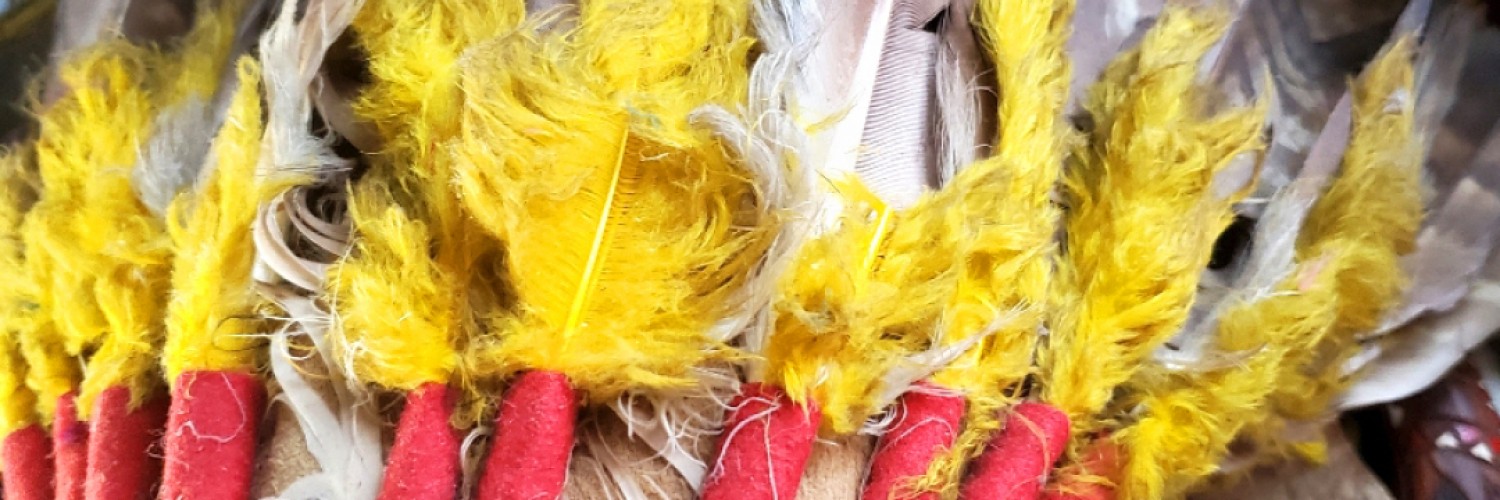
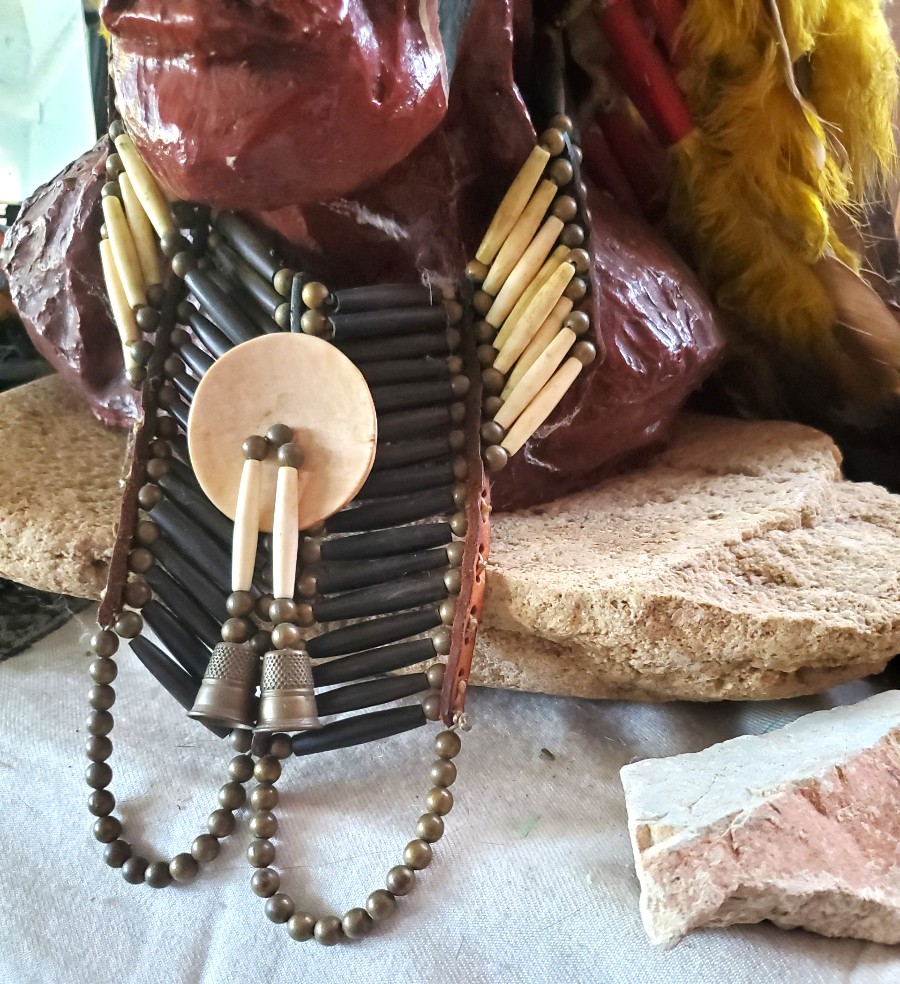
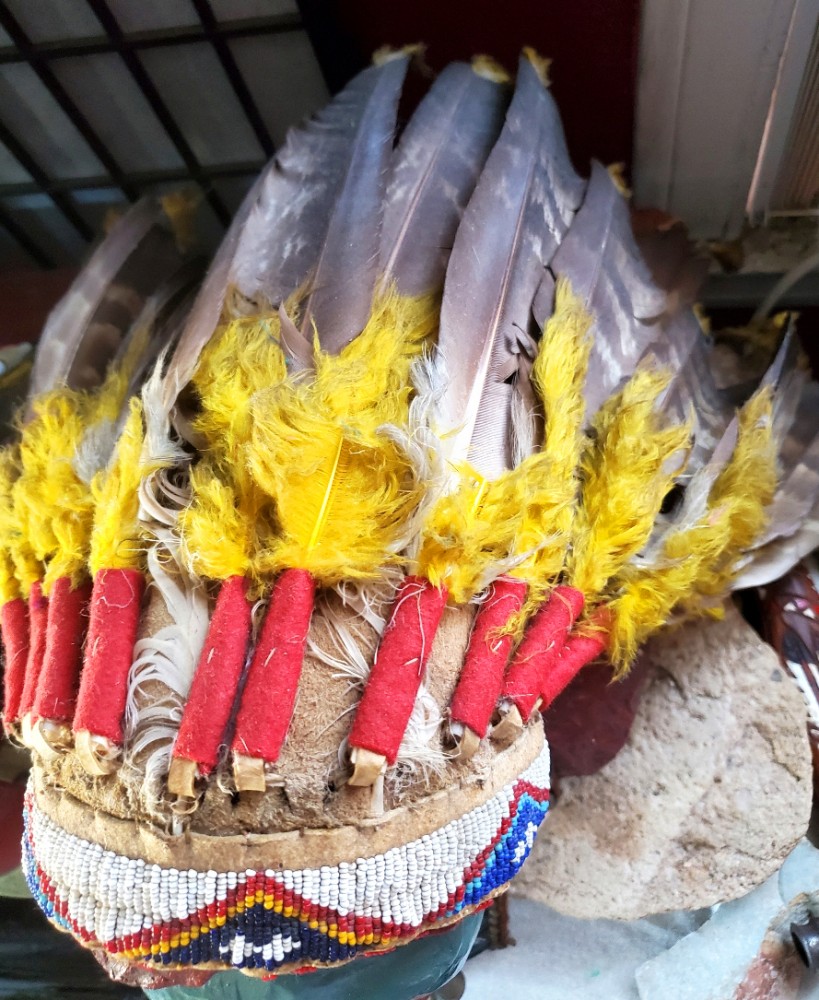
Let’s start with the old. The first Artifct is a bust of an indigenous man molded in clay by Running Turtle himself when he was 14 or 15 years old. In this artistic rendering, the indigenous man is crowned with a golden eagle feather ­­war bonnet that is approximately 95 years old. The necklace and pedestal carry with them much longer histories. Read on 


Modern monument from a master. The second Artifct is also a bust, but this one was created by internationally known sculptor and bronze artist Dave McGary shortly before his passing in 2013. Read on. 

Closing Thoughts

We encourage you to make the choice to learn more about the indigenous people’s history where you live. Or, if traveling in Texas and by luck it’s the last Saturday of the month, be a guest at Running Turtle’s drum circle and experience what may otherwise feel for most of us like lost heritage. Take an active role in preserving history, too, whether it's yours or that of your local community, country, or far-off places in the world.

###

© 2021 Artifcts, Inc. All Rights Reserved.

Share With Friends
2 likes
What's New at Artifcts
How to Prepare for a Move Without Losing Your Mind (Or Your Child’s Lovey)

Our co-founder Heather is getting ready for her fourth move in five years. At this point, you'd think she'd have moving down to a science. 

Spoiler alert, she doesn't. 

The thing is, even if you've moved multiple times, no one prepares you for the inevitable chaos. The boxes all start out neatly taped and labeled. Then somehow, hours later you find yourself surrounded by a sea of cardboard, balled up packing tape, and a child on the verge of a meltdown screaming "Mom, where's Shimmering Star?" For the record, Shimmering Star is the stuffed bunny you repeatedly reminded said child NOT to pack in a box and instead carry in their day pack.  

Bonus points if your spouse simultaneously chimes in with, "Honey, where'd you put the coffee maker?" while the dog is desperately looking your way with his patented, please-tell-me-you-remembered-my-kibble-mom look.  

Moving has a remarkable way of making even the most organized person question every life choice that led to accumulating so much...stuff. 

The good news? While you can't eliminate every "Where's the XYZ?" moment, you can make the entire process dramatically easier by getting organized before you pack your first box. 

It's tempting to start packing as soon as you know you're moving, but taking the time to declutter and organize first will save you time, money, and stress. Even better, it's the perfect opportunity to preserve the stories and details behind the belongings that matter most with Artifcts. 

Step 1: Declutter Before You Pack 

Why pay to move things you no longer need, use, or love? 

Every box you eliminate means less to pack, less to transport, less to unpack, and less to find a home for in your new space. Decluttering before a move also gives you a fresh start, allowing your new home to reflect your current lifestyle—not years of accumulated "just in case" items. 

If you're wondering where to begin, consider tackling items like: 

  • Duplicate kitchen gadgets and cookware
  • Clothing that no longer fits or hasn't been worn in years
  • Expired pantry items and medications
  • Old paperwork and manuals that can be securely shredded or recycled
  • Broken electronics and tangled cords
  • Outgrown toys and games
  • Decorative items that no longer match your style
  • Boxes of forgotten keepsakes you've been storing "for someday" 

Our article, 108 Objects to Declutter from Your Home, offers even more ideas to help you make meaningful progress room by room.  

As you sort, remember that decluttering doesn't have to mean losing the memories attached to your belongings. If you want to keep the memory of those keepsakes while maybe not the actual items, take a moment to snap a photo and create a quick Artifct in our App. You can always go back and add the details later.   


Step 2: Organize What You're Keeping and Artifct Before You Move 

Once you've decided what deserves a place in your next home, resist the urge to immediately start boxing everything up. This is the ideal time to organize and Artifct your most meaningful possessions. 

Think about family heirlooms, artwork, collections, antiques, military memorabilia, jewelry, childhood keepsakes, vintage toys, furniture, and other objects that tell the story of your life and your family. Heather also likes to Artifct anything that is or has the potential to be breakable, which with a 75-pound golden retriever underfoot is quite a long list! 

Before those items disappear into moving boxes, take a few minutes to: 

  • Photograph each item.
  • Record its story, history, and significance.
  • Note its current condition.
  • Attach any appraisals, receipts, or insurance information. 

Not only are you preserving memories, you're also creating a digital record that can be invaluable later. 

No matter how careful your movers are, accidents happen. Boxes get crushed. Furniture gets scratched. Artwork can be damaged. Sometimes items are even lost. 

When you've already created an Artifct, you have: 

  • Photos showing the item's pre-move condition.
  • Documentation of identifying features and provenance.
  • Purchase information or appraisals when available.
  • A centralized place to store supporting documents. 

This information can make insurance claims much easier should something unfortunate occur during the move. 


Our co-founder Heather Artifcts anything breakable before a move as life always has a way of happening...

And for the items that simply can't be replaced—a grandmother's quilt, a handwritten recipe book, a child's first artwork, or your grandfather's military medals—you'll always have their stories preserved, regardless of what happens to the physical object. 

After you've decluttered, organized, and Artifcted what matters most, packing becomes far more intentional. You'll know exactly what you're moving and which items require extra care. Instead of simply moving boxes, you're moving the pieces of your life with confidence—and protecting both the objects and the stories they carry. 

Let Go Without Losing the Story 

One of the hardest parts of moving or downsizing is deciding what to part with. Matt Paxton, author, television personality, and longtime advocate for helping families through life's transitions, beautifully captures why Artifcts changes that experience: 

"Take a picture, tell the story in Artifcts, and you can donate it away. The story lives on, and the memory lives on, and the person lives on. You don't need the item to do that." 

When the memories are preserved, letting go of the physical object often becomes much easier. Families can confidently donate treasured belongings, knowing the stories behind them remain accessible for future generations. 

Make Your Next Move Your Most Organized One Yet 

Moving is more than changing addresses. It's an opportunity to decide what deserves space in your next chapter. 

With Artifcts, you're not just preparing for moving day. You're protecting your memories, simplifying insurance documentation, making downsizing easier, and ensuring that the stories behind your most treasured belongings live on for generations to come. 

###

Looking for more ideas on how to Artifct during or after a move? One of our Artifcts community members, who grew up in a military family, shared that they Artifct the house they are moving from prior to the move so that they will always be able to remember what the house (and rooms!) looked like. We love this idea! Sometimes Artifcting those big items (like a house, car, etc.) may not seem obvious at first, but they are just as important as the small items we tend to Artifct most.

© 2026 Artifcts, Inc. All Rights Reserved.
Read more
Travel Without All the 'Stuff'

The Dalai Lama may have put it best, “Once a year, go somewhere you have never been before.” To some, that may be trekking halfway across the world; to others, it may be a day trip one town over to try out a new restaurant or hike a new trail. Travel need not be far flung to be enriching and rewarding. 

Here at Artifcts, our team members are avid world travelers and adventurers. We are also big fans of carry-on only travel and being able to pick up and go as plans change. This often means that space is at a premium, and not all desired souvenirs make the cut for the return trip home. Our children know this too well, as often the first question asked before making a purchase abroad is, “Do you have room for it in your backpack?” Notice we said backpack, not suitcase.  

In the outdoors world, there is a concept (and organization) called "Leave No Trace" which calls on travelers to be conscious of the effects their actions may have on plants, animals, other people, and entire ecosystems. There are seven principles that guide and inform leave no trace, and include: 

      • Plan ahead and prepare
      • Travel and camp on durable surfaces
      • Dispose of waste properly
      • Leave what you find
      • Minimize campfire impacts
      • Respect wildlife
      • Be considerate of other visitors 

We’d like to be so bold as to add an eighth to the list: Artifct where you’re at.  

We know firsthand that the memories and sun tans will fade, and that the little details that seemed so crystal-clear months ago will one day be a jumbled mess. Our co-founder Heather discovered that neither she nor her husband could recall all the hikes they did on their honeymoon in Italy; thankfully for them, they had saved their hikes in AllTrails and were able to recently piece together Artifcts from their honeymoon seven years ago, combining photos and videos from the hikes, the AllTrails maps, and their favorite memories and stories from the trip. 

We have also seen how souvenirs, once home and put on a shelf or tucked away in a drawer, are often forgotten or fall victim to time, breaking, crumbling, or fading. How many of us are living with those “please-mom-this-is-all-I-want" travel mementos that are no longer remotely interesting to said child?   

We have also found ourselves traveling in places that don’t always lend themselves to souvenir shopping. Several summers ago, Heather ventured off to Greenland for a week-long hiking adventure. Much to her delight, she did not encounter a single souvenir shop during her time in the Greenlandic wilderness.  

Ready to Give Leave No Trace Artifcting A Try?

Leave No Trace Artifcting is a simple and fun way to relive those much-loved travel adventures, while also saving space, money, and lessening your environmental footprint. Want to give it a try? We’ve put together these four easy tips to get started:  

      1. Pick an object. It could be Arctic flora you’ve never seen before, a favorite sunset, or even an interesting sign or mural discovered exploring a new city. 
      2. Take a photo and add video or audio, too. Trail maps, video snippets, even museum signs, all make for great add-ons.   
      3. Add a short story. You can always add more when you get home (or when you're inevitably stuck at the airport waiting for your flight that was supposed to depart hours ago).
      4. Save and you’re done! Want to share the love and memories? Privately share with family and friends or create a Circle to share near and far. Add a custom tag or two to quickly find the Artifcts from your favorite trips.  

 
Intrigued and want to try #leavenotrace Artifcting but worried about depriving the local economy of much-needed tourism dollars? One of our Artifcts Community members shared with us what they do—they Artifct on the go, and then when they get home (sans a suitcase full of souvenirs) they donate to a local charity they discovered while traveling. It sounds like a win-win to us! 

As you head out on your next adventure, or relive recent summer journeys, pause, and ‘Artifct that’ souvenir, memento, or memory from your trip. Your future self will never regret taking a moment to tell the story behind THAT photo, THAT t-shirt, or THAT travel treasure. 

___________________

Check out other Travel related ARTIcles by Artifcts:

Artifcts + Travel Go Better Together

Preserving Your Best Travel Memories

Have Passport. Willing to Travel

###

© 2026 Artifcts, Inc. All Rights Reserved.
Read more
Preserving Waterville Valley's History, One Artifct at a Time

At Artifcts, we often say that every object has a story. Whether it's a family heirloom, a piece of artwork, a treasured photograph, or a well-worn pair of hiking boots, the real value lies not only in the item itself but in the memories, people, and history connected to it. 

That's why we're especially excited about our partnership with the Waterville Valley Historical Society, an organization dedicated to preserving and sharing the rich history of one of New Hampshire's most beloved mountain communities. 

A Shared Mission of Preservation 

When members of the Waterville Valley Historical Society (WVHS) first learned about Artifcts, they immediately recognized the potential of the platform to help make their collection more accessible to the community. Historical societies often serve as stewards of remarkable local stories, but finding ways to organize, document, and share those stories in engaging and sustainable ways can be challenging. 

Artifcts offers a different approach—one that preserves not just artifacts, but the stories behind them. As Patty Furgal, President of WVHS said, "Sharing items from the Historical Society's collection with Artifcts was so much easier and faster than attempts at sharing them via adding images and descriptions directly to our website. No technical expertise in website design or graphic design is needed."

By creating digital records that combine photographs, historical details, family memories, and contextual information, Artifcts helps ensure that important pieces of history remain connected to the narratives that give them meaning. Furgal also added, "We can easily create different online ‘exhibits’ using simple tags," such as #WatervilleValley or #FabyanLorenzAdamsCollection

Bringing Local History to Life 

Among the first artifacts added to the Society's collection is a fascinating group of historic footwear donated by longtime resident Jerauld Adams. 


The shoes once belonged to members of the Fabyan and Lorenz families, two families whose stories are intertwined with the early history of Waterville Valley. Even more remarkable, the footwear was discovered inside the home Adams purchased—a house originally occupied by the Fabyan family in the early 1900s and later by the Lorenz family. 

At first glance, these shoes might seem like simple objects from another era. But when paired with their stories, they become tangible connections to the people who helped shape the Valley's history. They invite us to imagine daily life in Waterville Valley generations ago, the challenges residents faced, and the community they built. 


This is exactly the kind of storytelling Artifcts was designed to support. 

Creating a Living Community Archive 

Historical preservation is no longer limited to display cases, filing cabinets, and archival storage rooms. Today's digital tools allow organizations to build living collections that can grow over time, welcoming new contributions and connecting community members through shared stories. 

The Waterville Valley Historical Society's Artifcts collection represents more than a catalog of objects. It is becoming a dynamic archive of local history—one where artifacts, photographs, documents, and memories come together to paint a richer picture of the Valley's past. 


As new items are added, the collection will continue to reveal the people, places, and experiences that have shaped Waterville Valley across generations. 

Explore the Collection 

We are honored to support the Waterville Valley Historical Society as they embark on this exciting new chapter in preserving and sharing local history. 

Their growing Artifcts collection demonstrates how technology and community stewardship can work hand in hand to ensure that meaningful stories are not lost with time. 


We invite you to explore the collection, discover the stories already preserved there, and follow along as new pieces of Waterville Valley history are added in the months ahead. After all, every artifact has a story. Together, we're making sure those stories endure. 

In the greater New England area, or planning a road trip this summer? Stop by the Little Museum at the End of the Road (seriously, the road ends in Waterville Valley) and view the collection in person. 

### 

This collaboration is particularly meaningful for Artifcts co-founder Heather Nickerson, whose connection to Waterville Valley stretches back decades. Having grown up skiing in the Valley and recently returning with her own family, Heather was delighted to support the Historical Society's efforts.  

© 2026 Artifcts, Inc. All Rights Reserved.
Read more
Your privacy

This website uses only essential cookies to provide reliable and secure services, streamline your experience, allow you to share content from this website on social media, and to analyze how our Site is used. Learn more about these cookies and cookie settings.

Accept & Continue
Oops! This Web Browser Version is Unsupported

You received this warning because you are using an unsupported browser. Some features of Artifcts will not be available or will be displayed improperly until you update to the latest version or change browsers.

Close
Image for unsupported banner Oops! This Web Browser is Unsupported

You received this warning because you are using an unsupported browser. Some features of Artifcts will not be available or will be displayed improperly until you update to the latest version or change browsers.

Unsupported banner close icon Close