Give the gift small icon
Give the gift of Artifcts!
HELLO!
Give the gift big icon
Give the gift
of Artifcts

The perfect gift for the person
in your life who has everything.

Give a gift Close

Calling All Family History Buffs!

March 22, 2023

Love family history? Love bonding over family lore, stories, and other funny quips, quotes, and oh-so memorable moments? You’re in good company with us here at Artifcts! 

What we’ve discovered over the past two years is that family history may sometimes be fickler than we think. It’s easy to lull ourselves into believing that Grandma’s always going to be here to make her famous biscuits. Grandpa’s always going to be here to tell us the story of his steel pennies. But we know this is not true. 

Although we have yet to find a way to stop (or even stall!) time, we have discovered we can capture those moments, stories, and histories straight from the source. Thousands of photos and documents locked in your hard drive, or difficult or expensive software, will not do justice to your family history. You know the dots you want to connect, so start connecting them where you can easily share them with others with more permanence than memories alone allow! 

We’ve put together tips to make sure your family history will be remembered. 

  1. No need to reinvent the wheel. Use the photos and videos you already have and attach the documentation that is already lurking in your digital or physical file cabinets. Founder’s tip: Add a link to digital files in the ‘Location’ field if you have a digital folder with other related items. 
  2. Sharing is caring. Remember to share privately or publicly with your family (cousins included!) or other interested parties. Create a circle, invite your family into it, and you can all swap Artifcts like a big group chat! 
  3. Ask others to contribute. If you don’t know all the details, ask other family members (who have paid Artifcts memberships) to help fill in the blanks by giving them 'Edit’ access when you share. Our co-founder Heather recently asked her aunts for help in trying to track down the details of this old photo.  
  4. Families love using (name) tags. Tag your Artifcts with a family last name, first name, or initials to capture pieces of family history that are easily searchable, findable, and shareable. Got a big family? Encourage others to use the same tags, such as #GrandmaDot or #NickersonFamily2023, to build the family's Artifcts collection. 
  5. Include citation links. Are you the family keeper or the family genealogist? Include citation links to your research or even family tree details in the ‘Description;' as you would elsewhere, leave out details of living family members if you intend to broadly share or make the Artifct public. 

Ready for More? 

Curious how others are Artifcting their family histories?  

Check out our Family History Month Your Way piece for additional tips and tricks, along with our Gift Your Loved Ones a Why for an important reminder of why all that history is so important.  

If you especially love history and want to see some unique Artifcts, check out the Nickerson Family Association’s Artifcts collection. They’ve Artifcted pieces of their family history from the 1660s! You never know what you’ll discover.  

Happy (Family History) Artifcting! 

###

© 2023 Artifcts, Inc. All Rights Reserved.

Share With Friends
3 likes
What's New at Artifcts
Forget the Ghosts. Fear the Mystery Photo Box.

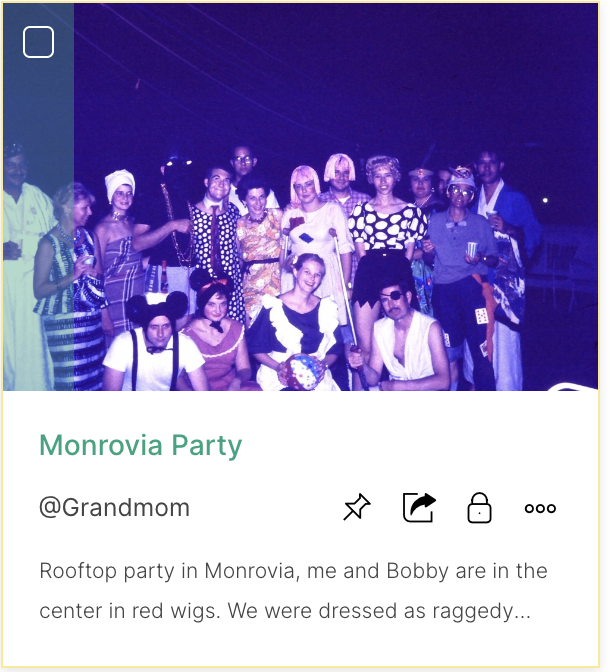
It was a dark and stormy night…The guests set out for a rooftop party under the cloud-covered sky. The year? Somewhere in the 1960s. The costumes? Delightfully questionable and all homemade. The photos? Priceless. 

Cue the spooky music.  

There were disguises, perhaps a little mischief, and the kind of party stories that get better with every retelling. But decades later, one very important detail could have been lost to the mists of time: Who were those people in the pictures? 


Sorry, this Artifct is private! What happend in Monrovia, will stay in Monrovia. 

Thankfully, one of our Artifcts members had the foresight to Artifct the memory of that costume party. She captured the story behind the photo, preserving the details her family might otherwise never have known. Now, her sons can look at the picture and pick out their parents among the costumed revelers. 

Without that story? Well, it might as well have been a gathering of ghosts. And THAT, my friends, is the truly spooky part. 

The Haunted House of Unidentified Photos, Heirlooms, and More 

Picture this: Years from now, your family gathers to sort through the boxes of belongings you've left behind. Someone opens a dusty carton labeled Photos — Miscellaneous. 

Inside are faded snapshots, mysterious trinkets, holiday decorations, and a recipe card stained with something that might be pumpkin puree. (Or is it ectoplasm? Hard to say.) 

Someone holds up a photograph. “Who are these people?” Silence. 

“Is that Grandma?” 

“Maybe? I think this was a Halloween party?” 

“Which Halloween party?” 

And just like that, a precious piece of family history becomes an unsolved mystery. No amount of detective work, séance scheduling, or frantic group-texting can guarantee the answers will ever be found. 

Okay, maybe that's a little dramatic. But isn't that what makes Halloween the perfect time to talk about preserving family memories? 

The scariest thing isn't a ghost in the attic or a skeleton in the closet. (Well, maybe that depends on your closet!) It's the possibility that the stories behind the things we treasure will disappear right along with the people who remember them. 

Don't Let Your Family Memories Disappear into Thin Air 

Halloween is full of traditions worth remembering. And we're not just talking about the year your neighbor's inflatable skeleton took flight during a windstorm. Think about the things your family does year after year: 

The pumpkin chronicles. Who insists on carving the most elaborate jack-o'-lantern? Who creates a masterpiece, only to have it collapse before trick-or-treaters arrive? And who saves every last pumpkin seed for roasting with just the right amount of salt? 

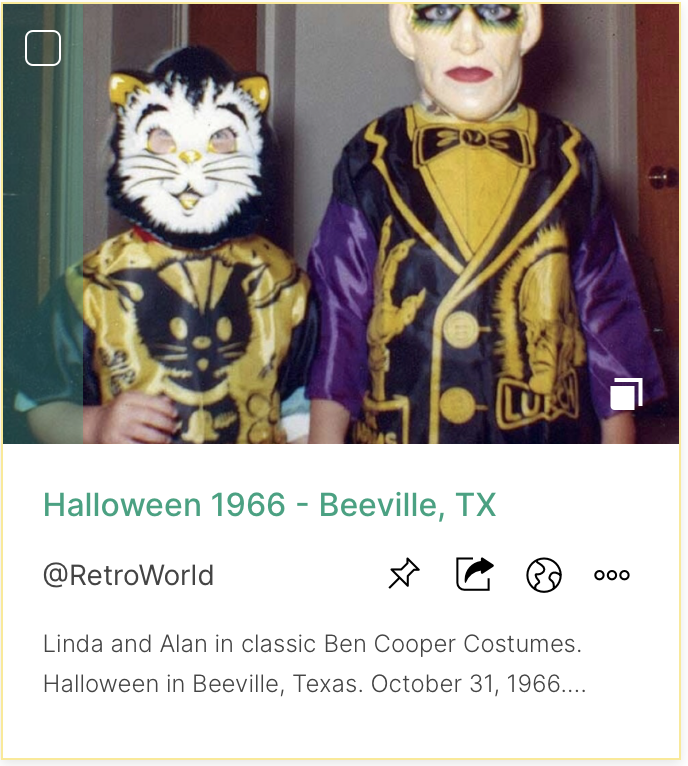
The costume hall of fame. From homemade superhero capes to questionable wigs and elaborate family group costumes, those pictures deserve more than a date scribbled on the back. Who made the costumes? What inspired them? And which one took home the neighborhood's unofficial prize for best disguise? 


The recipes that haunt your kitchen—in a good way. Mom's pumpkin spice coffee cake. Dad's famous chili before trick-or-treating. The caramel apples everyone pretends aren't sticky enough to require a full cleanup crew. Write down the recipe, sure, but don't forget the story. Who first made it? What makes it special? Who always asks for seconds? 

These aren't just seasonal activities. They're the moments that become family lore—the stories your children will someday tell their children, if only they know where those stories began. 

Artifct the Memories Before They Become Mysteries 

Here's the good news: You don't need a crystal ball, a detective's notebook, or an encyclopedic memory to preserve your family's history. 

You just need to Artifct it. 

With Artifcts, you can capture a photo, record the story behind it, and preserve the details that give an object or memory meaning. That way, the next generation doesn't have to guess who was hiding beneath the witch's hat or why Dad's 1970s vampire costume involved so much questionable fake blood, i.e. ketchup. 

Start with one Halloween memory. Upload that old costume-party photo. Add the names, the year, the location, and the story everyone still laughs about. Include the funny details, the family legends, and even the parts you're not entirely sure about. 

Then keep going. 

Artifct the costumes you've saved in the attic. The pumpkin-carving photos. The handwritten recipe for roasted pumpkin seeds. The decorations that come out of storage every October, along with the memories that come rushing back. 

And if you have a box of old photographs waiting to be identified? Consider this your friendly, slightly spooky nudge to get started. The goal isn't simply to preserve stuff; it's to preserve the why behind it—the people, the traditions, the laughter, and the stories that make ordinary things extraordinary. 

This Halloween, Give Your Family a Treat That Lasts 

Long after the candy wrappers have vanished, the pumpkins have rotted, and the costumes have been packed away, your family memories can live on. 

So go ahead. Dust off those old photos. Rescue that recipe card. Tell the story behind the costume that made everyone laugh. And please, for the sake of future generations, identify the people in the pictures! 

After all, the only thing scarier than a haunted house is inheriting a box of family treasures and having absolutely no idea what you're looking at. This Halloween, don't leave your family's stories to the ghosts of memories past. Artifct today, remember always.

Happy Artifcting, and Happy Halloween! 

###

© 2026 Artifcts, Inc. All Rights Reserved.

Read more
You Can’t Take It with You. But You Can Leave Instructions.

When we think about estate planning, we tend to focus on the big things: the house, retirement accounts, investments, and life insurance. We make plans for our financial assets, update our beneficiaries, and decide who will handle the important details when we're gone. 

But what about everything else? 

The jewelry tucked away in a drawer. The artwork hanging on the walls. The family china, the vintage record collection, the tools in the garage, and the box of photographs in the attic. What about the things that might not be worth much financially but mean the world to us—or to someone we love? 

With Boomers set to pass down more than $3 trillion in tangible goods, aka “stuff,” to Gen X over the next decade, the question isn't whether our belongings will need attention. It's whether we're going to make that process easier for the people we leave behind. 

Because here's the thing: your family shouldn't have to guess what you wanted to happen to the things you leave behind. 

...Your family shouldn't have to guess what you wanted to happen to the things you leave behind.

At Artifcts, we believe estate planning should go beyond financial assets. It should include the objects that tell our stories, the memories attached to them, and the wishes we have for their future. And with National Estate Planning Awareness Week as our reminder to get organized (it's this week!), there's no better time to start. 

Give Your Family a Roadmap with “In the Future” 

Imagine your family sorting through your home after you're gone. They find a beautiful necklace, but no one knows whether it was promised to a daughter, granddaughter, or a niece. They discover a collection you spent decades building, but have no idea whether you wanted it sold, donated, or kept together. They come across a box of treasured keepsakes and wonder which ones mattered most to you. 

These aren't just logistical questions. They're emotional ones, too. 

Without guidance, even well-intentioned families can find themselves navigating difficult decisions during an already painful time. They may disagree about what to keep, worry about making the wrong choice, or unknowingly part with something another family member would have treasured. Our co-founder Heather experienced all three scenarios when going through her mother's estate. Spoiler alert, it was not fun. 

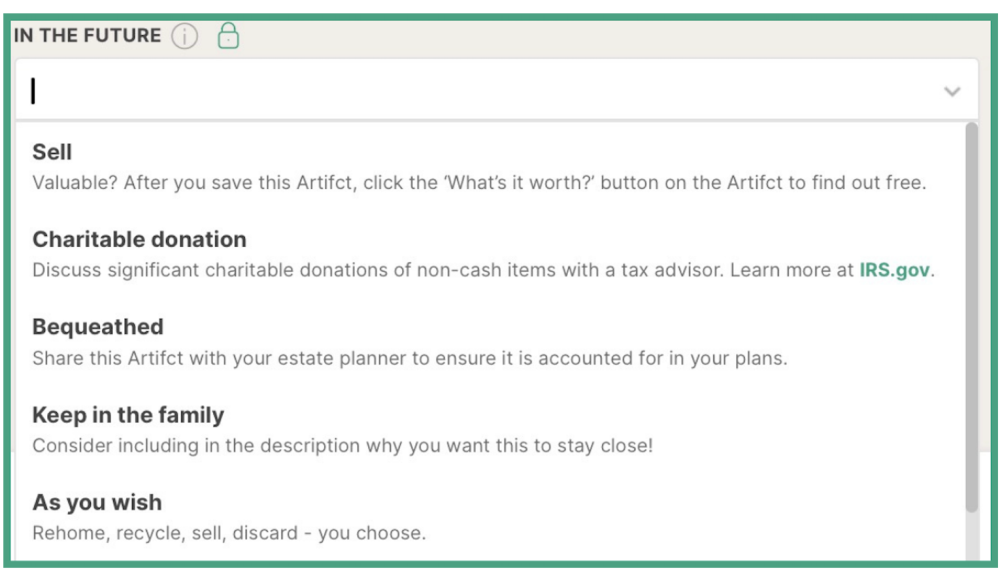
That's why we created Artifcts' “In the Future” feature. When you create an Artifct you can also document what you'd like to happen to that item down the road. 

Want your granddaughter to inherit your favorite necklace? Record it. Hope your beloved book collection stays together? Say so. Prefer that a piece of furniture be donated to someone who needs it? Make that clear. Already parted with an item? Update its record so no one goes on a scavenger hunt looking for something you no longer own. 

The choice is yours. The important part is making your wishes known. And because your wishes deserve a place in your broader estate plan, your Artifcts can be easily exported and shared with your estate planning attorney or advisor, or incorporated into the documentation that supports your will. No more scattered notes, mysterious lists, or guesswork about who gets what. 

Instead, you can provide a practical roadmap for your family, with the added benefit of capturing the why behind each decision. 

After all, knowing that a watch belonged to your grandfather is one thing. Knowing he wore it every day of his life, that it traveled with him across the ocean, and that he hoped it would one day belong to you? That's something else entirely. 

Your Artifcts Deserve to Live On: Meet Legacy Contacts 

There's another important piece of estate planning that can easily be overlooked: your digital legacy. 

Think about the time you've invested in creating your Artifcts. You've photographed meaningful objects, recorded family stories, uploaded documents, and preserved memories that might otherwise have been lost. You've created something valuable—not just for yourself, but for the people who come after you. 

What happens to all that work when you're no longer here? 

At Artifcts, we believe your Artifcts are no different from the tangible assets you'll leave behind. You've put time, thought, and care into documenting your life's stories. Your heirs should have the opportunity to receive and enjoy that legacy, too. That's where our Legacy Contacts feature comes in. 

Unlike platforms that may offer only one designated legacy contact, Artifcts encourages you to name both a primary and a secondary Legacy Contact. Why? Because life is unpredictable. The person you initially choose may move, become unavailable, or pass away before you do. Having a backup helps ensure that the stories and memories you've worked so hard to preserve have a better chance of reaching the people you love. 

Your primary and secondary Legacy Contacts are the trusted people you designate to help carry your Artifcts forward. They might be family members, close friends, or another trusted individual who understands the importance of preserving your stories. 

By setting up your Legacy Contacts, you're taking a simple but meaningful step toward ensuring your Artifcts don't disappear when you do. 

And there's a distinction we think matters: your Artifcts remain your stories, told in your voice. Your Legacy Contacts help preserve and pass them along, so the memories you've chosen to document can continue to inform, connect, and inspire future generations. 

Setting Up Your Legacy Contacts Is Easy 

Ready to put your plan in place? 

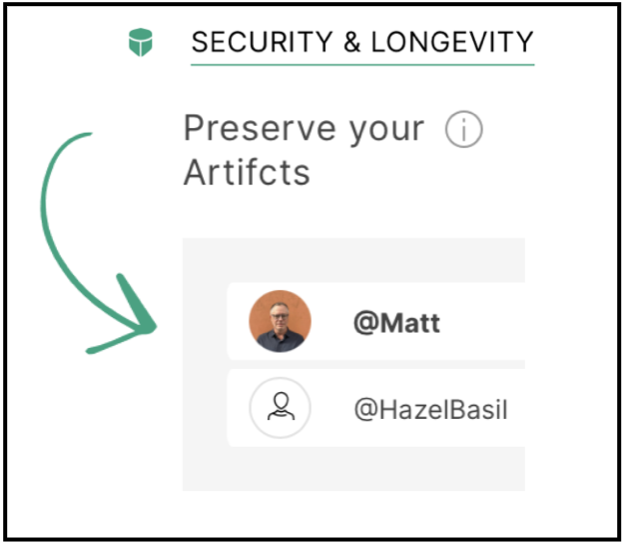
Sign in to your Artifcts account. Navigate to Account Settings → Security & Longevity → Preserve My Artifcts. Add the email addresses for your primary and secondary Legacy Contacts. Review the available account longevity options and confirm your preferences. 

You can update your contacts as life changes. It's a small task that can make a big difference in the future. 

Estate Planning Is About More Than What You Own. It's About What You Leave Behind. 

We know that thinking about our own mortality isn't exactly how most of us want to spend an afternoon, but estate planning doesn't have to be an exercise in worrying about what might happen. It can be an act of care for the people who matter most. 

It's an opportunity to spare your family unnecessary stress. To help prevent misunderstandings. To make sure treasured possessions find the right homes. And to preserve the stories, traditions, and memories that might otherwise disappear along with the objects themselves. 

You don't have to document everything in one sitting, either. Start with three things that matter to you. Take a photo. Tell the story. Add the important details. Then use “In the Future” to record your wishes for each item. Once you've started building your collection, make sure you've designated your primary and secondary Legacy Contacts. 

As you go, consider sharing your Artifcts with your estate planning attorney or advisor so your wishes for tangible belongings can be reflected in the appropriate estate planning documents. And remember, the most meaningful things you leave behind aren't always the most expensive. Sometimes they're the handwritten recipe card, the well-worn baseball glove, the necklace passed between generations, or the ordinary-looking object that carries an extraordinary story. 

This National Estate Planning Week, Give Your Family the Gift of Clarity 

The great stuff transfer is already on the horizon. The question is whether we'll leave our families with a lifetime of possessions to sort through—or a thoughtful roadmap that helps them understand what matters, what comes next, and why. 

At Artifcts, we're here to help you do just that. Document the things you love. Preserve the stories behind them. Record your wishes for their future. And designate the people who can help carry your digital legacy forward. 

Your stuff has a story. Your stories deserve to live on. And your family deserves to know what you wanted them to do next. This National Estate Planning Week, don't leave your family guessing. Leave them a plan, a story, and a legacy worth sharing. 

Ready to get started? Visit Artifcts.com to begin documenting your keepsakes, exploring the “In the Future” feature, and designating your Legacy Contacts. 

###

Looking for additional resources to help you jump start the conversation? We highly recommend AfterLight Founder, and co-founder of PALS Rachel Donnelly's book, Late to Your Own Funeral: How to Leave A Legacy And Not A Logjam. 

We also sat down with Rachel last year for an in-depth conversation about preparing with the end in mind. You can read more about our conersation here.

© 2026 Artifcts, Inc. All Rights Reserved.


Read more
What Should I Do With a Family Heirloom I Don't Want? 

There it is. The silver tea set your grandmother brought out for special occasions. The china your parents received as a wedding gift. The grandfather clock that's been in the family for generations. Or perhaps it's a piece of furniture, a collection of figurines, or a box of family treasures you inherited without ever asking for them. 

You know these things matter to someone. Maybe they mattered to the person who owned them, or perhaps other family members have always assumed they would stay in the family. You may even remember the stories attached to them. 

But here's the thing: You can love your family, cherish its history, and appreciate an heirloom's significance without wanting to own the object yourself. 

As we accumulate belongings, inherit them, downsize, or help loved ones navigate a move, we're often faced with a difficult question: What should we do with the things we don't want but don't feel comfortable getting rid of? 

At Artifcts, we believe the answer starts with separating the story from the stuff. The history, memories, and meaning behind an heirloom can live on, even when the physical object moves on to someone else. 

So before you tuck that heirloom back into a box, leave it on a shelf out of obligation, or quietly wonder whether it's okay to let it go, let's explore your options. 

First, Give Yourself Permission to Let Go 

Let's get this out of the way: You are not obligated to keep every family heirloom you inherit. Read that again if you need to. 

Family heirlooms can carry enormous emotional weight. They remind us of people we love, connect us to our childhoods, and give us a tangible link to generations who came before us. Sometimes, though, they also come with expectations, guilt, and a sense of responsibility that can be difficult to untangle. 

Perhaps your mother always said her china should stay in the family. Maybe your siblings assume you'll take the family furniture because you have the biggest house. Or perhaps you're the person everyone turns to when it's time to sort through a parent's belongings. 

It's easy to become the family keeper by default. 
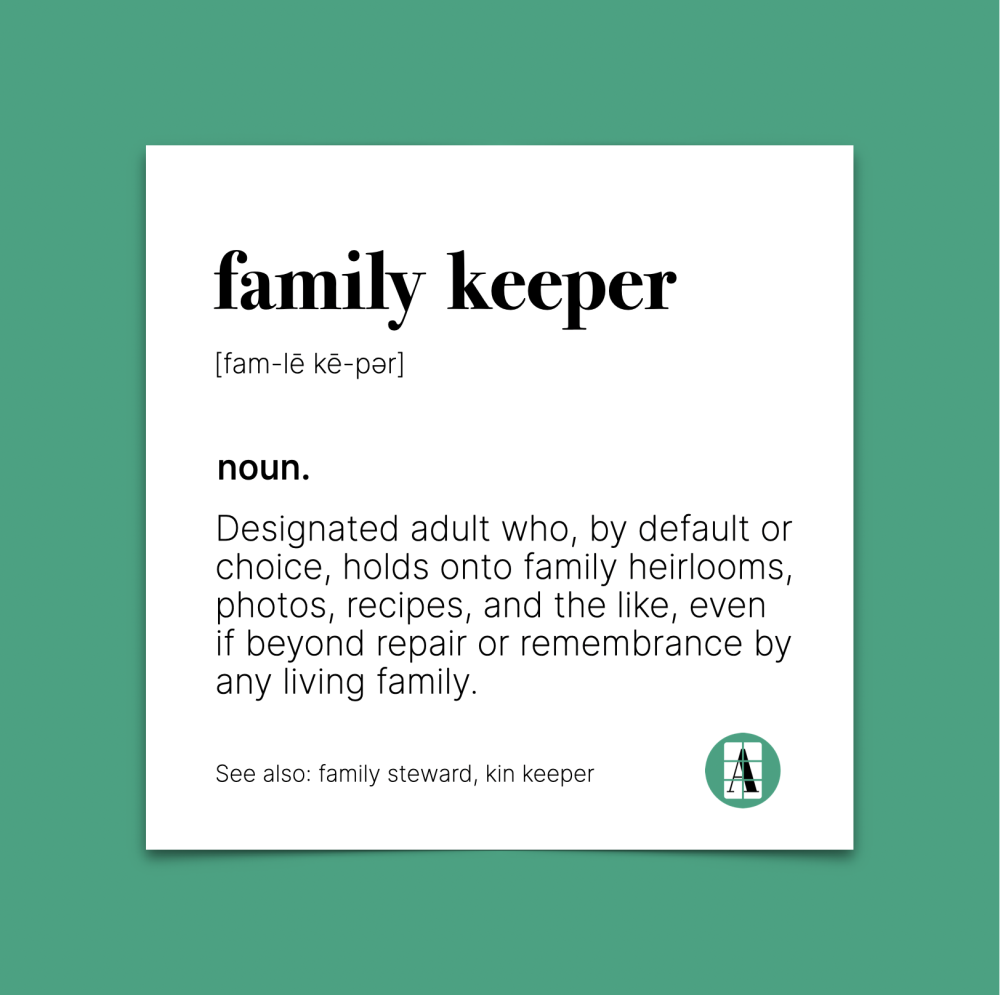
But being a good steward of your family's history doesn't mean becoming the permanent storage facility for everything it contains. 

Instead, try asking yourself a few questions: 

  • Do I genuinely enjoy owning or using this item?
  • Does it hold personal meaning for me, or do I feel obligated to keep it?
  • Do I have the space, time, and resources to care for it?
  • Would I rather preserve its story than keep the physical object?
  • Is there someone else who might treasure it more than I do? 

Your answers can help you decide what comes next. And remember, you don't have to make every decision immediately. It's perfectly reasonable to set an heirloom aside while you learn more about it or talk with family members. 

The goal isn't to get rid of things as quickly as possible. It's to make thoughtful decisions about what deserves a place in your life—and what might be better off somewhere else. 

Before You Pass It Along, Capture Its Story 

One of the biggest mistakes we can make with family heirlooms is assuming that the object's story will always be known. 

That rocking chair? Your great-grandfather built it for your grandmother when she was expecting her first child. Those serving dishes? They came out every Thanksgiving, and everyone knew which one held the cranberry sauce. That old watch? It belonged to a family member who wore it every day for decades. 

These details are what transform an ordinary object into a family heirloom. Without them, future owners may see only a chair, a dish, or a watch. The connection to the people and experiences that made it special can disappear. 

That's why we encourage you to Artifct the heirloom before you decide what happens to it next. 

Here's how to get started: 

  1. Take a few photos. Photograph the entire object, along with any distinctive details, inscriptions, maker's marks, or signs of wear that help tell its story.
  2. Record what you know. Who owned it? How did it enter the family? Was it purchased, handmade, gifted, or inherited? When and how was it used?
  3. Capture the personal details. What do you remember about the person who owned it? Was there a tradition associated with it? Did someone have a favorite story about it? Don't worry about getting every detail right or knowing the whole history. Start with what you know.
  4. Invite others to contribute. A sibling might remember a detail you've forgotten. A cousin might know who originally made the item. Share your Artifct and invite family members to add their memories. 

You may discover that the process of documenting an heirloom makes it easier to let go. Once its story is captured and shared, you can feel more confident that you're preserving what matters—even if the physical item no longer lives in your home. 

And if you discover that the story is incomplete? That's an opportunity to ask questions while the people who know the answers are still here. 

Who in the Family Might Want It? 

Before you donate, sell, or otherwise part with a family heirloom, give relatives the opportunity to express interest. To avoid those guilt-laden requests that soon turn into obligations, start by sharing a little of its story. Explain why it mattered to its previous owner and ask whether anyone would genuinely like to have it. 

You might say: 

“I'm making some decisions about Grandma's belongings, and I'd love for this tea set to go to someone who would enjoy having it. It was something she used during the holidays. I've captured a few photos and memories, too. Would anyone like to have it? There's absolutely no pressure if it's not right for you.” 

That last part matters. Your relatives may have their own space limitations, tastes, and inherited belongings to manage. They may cherish the memory of your grandmother without wanting her tea set. That's okay, too. 

A few things to keep in mind: 

  • Give people time to respond. Not everyone will be ready to make a decision right away, especially after a loss.
  • Share the story, not just a photo of the object. Context can help someone recognize why they'd want it.
  • Be clear about the practicalities. A large piece of furniture or fragile collection may require transportation, storage, or special care.
  • Agree on a plan. If several people want the item, talk through a fair way to decide who receives it.
  • Set a reasonable deadline. You can be compassionate while still moving forward with your own plans. 

And if nobody wants it? You have not failed your family. You've given people a chance to keep it, and you can now explore other ways to honor its history. 

What If No One in the Family Wants It?

You've asked. You've shared the story. And no one has raised a hand. Now what?

The good news is that you have options. The right one depends on the type of heirloom, its condition, its potential value, and whether its history connects to something beyond your immediate family.

Option 1: Find a New Home for It

Sometimes, the best thing you can do for an heirloom is find someone who will appreciate it in a new way. Consider reaching out to:

  • Friends and extended family. Someone outside your immediate family may have a connection to the item or simply love its style.

  • Community organizations. Schools, theaters, historical societies, and community groups may be interested in certain objects for their programs or collections.

  • Collectors and enthusiasts. Specialized online communities can connect you with people who appreciate particular types of antiques, vintage items, or collectibles.

  • People who can use it. Furniture, household goods, tools, and other practical items may be useful to someone setting up a home or starting a new chapter.

When possible, include the item's story when you offer it. A piece of furniture might be more appealing when its new owner learns who built it. A set of dishes might become more meaningful when someone knows they were used for decades of family celebrations.

And don't overlook the possibility of giving the item away. You may find more satisfaction in knowing someone will enjoy it than in trying to recover its monetary value.

Option 2: Donate It to an Organization That Can Preserve Its History

Some family heirlooms have significance beyond the family itself.

Perhaps your great-grandfather's military papers document an important chapter in local history. Maybe your grandmother's journals reveal something about life in a particular era. Or perhaps your family has photographs, letters, business records, or objects connected to a community, profession, or historical event.

Consider contacting a local historical society, museum, library, university archive, or other institution with a relevant collecting focus.

A word of caution: Not every organization can accept every item. Museums and archives typically have specific collection priorities, and they may decline items that fall outside their scope. Contact the institution first, explain what you have, and share any known history or documentation.

If an institution is interested, ask about its donation process and any paperwork needed to document the transfer.

Before you part with the item, create an Artifct with photographs, relevant documents, and the story as you know it. Share it with family members so they can retain a connection to the item even if the physical object enters a public collection.

Option 3: Sell It

Let's talk about money. Some heirlooms have significant monetary value. Others are valuable primarily because of the memories attached to them. And sometimes, what looks like a priceless antique turns out to have a surprisingly modest resale value.

If you think an item may be valuable, do a little research before selling it. Depending on the object, you might consult a qualified appraiser, an antiques dealer, a reputable auction house, or a specialist in that category.

Keep in mind that an item's age alone doesn't determine its worth. Condition, rarity, maker, provenance (its documented history of ownership), and current market demand can all play a role.

If you decide to sell, consider how you'd like the item to be used or appreciated by its next owner. You may also want to preserve photographs, records, and stories before the sale so the history doesn't disappear with the transaction.

And if the heirloom has both financial and sentimental value, take a moment to consider whether you're comfortable letting it go. You don't have to sell it simply because someone has told you it's worth money.

Option 4: Repurpose or Reimagine It

Sometimes, an heirloom can have a second life without remaining exactly as it was.

A collection of embroidered linens might become a quilt. A few meaningful pieces of jewelry might be incorporated into a new design. A well-loved piece of furniture might be refinished and put to use in a different home.
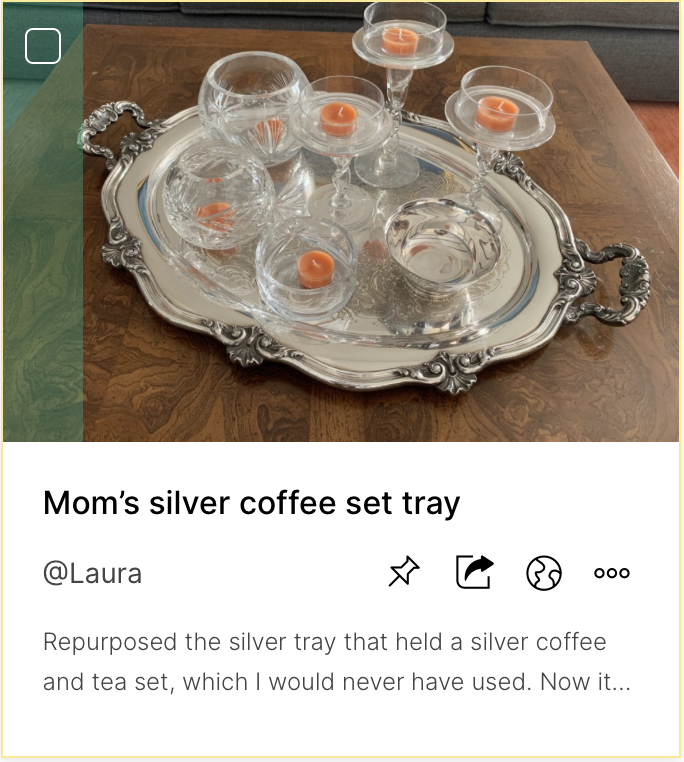


Of course, not every heirloom lends itself to repurposing, and altering an object can permanently change its character or value. If the item is rare, historically significant, or potentially valuable, seek expert advice before making changes. 

Option 5: Recycle or Dispose of It Responsibly

Not every heirloom can be sold, donated, or repurposed. Some items are damaged beyond repair, and others simply aren't suitable for another owner. If that's the case, it's okay to let them go.

Before throwing something away, consider whether any components can be recycled or whether a local organization accepts the materials. For items containing hazardous substances or requiring special handling, follow the appropriate local disposal guidance.

If the item has meaning for you, take photographs and record its story before you part with it. That way, the memory doesn't have to disappear simply because the object does.

What About Heirlooms With Significant Monetary or Historical Value?

A quick but important note: Before disposing of or transferring an heirloom, take time to understand what you have.

If an item may be an antique, a valuable collectible, a work of art, or an object with historical significance, consider obtaining a professional opinion before making a decision. You never want to be THAT family member that donated a million dollar piece of art to your local Goodwill store by accident. 

Likewise, if you inherited the item as part of an estate, confirm that you have the authority to decide what happens to it. There may be estate documents, ownership questions, or other family considerations to resolve first.

And if you believe an heirloom has significant financial value, remember that an online estimate isn't necessarily the same as a formal appraisal. A little research now can help you avoid regrets later.

The Bottom Line: Keep the Story, Even If You Don't Keep the Heirloom

Family heirlooms can connect us to the people, traditions, and experiences that shaped our lives. They remind us where we came from and help us understand the generations who came before us. But the physical object isn't the only way to preserve that connection.

You can photograph an heirloom, document its history, record a loved one's memories, share those stories with family, and then decide whether the object should stay with you, move to another family member, find a new owner, or leave your home altogether.

You can appreciate an heirloom without keeping it. You can honor the person who gave it to you without carrying the burden of storing it forever. And you can preserve family history without preserving every object that comes with it.

At Artifcts, we believe it's the stories, memories, and meaning behind our belongings that make them worth remembering. That's why we encourage you to Artifct the heirlooms that matter, share their stories with the people who will appreciate them, and think intentionally about what happens next.

Happy Artifcting!

###

© 2026 Artifcts, Inc. All Rights Reserved.
Read more
Your privacy

This website uses only essential cookies to provide reliable and secure services, streamline your experience, allow you to share content from this website on social media, and to analyze how our Site is used. Learn more about these cookies and cookie settings.

Accept & Continue
Oops! This Web Browser Version is Unsupported

You received this warning because you are using an unsupported browser. Some features of Artifcts will not be available or will be displayed improperly until you update to the latest version or change browsers.

Close
Image for unsupported banner Oops! This Web Browser is Unsupported

You received this warning because you are using an unsupported browser. Some features of Artifcts will not be available or will be displayed improperly until you update to the latest version or change browsers.

Unsupported banner close icon Close