


When we think about estate planning, we tend to focus on the big things: the house, retirement accounts, investments, and life insurance. We make plans for our financial assets, update our beneficiaries, and decide who will handle the important details when we're gone.
But what about everything else?
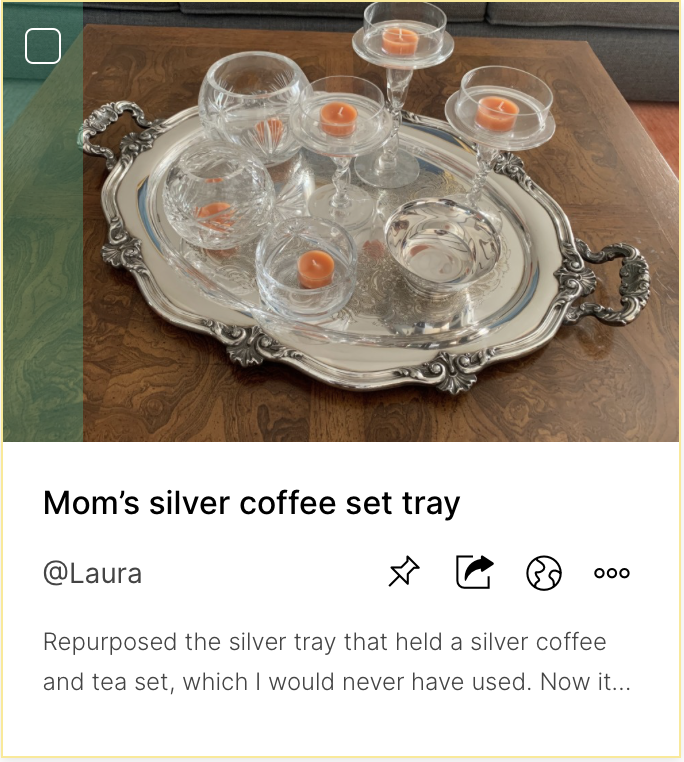
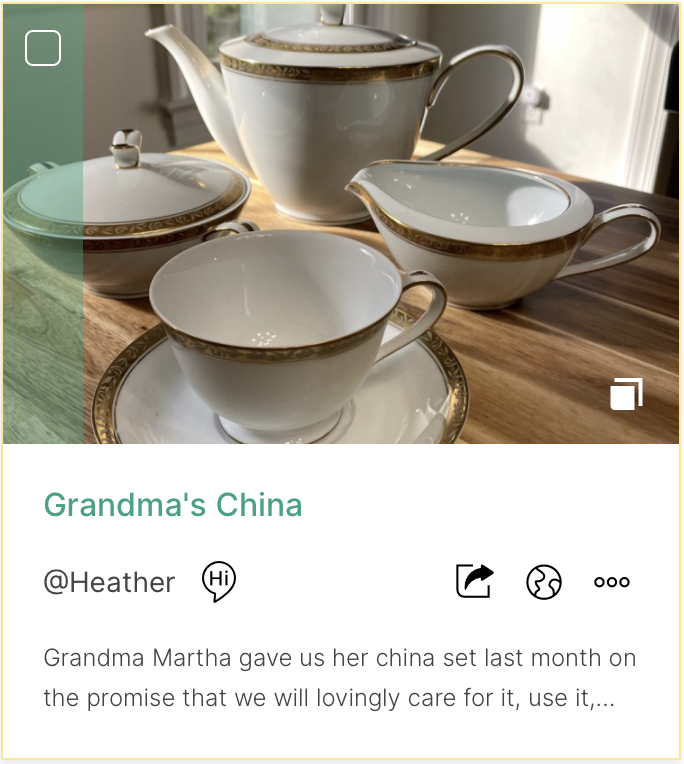
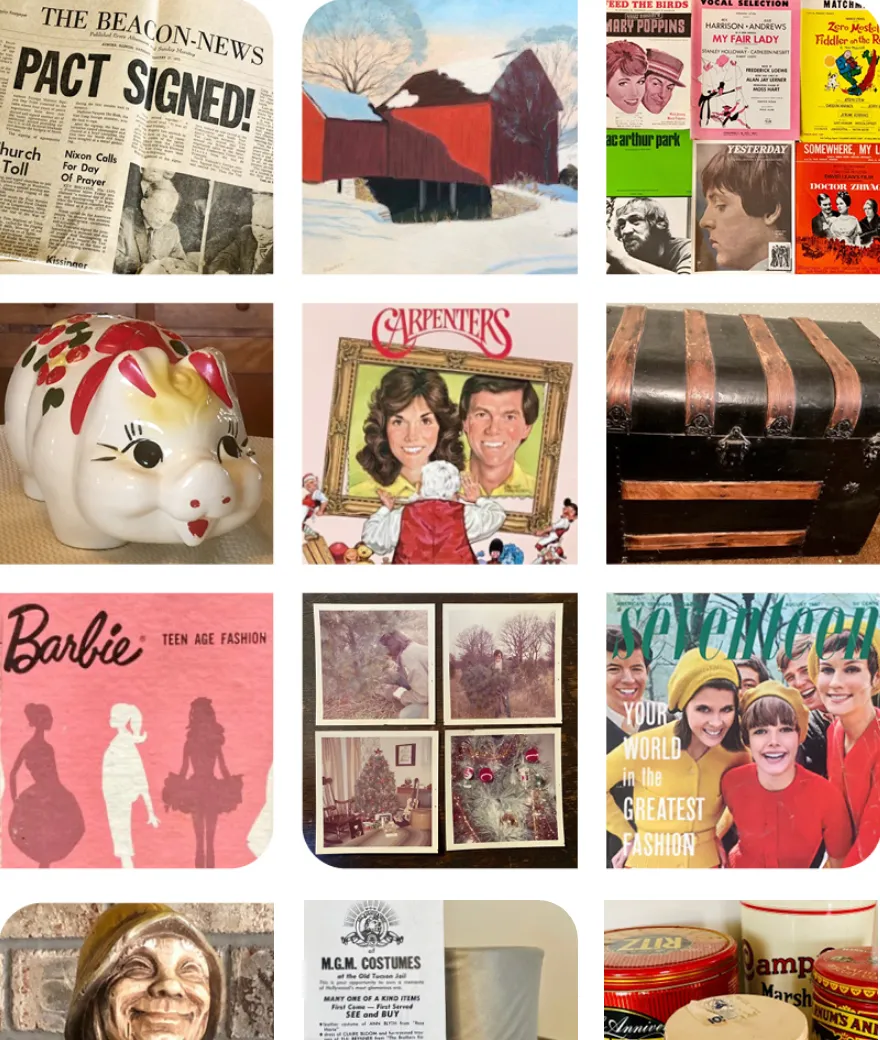
The jewelry tucked away in a drawer. The artwork hanging on the walls. The family china, the vintage record collection, the tools in the garage, and the box of photographs in the attic. What about the things that might not be worth much financially but mean the world to us—or to someone we love?
With Boomers set to pass down more than $3 trillion in tangible goods, aka “stuff,” to Gen X over the next decade, the question isn't whether our belongings will need attention. It's whether we're going to make that process easier for the people we leave behind.
Because here's the thing: your family shouldn't have to guess what you wanted to happen to the things you leave behind.
At Artifcts, we believe estate planning should go beyond financial assets. It should include the objects that tell our stories, the memories attached to them, and the wishes we have for their future. And with National Estate Planning Awareness Week as our reminder to get organized (it's this week!), there's no better time to start.
Give Your Family a Roadmap with “In the Future”
Imagine your family sorting through your home after you're gone. They find a beautiful necklace, but no one knows whether it was promised to a daughter, granddaughter, or a niece. They discover a collection you spent decades building, but have no idea whether you wanted it sold, donated, or kept together. They come across a box of treasured keepsakes and wonder which ones mattered most to you.
These aren't just logistical questions. They're emotional ones, too.
Without guidance, even well-intentioned families can find themselves navigating difficult decisions during an already painful time. They may disagree about what to keep, worry about making the wrong choice, or unknowingly part with something another family member would have treasured. Our co-founder Heather experienced all three scenarios when going through her mother's estate. Spoiler alert, it was not fun.
That's why we created Artifcts' “In the Future” feature. When you create an Artifct you can also document what you'd like to happen to that item down the road.
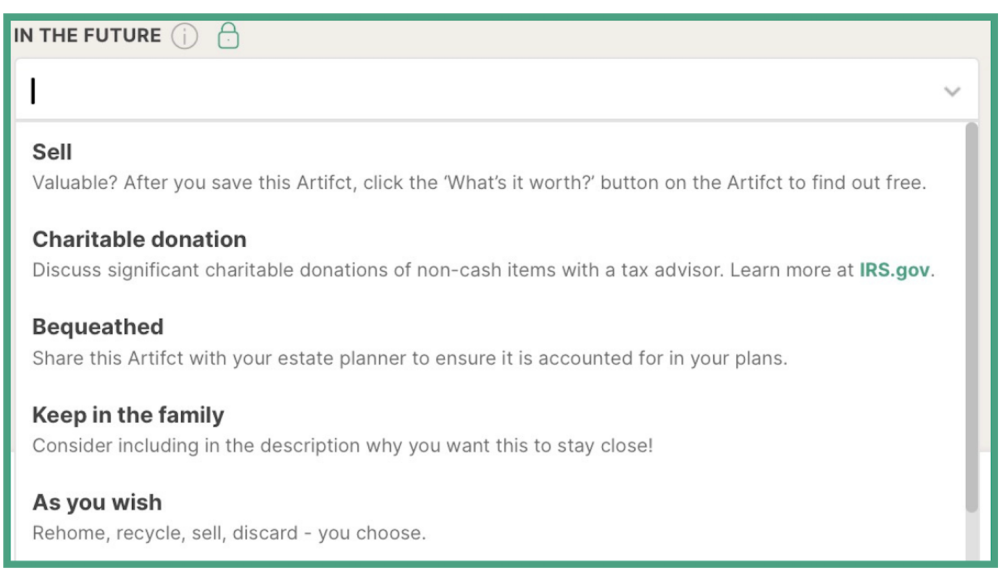
Want your granddaughter to inherit your favorite necklace? Record it. Hope your beloved book collection stays together? Say so. Prefer that a piece of furniture be donated to someone who needs it? Make that clear. Already parted with an item? Update its record so no one goes on a scavenger hunt looking for something you no longer own.
The choice is yours. The important part is making your wishes known. And because your wishes deserve a place in your broader estate plan, your Artifcts can be easily exported and shared with your estate planning attorney or advisor, or incorporated into the documentation that supports your will. No more scattered notes, mysterious lists, or guesswork about who gets what.
Instead, you can provide a practical roadmap for your family, with the added benefit of capturing the why behind each decision.
After all, knowing that a watch belonged to your grandfather is one thing. Knowing he wore it every day of his life, that it traveled with him across the ocean, and that he hoped it would one day belong to you? That's something else entirely.
Your Artifcts Deserve to Live On: Meet Legacy Contacts
There's another important piece of estate planning that can easily be overlooked: your digital legacy.
Think about the time you've invested in creating your Artifcts. You've photographed meaningful objects, recorded family stories, uploaded documents, and preserved memories that might otherwise have been lost. You've created something valuable—not just for yourself, but for the people who come after you.
What happens to all that work when you're no longer here?
At Artifcts, we believe your Artifcts are no different from the tangible assets you'll leave behind. You've put time, thought, and care into documenting your life's stories. Your heirs should have the opportunity to receive and enjoy that legacy, too. That's where our Legacy Contacts feature comes in.
Unlike platforms that may offer only one designated legacy contact, Artifcts encourages you to name both a primary and a secondary Legacy Contact. Why? Because life is unpredictable. The person you initially choose may move, become unavailable, or pass away before you do. Having a backup helps ensure that the stories and memories you've worked so hard to preserve have a better chance of reaching the people you love.
Your primary and secondary Legacy Contacts are the trusted people you designate to help carry your Artifcts forward. They might be family members, close friends, or another trusted individual who understands the importance of preserving your stories.
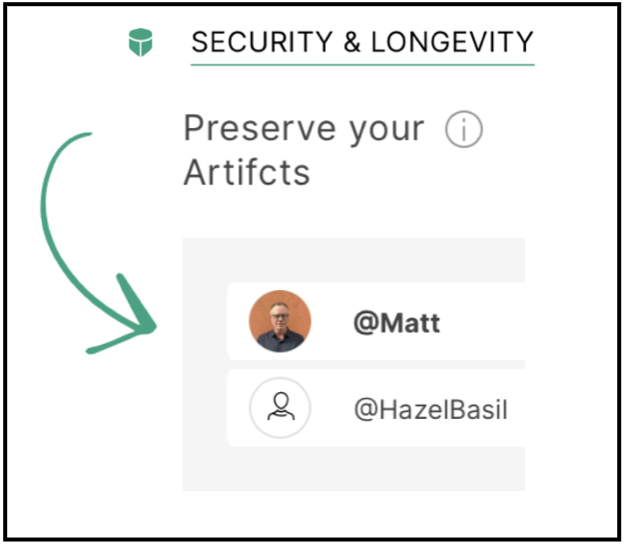
By setting up your Legacy Contacts, you're taking a simple but meaningful step toward ensuring your Artifcts don't disappear when you do.
And there's a distinction we think matters: your Artifcts remain your stories, told in your voice. Your Legacy Contacts help preserve and pass them along, so the memories you've chosen to document can continue to inform, connect, and inspire future generations.
Setting Up Your Legacy Contacts Is Easy
Ready to put your plan in place?
Sign in to your Artifcts account. Navigate to Account Settings → Security & Longevity → Preserve My Artifcts. Add the email addresses for your primary and secondary Legacy Contacts. Review the available account longevity options and confirm your preferences.
You can update your contacts as life changes. It's a small task that can make a big difference in the future.
Estate Planning Is About More Than What You Own. It's About What You Leave Behind.
We know that thinking about our own mortality isn't exactly how most of us want to spend an afternoon, but estate planning doesn't have to be an exercise in worrying about what might happen. It can be an act of care for the people who matter most.
It's an opportunity to spare your family unnecessary stress. To help prevent misunderstandings. To make sure treasured possessions find the right homes. And to preserve the stories, traditions, and memories that might otherwise disappear along with the objects themselves.
You don't have to document everything in one sitting, either. Start with three things that matter to you. Take a photo. Tell the story. Add the important details. Then use “In the Future” to record your wishes for each item. Once you've started building your collection, make sure you've designated your primary and secondary Legacy Contacts.
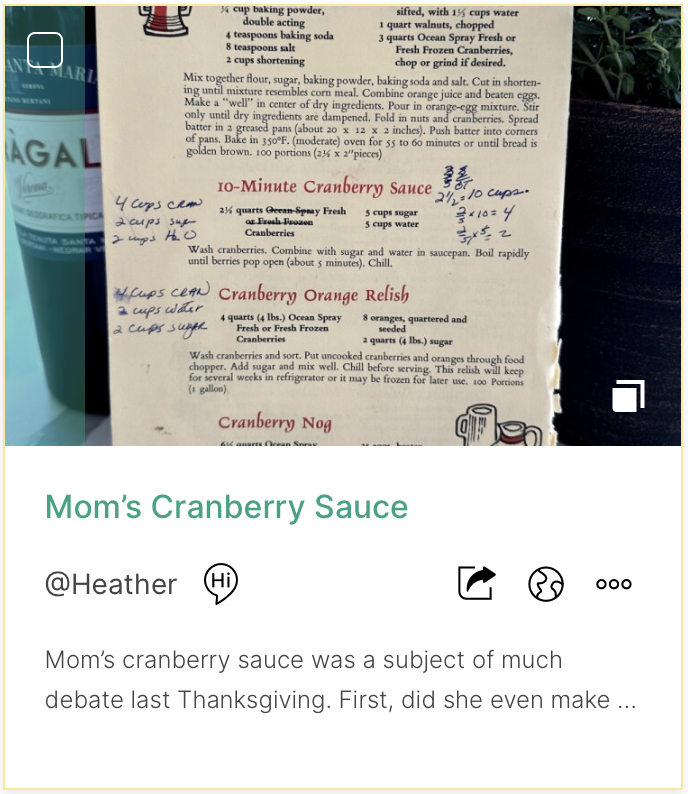
As you go, consider sharing your Artifcts with your estate planning attorney or advisor so your wishes for tangible belongings can be reflected in the appropriate estate planning documents. And remember, the most meaningful things you leave behind aren't always the most expensive. Sometimes they're the handwritten recipe card, the well-worn baseball glove, the necklace passed between generations, or the ordinary-looking object that carries an extraordinary story.
This National Estate Planning Week, Give Your Family the Gift of Clarity
The great stuff transfer is already on the horizon. The question is whether we'll leave our families with a lifetime of possessions to sort through—or a thoughtful roadmap that helps them understand what matters, what comes next, and why.
At Artifcts, we're here to help you do just that. Document the things you love. Preserve the stories behind them. Record your wishes for their future. And designate the people who can help carry your digital legacy forward.
Your stuff has a story. Your stories deserve to live on. And your family deserves to know what you wanted them to do next. This National Estate Planning Week, don't leave your family guessing. Leave them a plan, a story, and a legacy worth sharing.
Ready to get started? Visit Artifcts.com to begin documenting your keepsakes, exploring the “In the Future” feature, and designating your Legacy Contacts.
###
Looking for additional resources to help you jump start the conversation? We highly recommend AfterLight Founder, and co-founder of PALS Rachel Donnelly's book, Late to Your Own Funeral: How to Leave A Legacy And Not A Logjam.
We also sat down with Rachel last year for an in-depth conversation about preparing with the end in mind. You can read more about our conersation here.
© 2026 Artifcts, Inc. All Rights Reserved.